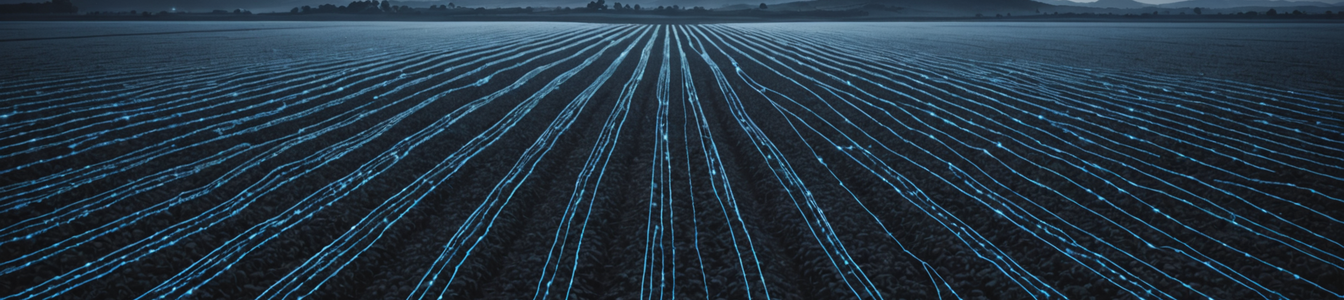
The pastoral image of farming is being rapidly overwritten by a new digital reality. At the intersection of the Internet of Things (IoT), blockchain, and artificial intelligence (AI), a radical evolution is taking place: the tokenization of agriculture. This fusion, often branded as 'AgriFi' (Agricultural Finance) or 'AgriTech,' is creating sophisticated financial ecosystems where physical assets—farmland, crops, and equipment—are digitized, fractionalized, and traded. While promising unprecedented efficiency, transparency, and access to capital, this convergence is simultaneously forging a vast and novel attack surface, presenting unique challenges for cybersecurity professionals.
From Soil to Smart Contract: The Anatomy of AgriTech Convergence
The modern AgriTech stack is a multi-layered architecture. At its base lies a dense network of IoT sensors deployed across fields, monitoring soil conditions, moisture levels, crop health via drones, and equipment status. This real-time data stream feeds into AI models that optimize irrigation, predict yields, and automate processes. The revolutionary—and risky—leap occurs when this verified physical data is used to mint digital tokens on a blockchain.
Initiatives are now actively bringing farmland 'on-chain.' Through platforms leveraging IoT and blockchain, a parcel of land can be digitally represented as a non-fungible token (NFT) or fractionalized into security tokens. IoT data acts as the 'oracle,' providing the proof-of-physical-backing for these digital assets. Investors can then buy tokens representing a share of a farm's future revenue or the land itself, creating liquid markets for historically illiquid assets.
The Cybersecurity Harvest: New Threats in a Digital Field
This digital-physical fusion expands the threat landscape in several critical dimensions:
- IoT Data Integrity as a Foundation for Fraud: The entire value proposition of tokenized agriculture hinges on trusted data. If threat actors compromise field sensors or the data transmission pipelines, they can manipulate moisture, yield, or health metrics. Falsified high-yield data could artificially inflate the value of crop-backed tokens, enabling large-scale market manipulation and fraud before the physical harvest ever fails. Securing these often-remote, resource-constrained IoT devices becomes a foundational security requirement, not just an operational one.
- Smart Contracts as High-Value Targets: The financial logic of AgriFi—leases, revenue sharing, insurance payouts, futures contracts—is encoded in smart contracts. These automated programs hold and transfer significant value. Vulnerabilities in their code (e.g., reentrancy attacks, logic errors) or in the underlying blockchain oracles could lead to the direct theft of digital assets or the malicious alteration of contractual terms governing physical assets.
- The Expanded Supply Chain Attack Surface: The agricultural supply chain now extends into the digital realm. An attack could originate in a compromised soil sensor, move through a manipulated data analytics platform to distort token valuation, and culminate in an exploit of a DeFi trading protocol where those tokens are listed. Defenders must now consider threats across the OT-IoT-IT-blockchain continuum.
- Identity and Access Management at Scale: Managing digital ownership rights (token wallets) for potentially thousands of fractional investors, while ensuring secure access for farmers and IoT management systems, creates a complex IAM challenge. The compromise of a private key could mean the loss of digital ownership to a farm, a scenario with real-world legal and operational consequences.
Bridging the Security Gap: From Innovation to Resilience
The pace of innovation in AgriFi currently outstrips the maturity of its cybersecurity frameworks. Many AgriTech startups prioritize functionality and market entry, while security is often an afterthought. This gap is exacerbated by a skills shortage; few professionals understand the intricacies of both OT/ICS security for farming equipment and smart contract security for blockchain.
Proactive measures are urgently needed. Security must be 'baked in' from the design phase. This includes:
- Zero-Trust Architectures for IoT networks, verifying device identity and data integrity continuously.
- Regular smart contract audits by specialized firms before deployment and after any updates.
- Resilient oracle design using multiple, independent data sources to prevent single points of truth failure.
- Unified threat modeling that maps attack paths from the physical field to the digital ledger.
Conclusion: Securing the Next Generation of Breadbaskets
The tokenization of agriculture is not a fleeting trend; it represents a fundamental shift in how we perceive and interact with one of humanity's oldest industries. For cybersecurity leaders, the mandate is clear: develop interdisciplinary expertise that spans operational technology, data science, and decentralized systems. The security of our future food systems and the financial ecosystems built upon them will depend on our ability to secure this complex convergence of bits and biomass. The attack surface has been plowed and seeded; it is now time to build its defenses.
Comentarios 0
Comentando como:
¡Únete a la conversación!
Sé el primero en compartir tu opinión sobre este artículo.
¡Inicia la conversación!
Sé el primero en comentar este artículo.