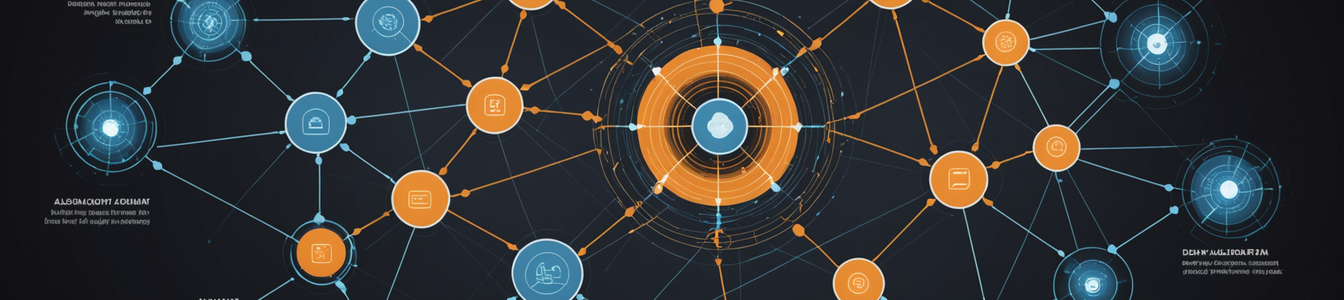
The enterprise software landscape is undergoing a seismic shift with the rise of autonomous AI agents—self-directed programs that can perform tasks, make decisions, and interact with digital environments. This "Agentic AI" revolution promises to transform workflows, but it is simultaneously forging a new and perilous software supply chain, ripe for exploitation. Recent developments, including the launch of commercial marketplaces and the disclosure of critical vulnerabilities in core development tools, highlight an urgent and systemic security challenge for organizations worldwide.
The New Marketplace: A Rush to Commercialize Autonomous Agents
The push to productize Agentic AI is accelerating. A significant milestone is the launch by Coinbase's payments protocol, x402, of a dedicated marketplace platform for AI agents. Functioning as an "app store" for autonomous agents, this platform allows developers to publish, share, and monetize their AI agents, while enterprises can discover and integrate them into their operations. This model mirrors the early days of mobile app stores and SaaS marketplaces, but with a critical difference: the "applications" being distributed are dynamic, reasoning AI entities capable of taking independent action based on their training, prompts, and environmental context.
Simultaneously, companies like Ciffly are introducing multi-agent AI systems explicitly designed to transform enterprise workflows. These systems involve fleets of specialized agents collaborating on complex business processes, from data analysis and customer service to automated procurement and IT operations. The commercial drive is clear: to embed autonomous, decision-making AI directly into the core operational fabric of businesses.
The Critical Flaw: Vulnerabilities in the Agent Development Stack
This rapid commercialization is happening atop a nascent and vulnerable technological foundation. Security researchers recently disclosed a critical flaw in Google's "Antigravity IDE," a development environment used for building and testing AI agents. The vulnerability was a classic prompt injection flaw that, when exploited, could allow an attacker to execute arbitrary code within the IDE's environment.
Prompt injection—where malicious instructions are fed into an AI's input to subvert its intended function—has emerged as a primary attack vector against AI systems. In this case, the flaw existed in the tool used to create the agents, not just in the agents themselves. This represents a software supply chain attack vector of the highest order. A compromised development tool could lead to backdoored agents being built and distributed at scale, with the malicious code hidden within the agent's logic or its dependencies. The patching of this flaw by Google is a warning shot, revealing that the very tools enabling the Agentic AI boom are themselves security liabilities.
Converging Risks: The Agentic AI Supply Chain Threat
The confluence of these trends—marketplace distribution and vulnerable tooling—creates a unique and dangerous threat model:
- Proliferation of Untrusted Components: Enterprise IT will soon be composed of numerous third-party AI agents, sourced from marketplaces, with opaque inner workings and unknown security postures. Traditional software composition analysis (SCA) tools are ill-equipped to analyze the "prompt chains," reasoning steps, and external API calls of an autonomous agent.
- Compromised Development Pipelines: As seen with Antigravity IDE, attacks on the agent development lifecycle can poison the supply chain at its source. A single vulnerability in a popular agent framework, IDE, or training library could have cascading effects, compromising thousands of derived agents.
- Autonomous Attack Scale: A malicious or compromised agent operates with the permissions and access it is granted. Unlike traditional malware, it can use "reasoning" to achieve its objectives, potentially exploiting other systems, exfiltrating data, or manipulating business processes in subtle, hard-to-detect ways. Its actions may look like legitimate autonomous activity.
- Lack of Governance and Standards: There are no established standards for securing, testing, or certifying AI agents. Questions of agent identity, integrity verification, behavior auditing, and permission boundaries remain largely unanswered by the industry.
The Path Forward for Cybersecurity
For cybersecurity professionals, this new landscape demands a proactive and evolved approach:
- Extend Supply Chain Security Practices: Security teams must apply and adapt software supply chain security principles—like SBOMs (Software Bill of Materials), code signing, and vendor risk assessment—to the world of AI agents. An "ABOM" (Agent Bill of Materials) may be necessary, detailing an agent's model, prompts, tools, and knowledge sources.
- Develop New Testing Paradigms: Penetration testing and red teaming must evolve to include agent-specific tests. This includes adversarial prompt engineering, testing for goal hijacking, sandboxing agent actions, and simulating complex multi-agent interaction failures.
- Implement Agent-Specific Controls: Security architectures need new controls: runtime monitoring for agent behavior deviation, strict permission sandboxing (the principle of least privilege for AI), and secure orchestration layers that mediate all agent interactions with critical systems and data.
- Advocate for Security-by-Design: The cybersecurity community must engage with AI developers and marketplace operators early to advocate for security-by-design in agent frameworks, establish vulnerability disclosure programs, and create shared threat intelligence feeds focused on agentic AI attacks.
The promise of Agentic AI is immense, but the security community has a narrow window to build the guardrails before this new technology embeds itself—and its vulnerabilities—into the heart of enterprise infrastructure. The vulnerabilities patched today are just the first glimpse of the attack surface to come. Treating AI agents as mere software components is a grave mistake; they are active participants in the digital ecosystem, and their security requires a fundamentally new playbook.
Comentarios 0
Comentando como:
¡Únete a la conversación!
Sé el primero en compartir tu opinión sobre este artículo.
¡Inicia la conversación!
Sé el primero en comentar este artículo.