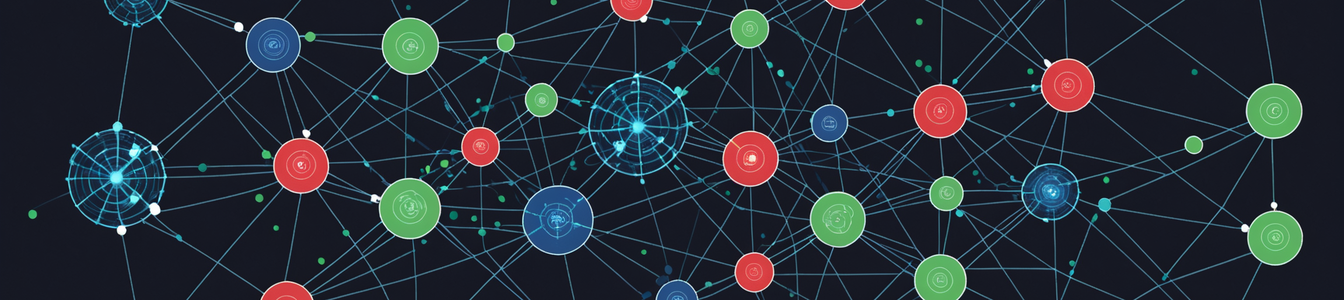
The vague promise of "AI in cybersecurity" is rapidly crystallizing into a concrete and strategic reality: the rise of specialized, autonomous AI agents. We are moving decisively beyond monolithic AI models and simple chatbots into an era where security platforms deploy entire teams of purpose-built digital colleagues. This AI agent arms race, exemplified by recent moves from established players like KnowBe4 and Arctic Wolf, marks a fundamental shift in how security operations are conducted and human risk is managed. The endgame is not just automation, but the creation of collaborative, multi-agent systems that augment—and in some cases autonomously execute—core security functions with unprecedented speed and scale.
From Generic AI to Specialized Agents: The New Paradigm
For years, vendors touted AI and machine learning as silver bullets. Today, the focus has sharpened. The value is no longer in having "AI" but in deploying specific agents with defined roles and responsibilities. An AI agent in this context is a software entity that can perceive its environment, make decisions based on predefined goals and learned patterns, and take actions to achieve those goals—often with a significant degree of independence.
This specialization is critical. A single AI trying to do everything—detect malware, analyze phishing emails, coach employees, and investigate incidents—would be a master of none. The new architecture involves a symphony of specialists: one agent for phishing detection, another for log analysis, a third for user behavior risk scoring, and so on.
KnowBe4: Orchestrating AI Agents for Human Risk Management
KnowBe4, a leader in security awareness training, is aggressively expanding its vision beyond training platforms to a comprehensive human risk management (HRM) suite powered by AI agents. Their approach recognizes that the human element is dynamic and requires continuous, personalized engagement that scales across entire organizations.
Their developing suite includes agents designed to:
- Personalize Phishing Simulations: Moving beyond batch-and-blast campaigns, AI agents analyze individual user roles, past click behavior, and current threat intelligence to generate hyper-targeted phishing simulations. This ensures training is relevant and challenging for each employee, maximizing its impact.
- Analyze Behavioral Risk: Agents continuously assess user behavior across email, web, and potentially other vectors to generate a real-time risk score. Unusual activity, such as accessing risky websites or handling data in atypical ways, can trigger automated, contextual coaching moments or alerts for security teams.
- Automate Awareness Campaigns: Instead of manually scheduling training modules, AI agents can manage the entire awareness program lifecycle—deploying micro-trainings based on risk scores, refreshing knowledge on emerging threats, and measuring behavioral change over time.
This transforms HRM from a periodic compliance exercise into a continuous, adaptive, and data-driven security control.
Arctic Wolf: Building a Trusted, AI-Powered SOC
While KnowBe4 focuses on the human layer, Arctic Wolf is applying the multi-agent philosophy to the technological core of security: the Security Operations Center (SOC). Their mission is to build an AI-powered SOC that doesn't just operate faster, but one that "actually earns trust," as highlighted in their recent public commentary. This focus on trust is the key differentiator in a market wary of AI "black boxes."
Arctic Wolf's envisioned SOC platform operates as a collaborative network of AI agents:
- Triage Agents: These act as the first line of defense, autonomously analyzing incoming alerts from across the security stack (EDR, firewall, cloud, etc.). Using correlation rules and context, they filter out false positives, prioritize genuine threats, and queue them for investigation.
- Investigation Agents: For each prioritized incident, an investigation agent takes over. It can autonomously gather contextual data—pulling logs, checking asset criticality, reviewing user history—and compile a preliminary incident timeline. Crucially, it explains its reasoning, showing the human analyst the "why" behind its findings.
- Response Guidance Agents: Based on the investigation, another agent can suggest or even execute standardized containment and remediation steps, such as isolating a host or disabling a user account, always with human oversight or approval depending on configured playbooks.
The entire system is designed for transparency. Analysts are not presented with a cryptic "AI alert"; they are given a collaboratively built incident dossier, with clear attribution of what each agent did and what evidence it found. This builds the essential trust required for analysts to rely on and effectively partner with the AI agents.
Impact and Implications for the Cybersecurity Community
The expansion of this AI agent arms race carries profound implications:
- SOC Evolution and Analyst Burnout: By offloading repetitive, high-volume tasks—alert triage, initial data gathering, basic containment—to AI agents, SOC analysts can escape the alert fatigue treadmill. This allows them to focus on high-value activities: complex investigation, threat hunting, strategic planning, and improving security posture. The potential to reduce burnout and retain talent is significant.
- The Rise of the AI Agent Orchestrator: A new critical role will emerge: the designer and orchestrator of AI agent teams. Security professionals will need to understand how to configure, task, and oversee these digital teams, ensuring they work in harmony and align with organizational processes.
- Democratization of Security Capabilities: For mid-sized and smaller organizations that cannot afford a 24/7 SOC staffed with tier-1, tier-2, and tier-3 analysts, a platform powered by a team of AI agents can provide a force-multiplier effect. It brings advanced, continuous monitoring and response capabilities within financial reach.
- The Trust Imperative: As Arctic Wolf emphasizes, the success of this model hinges on trust. Vendors must prioritize explainable AI (XAI) and transparent workflows. Agents must be seen as reliable colleagues, not inscrutable oracles. The industry will likely develop new standards and metrics for evaluating the trustworthiness and transparency of AI agents in security products.
Conclusion: The Collaborative Future
The trajectory is clear. The future of security operations is not human versus machine, but human with machine. It will be defined by collaborative teams where specialized AI agents handle defined, routine tasks at machine speed, while human experts provide strategic direction, handle edge cases, and make complex ethical and business decisions. The moves by KnowBe4 into HRM and Arctic Wolf into SOC operations are two sides of the same coin: a comprehensive re-architecting of cybersecurity defense through specialized, autonomous intelligence. For cybersecurity professionals, adapting to this new landscape means developing skills in agent oversight, process design for human-AI collaboration, and maintaining a critical, trust-but-verify approach to this powerful new class of digital colleagues.
Comentarios 0
Comentando como:
¡Únete a la conversación!
Sé el primero en compartir tu opinión sobre este artículo.
¡Inicia la conversación!
Sé el primero en comentar este artículo.