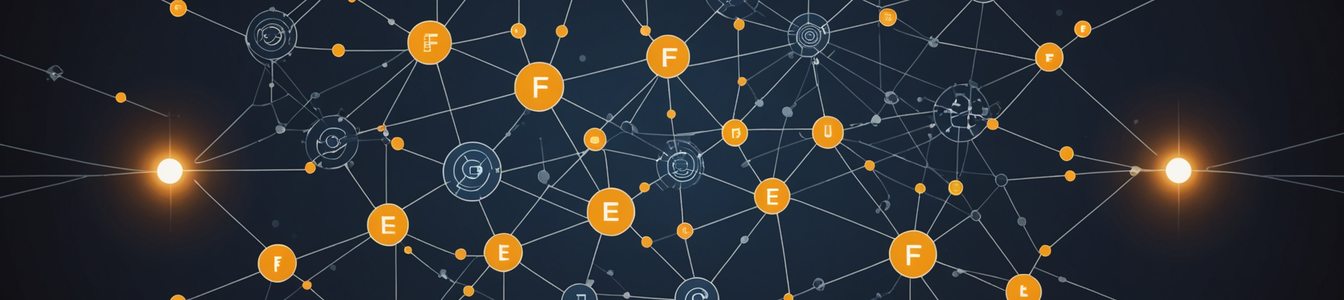
The artificial intelligence revolution is fundamentally reshaping identity verification and authentication systems worldwide, creating both unprecedented security opportunities and complex ethical challenges. Recent global developments demonstrate how AI-powered authentication technologies are rapidly evolving beyond traditional security paradigms into sophisticated systems capable of analyzing multiple biometric and behavioral factors simultaneously.
Hong Kong's deployment of advanced surveillance cameras equipped with AI facial recognition represents one of the most significant implementations of this technology in urban security. These systems leverage deep learning algorithms to process facial features in real-time, comparing them against databases with remarkable accuracy. The technology can identify individuals across different lighting conditions, angles, and even partial obstructions, representing a quantum leap beyond previous generation surveillance systems.
Simultaneously, cybersecurity firms are developing counter-technologies to protect against potential misuse of these systems. New defensive AI platforms are emerging that can detect and prevent sophisticated cyber attacks targeting authentication systems. These solutions employ adversarial machine learning techniques to identify attempted breaches and reinforce security protocols dynamically. The cybersecurity industry is essentially creating AI systems that can outthink other AI systems in a continuous technological arms race.
Law enforcement agencies worldwide are integrating AI authentication into their operational frameworks. The Indore Police Commissionerate's development of an AI chatbot represents how these technologies are being adapted for public safety applications. While primarily serving as an information resource, such systems increasingly incorporate identity verification capabilities that could eventually interface with broader authentication networks.
Perhaps most strikingly, AI's capabilities in historical facial recognition were demonstrated when researchers successfully identified a Nazi perpetrator from Holocaust imagery using advanced pattern recognition algorithms. This application highlights the technology's potential for forensic and historical analysis, but also raises questions about its implications for contemporary privacy and civil liberties.
The technical architecture of these AI authentication systems typically involves convolutional neural networks (CNNs) for image processing, recurrent neural networks (RNNs) for behavioral pattern analysis, and transformer models for contextual understanding. These systems don't merely match static images; they analyze dynamic factors including gait, typing patterns, voice modulation, and even micro-expressions to create comprehensive biometric profiles.
For cybersecurity professionals, the implications are profound. Organizations must develop strategies that leverage AI authentication's security benefits while implementing robust privacy safeguards. Key considerations include data encryption standards, consent management frameworks, and transparency in algorithmic decision-making. The European Union's AI Act and similar regulatory initiatives worldwide are beginning to establish guidelines, but the technology continues to outpace legislation.
Enterprise security teams face the challenge of integrating AI authentication with existing identity and access management (IAM) systems while maintaining compliance with data protection regulations like GDPR and CCPA. Many are adopting zero-trust architectures that treat every access request as potentially malicious, with AI authentication serving as a critical component in continuous verification processes.
Looking forward, the evolution of AI authentication will likely involve increased emphasis on multimodal systems that combine facial recognition with voice analysis, behavioral biometrics, and contextual factors. The development of explainable AI (XAI) will also become crucial as organizations seek to understand and justify authentication decisions, particularly in regulated industries.
As these technologies become more sophisticated, the cybersecurity community must address emerging threats including deepfake-based spoofing attacks, model poisoning, and adversarial examples designed to deceive AI systems. The ongoing cat-and-mouse game between security developers and malicious actors will define the next chapter in digital identity verification.
The convergence of AI authentication with other emerging technologies like blockchain for decentralized identity management and quantum-resistant cryptography suggests that we are only at the beginning of this transformation. Cybersecurity leaders must maintain vigilance, continuously updating their knowledge and strategies to navigate this rapidly evolving landscape effectively.
Comentarios 0
Comentando como:
¡Únete a la conversación!
Sé el primero en compartir tu opinión sobre este artículo.
¡Inicia la conversación!
Sé el primero en comentar este artículo.