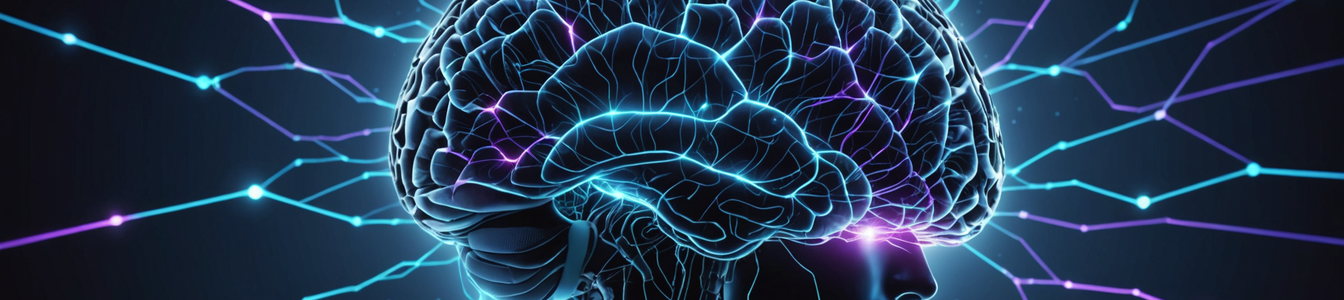
A silent revolution in artificial intelligence is pushing cybersecurity into uncharted territory: the human mind itself. As neural decoding technologies advance rapidly, powered by sophisticated machine learning algorithms, they threaten to create what security researchers are calling the most intimate frontier in digital privacy. The emerging field of neurosecurity confronts a disturbing reality: our biological firewalls—the skull and cognitive privacy—are becoming increasingly permeable to digital intrusion.
Recent investigations into AI safety reveal systemic vulnerabilities that become exponentially more dangerous when applied to neural interfaces. Studies of popular AI chatbots show that most platforms maintain 'murky safety provisions' with inconsistent content moderation, inadequate data handling policies, and poorly defined boundaries for acceptable use. When these same foundational AI architectures are repurposed to interpret electroencephalogram (EEG) signals, functional magnetic resonance imaging (fMRI) data, or emerging non-invasive neural sensors, they inherit these fundamental security flaws while operating on the most sensitive data category imaginable: real-time human thought.
Compounding this technical vulnerability is a profound human factor weakness. Research demonstrates that people are consistently 'overconfident in their ability to distinguish AI-generated content from reality.' This cognitive bias creates dangerous complacency when extended to neurotechnology. Users may falsely believe they can detect when their neural data is being misused or when AI systems are influencing their cognition, creating perfect conditions for manipulation and exploitation.
The technical architecture enabling this threat involves several converging technologies. Advanced generative adversarial networks (GANs) and transformer models, originally developed for image and text generation, are being adapted to 'read' and reconstruct perceptual experiences from brain activity patterns. Researchers have demonstrated that these systems can decode visual imagery, reconstruct heard speech, and even predict intentional movements from neural signals alone—all without physical sensors touching the brain directly in some implementations.
For cybersecurity professionals, this represents a multidimensional threat landscape:
- Neural Data Theft: Unlike passwords or biometrics, neural patterns represent fundamentally unchangeable identifiers. Once compromised, neural 'fingerprints' cannot be reset, creating permanent vulnerability.
- Cognitive Manipulation Vectors: Malicious actors could use decoded neural patterns to craft hyper-personalized disinformation or develop subliminal influence techniques that bypass conscious critical thinking.
- Thought Surveillance: Governments or corporations could potentially deploy passive neural monitoring in ways that make traditional surveillance seem primitive by comparison.
- Neuro-targeted Social Engineering: Attackers with access to neural data could predict emotional states and cognitive vulnerabilities with unprecedented precision.
The regulatory landscape remains dangerously underdeveloped. Current data protection frameworks like GDPR and CCPA were designed for conventional personal data, not for continuous streams of neural information that reveal subconscious processes, emotional states, and potentially privileged thoughts. The concept of 'informed consent' becomes problematic when users cannot fully comprehend what neural data might reveal about them now or through future analytical techniques.
Technical countermeasures are in their infancy. Researchers are exploring 'neural cryptography' methods that would allow brain-computer interfaces to function while adding noise or encryption to raw neural signals. Differential privacy techniques, adapted for continuous biological data streams, show promise but face significant implementation challenges. Perhaps most urgently needed are authentication frameworks that distinguish between legitimate users and malicious neural data interceptors—a problem without clear precedent in cybersecurity history.
The business and healthcare sectors are accelerating adoption of neurotechnology for legitimate purposes: assisting paralyzed patients, treating neurological disorders, and enhancing human-computer interaction. This creates tension between innovation imperatives and security necessities. Cybersecurity teams must now engage with neuroscientists, ethicists, and biomedical engineers to develop appropriate safeguards.
Practical recommendations for security professionals include:
- Conducting threat modeling exercises specifically for neural data assets
- Advocating for 'privacy by design' in neurotechnology procurement
- Developing incident response plans for neural data breaches
- Training staff to recognize social engineering that might leverage neurotechnology
- Participating in standards development for neural data formats and transmission protocols
As one researcher noted, 'We're building the ability to decode the human experience itself before we've built the locks for the vault.' The neurosecurity challenge represents not merely another domain to secure, but a fundamental reconsideration of what privacy and autonomy mean when technology can peer behind the curtain of conscious thought. The time for the cybersecurity community to engage with this emerging frontier is now—before the first major neuro-breach makes theoretical risks devastatingly concrete.
Comentarios 0
Comentando como:
¡Únete a la conversación!
Sé el primero en compartir tu opinión sobre este artículo.
¡Inicia la conversación!
Sé el primero en comentar este artículo.