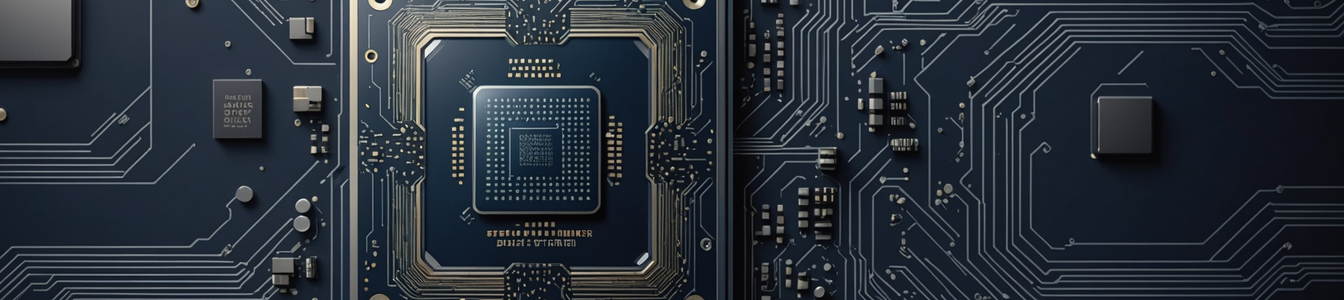
The hardware foundation of our digital world is undergoing its most significant transformation in a decade, driven by an insatiable demand for artificial intelligence capabilities. Recent announcements from CES 2026 and beyond reveal a concerted push by silicon giants to embed AI acceleration directly into System-on-Chip (SoC) designs for everything from smartphones to edge servers. While these innovations unlock new performance frontiers, they are simultaneously creating a sprawling, complex, and poorly understood attack surface that is stretching traditional cybersecurity defenses to their limits.
The New Silicon Landscape: Performance at a Security Cost
The landscape is defined by three pivotal developments. First, Qualcomm's Snapdragon X2 platform aims to democratize AI-powered computing by bringing its neural processing unit (NPU) technology to budget-friendly laptops in 2026. This move will exponentially increase the number of devices with dedicated, always-on AI hardware in enterprise fleets. Second, specialist firms like Innodisk are leveraging these commercial SoCs for industrial applications. Their new 'AI on Dragonwing' computing series, launching with the EXMP-Q911 COM-HPC Mini Module powered by a Qualcomm SoC, is designed for high-performance edge computing in demanding environments. This represents the deep integration of consumer-grade silicon into critical industrial and operational technology (OT) infrastructure. Third, Apple continues its vertical integration strategy. Rumors point to the iPhone 17e entering mass production soon, reportedly featuring a 'downgraded' variant of its flagship A19 SoC, likely to offer advanced machine learning features at a lower price point, further seeding the market with custom AI silicon.
Expanding the Attack Surface: From Silicon to Supply Chain
For cybersecurity professionals, this shift is not merely about faster processing speeds. It fundamentally alters the threat model in several critical ways:
- The Black Box of AI Accelerators: Dedicated NPUs and tensor cores are proprietary, complex subsystems. Their firmware, memory management, and interaction with the main CPU are often opaque. This lack of transparency makes it difficult to audit for vulnerabilities, detect malicious firmware implants, or understand how an AI model's operation could be subverted at the hardware level to cause malfunctions or data leakage.
- Module-Level Vulnerabilities: Products like Innodisk's COM-HPC module exemplify the supply chain risk. A security team might vet a Qualcomm SoC datasheet, but the final implemented module—designed, assembled, and firmware-loaded by a third-party—becomes a new entity. Vulnerabilities can be introduced in the module's board design, its integrated controllers, or the vendor's custom firmware layer that glues everything together. The attack surface now includes this entire 'system-on-module' as a single, potentially exploitable component.
- Firmware Fragmentation and Complexity: Each new SoC variant, from Qualcomm's X2 to Apple's A19 spin-offs, requires its own unique firmware and driver stack. Managing the security of this firmware—ensuring secure boot, timely updates, and integrity checks—across a heterogeneous device fleet becomes a logistical nightmare. An unpatched vulnerability in the bootloader or NPU driver of a specific SoC can create a widespread, hard-to-remediate risk.
- Edge Computing's Physical Peril: Deploying AI-capable modules like the EXMP-Q911 in factory floors, transportation systems, or remote infrastructure exposes them to physical tampering risks that are irrelevant in a cloud data center. The security of the hardware itself, its physical interfaces, and the integrity of its supply chain from manufacturer to installation site become paramount concerns.
Strategic Imperatives for Security Teams
To navigate this new era of silicon-centric risk, SOC teams and security architects must evolve their practices:
- Shift Left to Hardware Procurement: Security requirements must be integrated into the hardware procurement and vendor selection process. Questionnaires should demand detailed information on SoC security features (like hardware root of trust), module-level security assurances, and the vendor's firmware security development lifecycle.
- Invest in Firmware Security Posture Management (FSPM): Tools and processes are needed to gain visibility into all firmware versions running on every device, track associated vulnerabilities, and manage the update process for these deep-level components, not just the operating system.
- Develop Hardware-Aware Threat Hunting: Detection rules and hunting hypotheses must account for anomalies that could indicate hardware/firmware compromise, such as unexpected NPU activity, irregularities in boot sequence logs, or performance deviations that suggest malicious microcode.
- Pressure for Transparency: The cybersecurity community must advocate for greater transparency from silicon and module vendors regarding security architectures, providing necessary documentation for independent assessment without compromising intellectual property.
Conclusion
The race for AI-optimized silicon is accelerating innovation but also compounding risk. Each new SoC launch is not just a product announcement; it is the blueprint for a new set of potential vulnerabilities that reside beneath the operating system, beyond the reach of conventional endpoint protection. The industry's move towards specialized hardware demands an equal and opposite reaction from the security community: a deeper, more rigorous focus on the integrity of the silicon, the firmware that brings it to life, and the complex supply chains that deliver it. The security of the next decade will be built, quite literally, on the foundation of how well we secure today's new chips.
Comentarios 0
Comentando como:
¡Únete a la conversación!
Sé el primero en compartir tu opinión sobre este artículo.
¡Inicia la conversación!
Sé el primero en comentar este artículo.