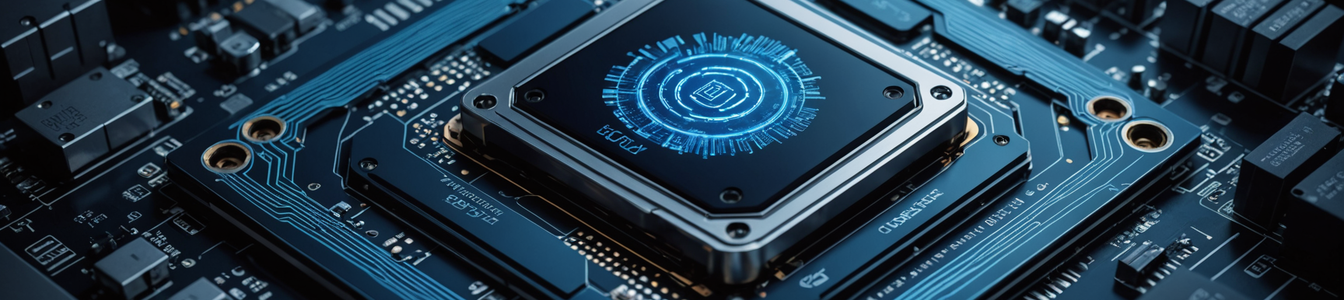
The rapidly evolving landscape of connected and autonomous vehicles (CAVs) is creating a critical battleground for cybersecurity, pushing the industry beyond software-based defenses toward specialized hardware solutions. In a significant move addressing this need, BlueCloud Softech Solutions Ltd (BCSSL), a company specializing in AI and digital solutions, has entered a strategic partnership with ConnectM Technology Solutions Pvt Ltd, an IoT and embedded systems specialist. The collaboration, formalized through a Memorandum of Understanding (MoU), is focused on the joint development of a next-generation Edge AI System-on-Chip (SoC) designed explicitly for automotive cybersecurity applications.
The Hardware Imperative in Automotive Security
Modern vehicles are essentially networks of computers on wheels, featuring over 100 Electronic Control Units (ECUs) that manage everything from engine performance and braking to infotainment and advanced driver-assistance systems (ADAS). Each ECU and the communication buses (like CAN, LIN, Ethernet) connecting them represent potential attack vectors. Traditional software security running on general-purpose processors often struggles with the low-latency, high-reliability demands of real-time vehicle systems. An attack on a critical system like steering or brakes requires mitigation in milliseconds, not seconds.
This is where the concept of a dedicated Edge AI SoC becomes paramount. By embedding AI-driven threat detection and response capabilities directly into the hardware silicon, security can be processed locally at the network edge—inside the ECU itself. This "Silicon Shield" approach offers several key advantages: ultra-low latency for immediate threat neutralization, reduced dependency on vulnerable cloud connectivity, inherent resilience against software-level exploits that might disable security applications, and optimized power efficiency for always-on protection.
Strategic Partnership: Combining AI Prowess with Embedded Expertise
The MoU between BCSSL and ConnectM appears strategically crafted to leverage complementary strengths. BCSSL brings its expertise in artificial intelligence, cloud platforms, and cybersecurity frameworks to the table. Their role likely involves developing the advanced machine learning models for anomaly detection, intrusion prevention, and behavioral analysis of in-vehicle network traffic. ConnectM, with its deep background in IoT and embedded systems design, contributes the crucial hardware and firmware engineering knowledge required to translate these AI models into an efficient, automotive-grade SoC.
The target output is an Edge AI SoC capable of performing real-time analysis of data flows across vehicle networks. It would be designed to identify signatures of known attacks and, more importantly, detect anomalous behavior indicative of zero-day exploits. By processing this data locally, the chip can initiate immediate countermeasures, such as isolating a compromised ECU, blocking malicious messages on the CAN bus, or triggering failsafe operational modes, all without waiting for instructions from a central gateway or external server.
Market Validation and Industry Trend
The market's immediate reaction underscored the strategic importance of this development. Following the announcement, BCSSL's stock—categorized as a small-cap AI stock—experienced a notable jump in its share price. This investor confidence signals a broader recognition that the future of automotive cybersecurity is inextricably linked to specialized hardware. As vehicles evolve into fully autonomous platforms, the consequences of a successful cyberattack escalate from privacy breaches and inconvenience to life-threatening situations. Regulatory pressures, such as UN Regulation No. 155 on cybersecurity and cybersecurity management systems, are also mandating robust, built-in security measures, further driving demand for hardware-enforced solutions.
This partnership is a microcosm of a larger industry shift. Semiconductor giants, tier-1 automotive suppliers, and cybersecurity firms are all investing in or partnering to develop secure hardware elements, Hardware Security Modules (HSMs), and trusted platform modules for vehicles. The BCSSL-ConnectM MoU represents the entry of specialized AI and IoT firms into this high-stakes arena, aiming to create a best-in-class, focused solution rather than a generalized chip.
Implications for Cybersecurity Professionals
For cybersecurity professionals in the automotive and critical infrastructure sectors, this trend has clear implications. The skill set required is expanding to include an understanding of hardware-assisted security, secure hardware-software co-design, and the unique challenges of real-time embedded systems security. The development lifecycle for vehicle security must now integrate hardware considerations from the earliest architectural stages.
Furthermore, the rise of Edge AI SoCs for cybersecurity will change the threat landscape. Attackers will need to develop more sophisticated techniques targeting hardware vulnerabilities or side-channel attacks, raising the barrier to entry but also necessitating more advanced defensive research. It also promises to alleviate some burdens on security operation centers (SOCs) for fleet operators by enabling more autonomous, in-vehicle incident response.
The Road Ahead
The MoU between BlueCloud Softech and ConnectM is a foundational step. The real challenge lies in the execution: successfully designing, fabricating, and validating a chip that meets the stringent automotive requirements for temperature range, longevity, reliability, and safety certifications (like ISO 26262 for functional safety). If successful, this partnership could provide a critical component for the automotive industry's defense arsenal, making the "Silicon Shield" a standard layer of protection in the software-defined vehicles of the future. It confirms that in the race to secure the connected car, the winning solutions will likely be baked into the silicon itself.
Comentarios 0
Comentando como:
¡Únete a la conversación!
Sé el primero en compartir tu opinión sobre este artículo.
¡Inicia la conversación!
Sé el primero en comentar este artículo.