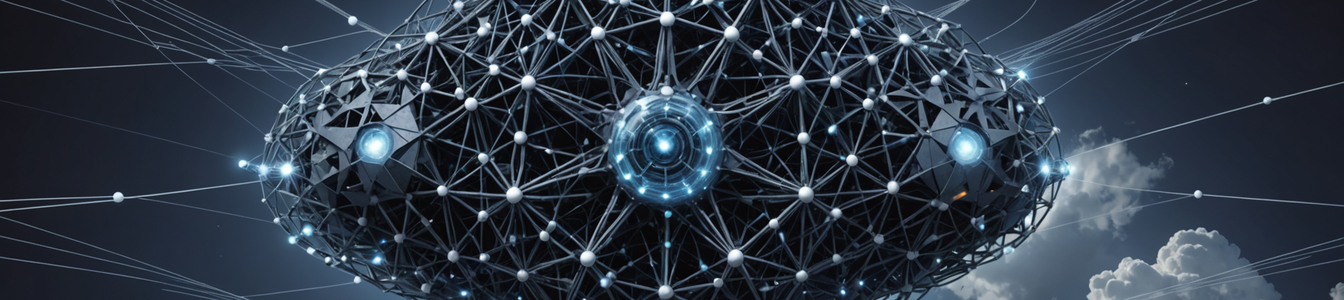
The manufacturing sector is undergoing a seismic shift, migrating its operational heart from the factory floor to the cloud. This transition, powered by the dual engines of agentic AI and prescriptive maintenance, promises a new era of efficiency and autonomy. However, cybersecurity professionals are sounding the alarm, as this cloud revolution is dramatically reshaping—and expanding—the industrial attack surface in ways that existing security models are ill-equipped to handle.
The Rise of the Autonomous Factory
Recent strategic moves by major industry players underscore the velocity of this change. Enterprise software provider Infor, in partnership with Amazon Web Services (AWS), has announced the deployment of agentic AI at an industrial scale for the manufacturing sector. This isn't merely about analytics dashboards; it's about deploying autonomous AI agents that can reason, plan, and execute complex workflows within cloud-based manufacturing environments. Concurrently, solutions like Treon's new offering on AWS are accelerating AI-driven prescriptive maintenance workflows. The goal is clear: move beyond predictive maintenance (which forecasts failures) to prescriptive systems that can autonomously schedule repairs, order parts, and reconfigure production lines to minimize downtime.
This represents a fundamental architectural break from the past. Traditional Industrial Control Systems (ICS) and Supervisory Control and Data Acquisition (SCADA) systems were largely isolated, air-gapped, and physically secured. The new paradigm is cloud-native, interconnected, and data-hungry. Sensor data from CNC machines, robotic arms, and conveyor belts streams continuously to cloud platforms where agentic AI models process it in real-time, making decisions that have immediate physical consequences.
The New Attack Vectors: A Security Perspective
For cybersecurity teams, this convergence creates a multi-layered threat landscape that merges traditional IT cloud risks with high-stakes operational technology (OT) consequences.
- The Compromised AI Agent: An agentic AI system making prescriptive decisions is a supremely high-value target. Adversaries could seek to poison the training data, manipulate the real-time sensor data feeding the model, or exploit vulnerabilities in the agent's reasoning framework. A manipulated agent could prescribe unnecessary maintenance, causing massive financial loss through halted production, or worse, it could ignore genuine critical failures, leading to catastrophic equipment damage or safety incidents.
- The Cloud-to-Floor Data Pipeline: The integrity of the data flowing from the cloud back to the factory floor is paramount. These are no longer just informational reports; they are executable commands. A man-in-the-middle attack on this pipeline could alter instructions sent to a Programmable Logic Controller (PLC), changing pressure settings, temperatures, or machine speeds with potentially dangerous physical outcomes. Securing this command-and-control channel requires a blend of cloud security, robust encryption, and strict integrity verification that many legacy OT environments lack.
- Expanded Identity and Access Management (IAM) Complexity: Agentic AI systems and maintenance bots operate with their own sets of permissions and service accounts within the cloud environment. The principle of least privilege becomes exponentially more complex when applied to non-human entities that need broad authority to interact with ERP systems, supply chain databases, and machine controls. A compromised service account for a maintenance AI could grant an attacker lateral movement across the entire industrial cloud ecosystem.
- Supply Chain and Third-Party Risk: Solutions like Treon Make or Infor's platform are often integrated into a manufacturer's environment. The security posture of these third-party applications, their APIs, and their access to sensitive OT data becomes a critical part of the attack surface. Vulnerabilities in one vendor's cloud service could serve as a beachhead into multiple manufacturing organizations.
Strategic Imperatives for Industrial Cybersecurity
Defending this new landscape requires a paradigm shift. Security can no longer be an afterthought bolted onto a cloud migration project; it must be architecturally embedded from the outset.
- Zero-Trust for Operational Data: Implementing a zero-trust architecture specifically for OT data flows is essential. This means verifying every data packet's integrity and origin, whether from a sensor or the cloud AI, before any action is taken. Mutual TLS, code signing for firmware updates, and hardware-backed security modules on edge devices are key components.
- AI Model Security as a Core Discipline: Security teams must develop expertise in securing the AI/ML pipeline—from data collection and labeling to model training, deployment, and inference. This includes techniques for detecting data poisoning, adversarial machine learning attacks, and ensuring model explainability to audit AI-driven decisions.
- Unified Cloud & OT Security Monitoring (Cloud SOC + ICS SOC): Siloed security operations centers (SOCs) for IT/cloud and OT/ICS are untenable. A unified view is needed to correlate events—like anomalous cloud API calls from a maintenance agent with unusual vibration readings on a physical turbine. This requires specialized tools that understand both cloud telemetry and OT protocol data (e.g., OPC UA, Modbus).
- Secure-by-Design for Industrial Cloud Platforms: Manufacturers must demand and vendors must provide security-by-design in their industrial cloud offerings. This includes built-in security features for AI agents, comprehensive audit trails for all autonomous actions, and clear shared responsibility models outlining where the vendor's security ends and the customer's begins.
Conclusion: Navigating the Risk-Reward Equation
The drive towards agentic AI and prescriptive maintenance in the cloud is irreversible, offering too great a competitive advantage in efficiency, cost savings, and innovation. The role of cybersecurity is not to block this progress but to enable it safely. The manufacturing cloud revolution is not just a change in technology; it is a change in the very nature of industrial risk. By proactively understanding and securing the new attack surfaces created by autonomous AI agents and cloud-native operations, security leaders can transform from perceived blockers into essential enablers of the future, resilient, and secure industrial enterprise.
Comentarios 0
Comentando como:
¡Únete a la conversación!
Sé el primero en compartir tu opinión sobre este artículo.
¡Inicia la conversación!
Sé el primero en comentar este artículo.