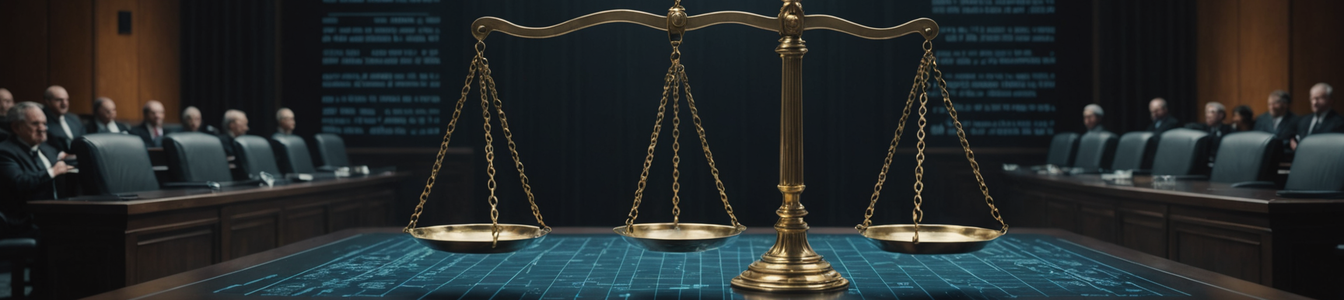
The global justice system is undergoing a silent, seismic shift. From New Delhi to Los Angeles, courtrooms are increasingly turning to artificial intelligence as a tool for efficiency and a weapon against digital deception. However, this rapid, often unregulated adoption is creating a precarious gamble with the very foundation of justice: the integrity of evidence and the impartiality of the process. For cybersecurity and digital forensics professionals, this represents one of the most critical and complex challenges of the decade, merging legal precedent with cutting-edge—and often vulnerable—technology.
The Deepfake Dilemma: Courts Playing Catch-Up
The urgency is palpable. A recent ruling from an Indian court, ordering the removal within 36 hours of all links misusing actress Sonakshi Sinha's name and likeness in deepfake content, is a stark example. This case underscores a global crisis where the legal system is forced to react to AI-generated evidence (or crimes) at breakneck speed. The 36-hour window itself is a forensic and logistical nightmare, pressuring platforms and investigators to act faster than traditional verification protocols allow, potentially compromising thorough analysis.
This reactive posture is mirrored in legislative efforts. Alberta, Canada, is moving to amend its laws to explicitly allow victims to sue over the creation and distribution of deepfake intimate images. Similarly, Germany is reportedly examining Spain's more aggressive legal framework for prosecuting deepfake pornography as a potential model. These developments highlight a fragmented, jurisdiction-by-jurisdiction scramble to legislate against a threat that knows no borders. For cybersecurity experts, this patchwork creates a compliance labyrinth and underscores the absence of universal forensic standards for authenticating or debunking synthetic media in a legally defensible manner.
The Algorithm in the Robes: AI as Judicial "Assistant"
While courts combat AI-facilitated crimes, they are also inviting AI into the judge's chamber. California has initiated a pilot program where select judges will use an AI tool to help draft rulings, analyze case law, and manage documents. Proponents argue it reduces backlog and human error. However, the cybersecurity and ethical implications are profound.
The core promise—"humans will still rule"—belies the risk of automation bias. A judge may unconsciously defer to an AI's summary or legal reasoning, especially under time pressure. The security of these systems is paramount: are they air-gapped? How is the training data curated and secured? Could they be poisoned to subtly influence outcomes? Furthermore, the use of AI in evidence analysis—such as reviewing terabytes of digital discovery—introduces a "black box" into the chain of custody. If a critical piece of exculpatory evidence is algorithmically filtered out before a human ever sees it, has justice been served? The pilot program's protocols for validating the AI's output and ensuring its security remain critical, yet often undisclosed, details.
A Convergence of Risks: The Cybersecurity Imperative
This dual trajectory—using AI to fight digital evidence crimes while employing AI to adjudicate cases—creates a dangerous convergence of risks for the cybersecurity community to address:
- Evidence Integrity & Chain of Custody: Digital evidence, from deepfake videos to metadata, must be collected, preserved, and analyzed using forensically sound methods. AI tools used in this process must themselves be validated and their operations transparent and auditable to withstand legal scrutiny. A compromised or biased analysis tool could invalidate an entire case.
- Adversarial Attacks on Judicial AI: Judicial AI systems become high-value targets. Attack vectors could include data poisoning to bias outcomes, adversarial inputs to generate incorrect legal analyses, or outright breaches to steal sensitive case data. The threat model for a court's IT infrastructure has now expanded to include the integrity of its decision-support algorithms.
- The Authentication Arms Race: As deepfakes grow more sophisticated, the forensic tools to detect them must evolve even faster. Courts will rely on expert testimony from digital forensics specialists to authenticate evidence. This demands continuous research, standardized certification for tools, and clear protocols for presenting technical findings to non-technical juries and judges.
- Bias and Due Process: The datasets used to train legal AI risk encoding historical biases. If a system is trained on past rulings that reflect societal inequities, it may perpetuate them under a guise of algorithmic neutrality. Cybersecurity professionals working on AI governance must partner with legal ethicists to implement rigorous bias testing and fairness audits.
The Path Forward: Governance, Standards, and Collaboration
The current piecemeal approach is unsustainable. To mitigate these risks, a concerted effort is required:
- Develop Judicial AI Security Frameworks: Modeled on critical infrastructure protection, frameworks must mandate strict access controls, adversarial robustness testing, secure development lifecycles, and comprehensive audit logs for any AI used in legal proceedings.
- Establish Digital Forensic Standards for AI-Generated Content: International bodies must work towards standards for analyzing and presenting evidence related to synthetic media. This includes metadata analysis, toolmark identification in AI models, and chain-of-custody protocols for digital evidence subjected to AI analysis.
- Foster Cross-Disciplinary Collaboration: Judges, lawyers, cybersecurity engineers, and AI ethicists must engage in continuous dialogue. Pilots like California's should have independent cybersecurity oversight, and their findings should be publicly reported to build trust and guide best practices.
The integration of AI into the justice system is inevitable. However, its current trajectory—driven by urgency and efficiency—threatens to outpace the necessary safeguards. For the cybersecurity community, the mandate is clear: to move from being external consultants to essential stakeholders in designing a future where algorithmic justice is also secure, transparent, and equitable justice. The integrity of the digital courtroom depends on it.
Comentarios 0
Comentando como:
¡Únete a la conversación!
Sé el primero en compartir tu opinión sobre este artículo.
¡Inicia la conversación!
Sé el primero en comentar este artículo.