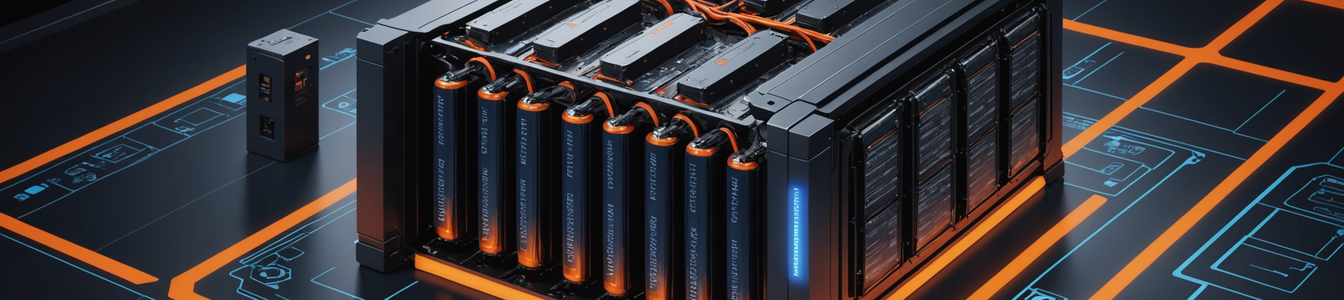
The global race for artificial intelligence supremacy is building upon a foundation that could literally catch fire. As AI Data Centers (AIDCs) multiply to support exponentially growing computational demands, their most critical—and vulnerable—component isn't the silicon, but the lithium-ion batteries that keep them running. This emerging cyber-physical risk represents what security experts are calling "the power grid's Achilles' heel" in the age of AI.
The Battery Backbone of AI Infrastructure
Modern AIDCs require unprecedented levels of power reliability. To maintain the 99.999% uptime demanded by continuous AI training and inference workloads, these facilities deploy massive uninterruptible power supply (UPS) systems with lithium-ion batteries that dwarf those found in traditional data centers. Where conventional facilities might have battery backup for minutes, AIDCs require sustained backup power for significantly longer periods, often involving multi-megawatt battery installations.
Vision Group's recently released white paper on AIDC UPS lithium battery safety reveals the scale of this challenge. The report details how these battery systems, while offering higher energy density and longer lifespan than traditional lead-acid alternatives, introduce severe physical security risks that directly impact cybersecurity posture. Thermal runaway—a chain reaction leading to uncontrollable battery heating and potential explosion—poses not just a fire hazard but a guaranteed operational catastrophe.
Converging Cyber and Physical Threats
The risk extends beyond accidental failure. Battery management systems (BMS) that monitor cell voltage, temperature, and state of charge are increasingly networked and connected to data center infrastructure management (DCIM) platforms. This connectivity creates attack surfaces where cyber intrusions could manipulate battery parameters, disable safety protocols, or trigger destructive conditions remotely. A sophisticated attacker could theoretically induce thermal runaway through software manipulation rather than physical tampering.
This threat vector is particularly concerning given the ambitious expansion of AI infrastructure. Reports indicate China is developing space-based AI data centers, challenging similar ambitions from SpaceX. These orbital facilities would face even greater challenges in battery safety, where physical maintenance is impossible and failure consequences are magnified. The convergence of advanced AI, critical infrastructure, and hazardous materials in inaccessible environments creates unprecedented risk scenarios.
Supply Chain and Systemic Vulnerabilities
The lithium-ion battery supply chain presents additional security concerns. Most battery cells and BMS components originate from a geographically concentrated manufacturing base, creating single points of failure. Compromised components could introduce vulnerabilities at the hardware level that might evade traditional cybersecurity detection methods. Furthermore, the specialized knowledge required to safely maintain these systems creates workforce dependencies that could be exploited.
Security professionals must now consider:
- Integrated Risk Assessment: Traditional data center security assessments rarely evaluate battery chemistry risks alongside cyber threats. New frameworks must address both simultaneously.
- BMS Security Hardening: Battery management systems require the same security rigor as other industrial control systems, including network segmentation, strict access controls, and anomaly detection for physical parameters.
- Incident Response for Physical-Cyber Events: Response plans must account for scenarios where cyber attacks cause physical damage requiring hazardous materials handling, fire suppression, and environmental containment.
- Regulatory and Standards Gap: Current data center standards and cybersecurity frameworks inadequately address the unique risks of large-scale lithium-ion installations.
The Path Forward: Integrated Security Architectures
Addressing this convergence risk requires breaking down silos between physical security, cybersecurity, and facilities management teams. Security architectures must monitor for anomalies that span digital and physical domains—for example, correlating unusual network traffic to BMS systems with abnormal temperature readings from battery racks.
Emerging technologies like digital twins could help simulate and predict failure scenarios, while AI-powered monitoring systems might detect precursor signs of thermal runaway before catastrophic failure. However, these technological solutions must be paired with comprehensive workforce training that bridges electrical engineering, cybersecurity, and safety disciplines.
The expansion of AI infrastructure shows no signs of slowing, with projections indicating data center power consumption could double by 2026. As these facilities become more critical to economic and national security, their battery systems represent both a necessary enabler and a potential single point of catastrophic failure. The cybersecurity community's traditional focus on data and network protection must expand to encompass the physical substrates that make digital infrastructure possible. In the AI era, the most sophisticated algorithm is only as reliable as the battery that powers it.
Failure to address this convergence risk could result in incidents that simultaneously compromise data integrity, disrupt critical services, and create environmental and safety disasters. The time to integrate battery safety into cybersecurity strategy is now—before the first major incident demonstrates the devastating potential of this overlooked vulnerability.
Comentarios 0
Comentando como:
¡Únete a la conversación!
Sé el primero en compartir tu opinión sobre este artículo.
¡Inicia la conversación!
Sé el primero en comentar este artículo.