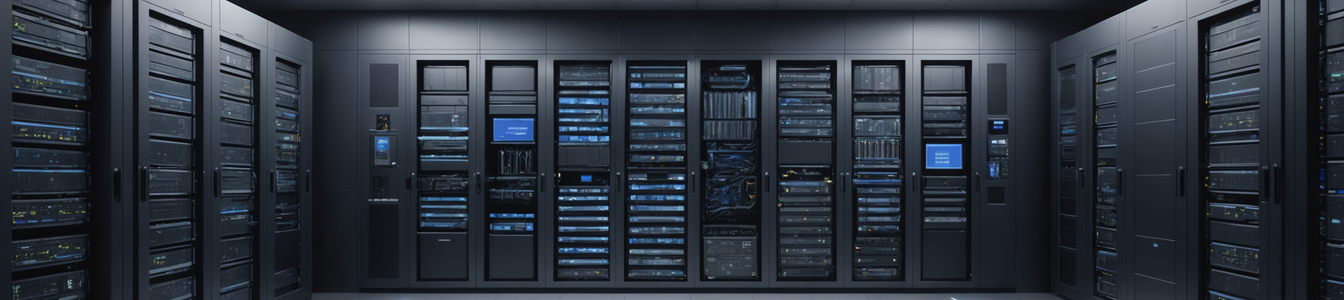
The artificial intelligence revolution is being built on a foundation of concrete, steel, and silicon, sparking a global infrastructure arms race with profound security implications. As tech giants scramble to deploy AI-capable data centers at breakneck speed, security professionals face unprecedented challenges at the intersection of physical infrastructure, digital systems, and community relations.
The Speed vs. Security Dilemma
Amazon's recently revealed 'Project Houdini' exemplifies the industry's push toward unprecedented deployment velocity. The initiative aims to construct fully operational AI data centers in mere weeks rather than the traditional 18-24 month timeline. This acceleration is achieved through modular, prefabricated components that can be rapidly assembled on-site. While this addresses the urgent compute demands of AI development, it creates significant security trade-offs.
'When you compress construction timelines from years to weeks, you inherently compress the security hardening timeline as well,' explains a veteran critical infrastructure security consultant. 'Traditional data center security involves layered physical defenses, comprehensive access control systems, and thorough vulnerability assessments. These processes require time that may not be available in the new accelerated paradigm.'
Global Expansion Meets Local Resistance
The scale of expansion is staggering. India alone projects its data center capacity will reach 5 gigawatts by 2030, representing a $22 billion market. Similar explosive growth is occurring across Southeast Asia, Europe, and the Americas. However, this rapid development is increasingly meeting organized community resistance.
From rural Virginia to suburban Dublin, communities are pushing back against data center projects citing environmental concerns, massive water consumption for cooling, strain on local power grids, and transformation of community character. This resistance creates both physical security vulnerabilities and operational risks. Protests and community opposition can delay projects, increase costs, and in some cases, make facilities targets for activism or sabotage.
'Community relations have become a critical component of physical security planning,' notes a security director for a hyperscale cloud provider. 'A facility that's viewed as an unwelcome corporate imposition faces different threat vectors than one integrated into community planning with local support.'
The Supply Chain Security Challenge
The AI data center boom is driving record profits for semiconductor manufacturers like TSMC, which is projected to report its fourth consecutive quarter of record earnings due to insatiable AI chip demand. This concentration of critical components creates significant supply chain security concerns.
With AI infrastructure depending on advanced semiconductors from a geographically concentrated supply chain, the physical security of manufacturing facilities, transportation routes, and inventory storage becomes paramount. Additionally, the accelerated construction timeline means less opportunity for thorough vetting of components and contractors for potential security compromises.
Energy Infrastructure: The New Security Frontier
AI data centers are extraordinarily power-intensive, with individual facilities consuming as much electricity as medium-sized cities. This creates dependencies on local power infrastructure that represent both vulnerabilities and potential attack vectors. Security teams must now consider not only the physical security of the data center itself but also the transmission lines, substations, and generation facilities that power them.
Companies like Globe Telecom are highlighting AI-powered energy efficiency solutions at industry events, recognizing that sustainable operations have become a security imperative. Facilities that strain local grids or depend on unreliable power sources face operational risks that can compromise availability—a core security principle.
Integrated Security for Convergent Infrastructure
The modern AI data center represents the ultimate convergence of physical and digital systems. Security strategies must evolve accordingly:
- Physical-Cyber Integration: Security operations centers must monitor both network intrusions and physical perimeter breaches as interrelated events. Unauthorized physical access could enable hardware-level compromises that bypass network security controls.
- Community Intelligence: Security teams should incorporate local sentiment monitoring and community engagement into threat assessment models. Early identification of community concerns can prevent escalation to physical security incidents.
- Accelerated Hardening Protocols: New security deployment methodologies must match accelerated construction timelines. This may involve standardized security modules, automated vulnerability scanning for physical infrastructure, and pre-vetted security configurations.
- Supply Chain Resilience: Diversifying component sources, implementing hardware security modules, and developing contingency plans for supply disruptions are essential for maintaining operations.
- Energy Security Partnerships: Collaborating with utility providers on security assessments of shared infrastructure and developing on-site generation capabilities can mitigate grid dependency risks.
The Geopolitical Dimension
As nations recognize AI infrastructure as critical to economic and military competitiveness, data centers are becoming geopolitical assets. This introduces state-level threat actors into the risk equation, requiring security postures that account for advanced persistent threats with significant resources.
'The security calculus for AI infrastructure must now consider nation-state capabilities alongside criminal enterprises and activist groups,' observes a former intelligence official now consulting on infrastructure security. 'The physical protection requirements for facilities housing strategic AI capabilities are approaching those of traditional national security installations.'
Looking Ahead
The AI data center boom shows no signs of slowing, with demand continuing to outstrip supply. For security professionals, this represents both immense challenge and opportunity. Developing integrated security frameworks that address physical, digital, supply chain, and community dimensions will be essential for protecting the infrastructure underpinning the AI revolution.
The organizations that succeed will be those recognizing that in the age of AI infrastructure, security is no longer just about protecting data—it's about protecting the physical foundations upon which that data is processed, and the communities in which those foundations are built.
Comentarios 0
Comentando como:
¡Únete a la conversación!
Sé el primero en compartir tu opinión sobre este artículo.
¡Inicia la conversación!
Sé el primero en comentar este artículo.