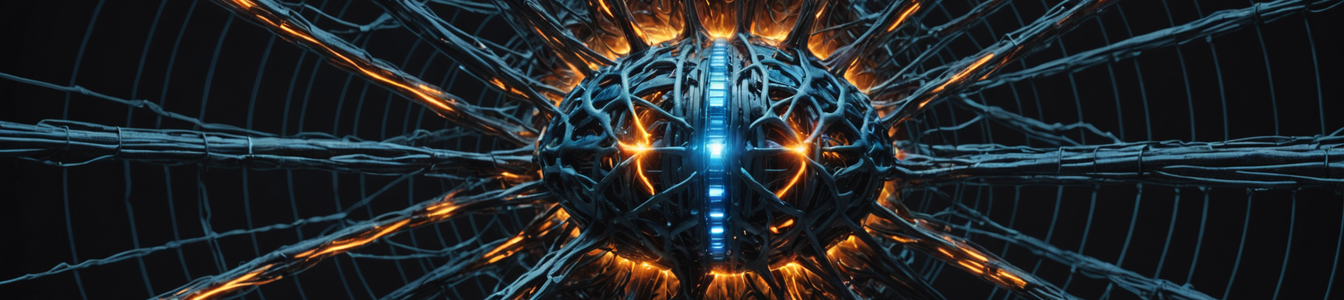
A seismic shift is underway in global energy policy, driven not by climate accords but by the insatiable power demands of artificial intelligence. Across Southeast Asia and the Pacific, nations are fast-tracking long-dormant nuclear power programs to fuel the AI data center boom, creating a dangerous convergence of two high-value critical infrastructure sectors and presenting an unprecedented challenge for cybersecurity professionals.
The Energy Imperative and Geopolitical Catalyst
The computational intensity of training and running large language models (LLMs) and AI inference engines has created an energy crisis for the tech industry. Traditional data centers already consume vast amounts of electricity; AI facilities multiply that demand exponentially. This has pushed countries like Vietnam, Thailand, and Indonesia to urgently revisit nuclear blueprints shelved decades ago due to cost and safety concerns.
Geopolitics is acting as a potent accelerant. The ongoing conflict involving Iran has disrupted regional and global energy supplies, highlighting the vulnerability of over-reliance on fossil fuel imports. This instability has made the promise of domestic, baseload nuclear power not just an economic calculation, but a national security imperative for nations aiming to become AI hubs. Concurrently, Australia has unveiled a national framework to manage the sustainable expansion of AI data centers, acknowledging that the current grid cannot support the projected load without major, resilient additions like nuclear or next-gen renewables paired with grid-scale storage.
The New Attack Surface: AI Meets Fission
This pivot creates a novel and perilous attack surface. Nuclear facilities have always been prime targets for state-sponsored advanced persistent threats (APTs), valued for their potential to cause widespread disruption and psychological impact. AI data centers are now crown jewels for both nation-states seeking intellectual property dominance and criminal groups executing ransomware attacks for immense payouts.
By physically and digitally tethering these two assets, nations are creating single points of catastrophic failure. A successful cyber-physical attack on a nuclear plant powering a cluster of AI data centers could achieve a dual effect: crippling a nation's strategic AI capabilities while triggering a regional energy crisis and potential radiological incident. The operational technology (OT) systems controlling nuclear reactors, historically air-gapped but now increasingly connected for efficiency, represent a particularly vulnerable vector when linked to the IT networks of demanding tech tenants.
Supply Chain Vulnerabilities and "Ex-China" Strategies
The security implications extend beyond the reactor itself to the entire support ecosystem. The announcement by companies like E-Power Inc. to build resilient "Ex-China" supply chains for critical components like anode materials—essential for both AI data center batteries and energy storage systems (ESS)—underscores the geopolitical fragmentation of tech infrastructure. While diversifying away from a single point of failure is strategically sound, it also creates new, less mature supply chains that may lack the rigorous security standards of established counterparts.
Building new manufacturing hubs in locations like Vietnam introduces variables in local workforce cybersecurity training, regulatory enforcement, and vulnerability to local or regional threat actors. Each new link in this geopolitically motivated chain must be audited and hardened, a monumental task for security teams now responsible for the integrity of everything from the uranium fuel rod to the finished AI model.
Long-Term Systemic Risk and the Inflationary Dimension
The financial stakes validate the elevated threat level. Analysis from firms like IFM Investors indicates that the inflationary pulse from AI's energy consumption will last for decades, not years. This isn't a transient market fluctuation but a permanent restructuring of the global economy around computationally intensive intelligence. When critical national infrastructure underpins a sector generating long-term inflationary pressure, it becomes a magnet for destabilization campaigns by adversarial states.
Recommendations for the Cybersecurity Community
- Cross-Domain Expertise: Security teams must develop fluency in both IT (data center/cloud) and OT/ICS (industrial control systems for energy) security frameworks. The silos between these disciplines are a critical vulnerability.
- Supply Chain Zero Trust: The new "Ex-China" and regional supply chains must be built on a Zero-Trust architecture from the ground up, with stringent security requirements mandated for all vendors, down to raw material suppliers.
- Regulatory-Industry Collaboration: Governments and private operators must co-develop security baselines for "AI-Ready" nuclear power or dedicated high-density energy zones. This includes real-time threat intelligence sharing focused on this specific convergence.
- Resilience-by-Design: New facilities must be architected with cyber-resilience as a core design principle, incorporating micro-grid capabilities, failover isolation, and encrypted, quantum-resistant communication channels between power source and data center.
Conclusion
The race for AI supremacy is being fought not just in silicon valleys but in uranium enrichment facilities and transformer substations. The decision to power the digital future with nuclear fission has irrevocably linked the security of our algorithms to the security of our reactors. For cybersecurity leaders, the mandate is clear: defend this new hybrid infrastructure with a holistic, cross-domain strategy, or risk a failure that could simultaneously darken cities and silence the artificial minds upon which the global economy now depends.
Comentarios 0
Comentando como:
¡Únete a la conversación!
Sé el primero en compartir tu opinión sobre este artículo.
¡Inicia la conversación!
Sé el primero en comentar este artículo.