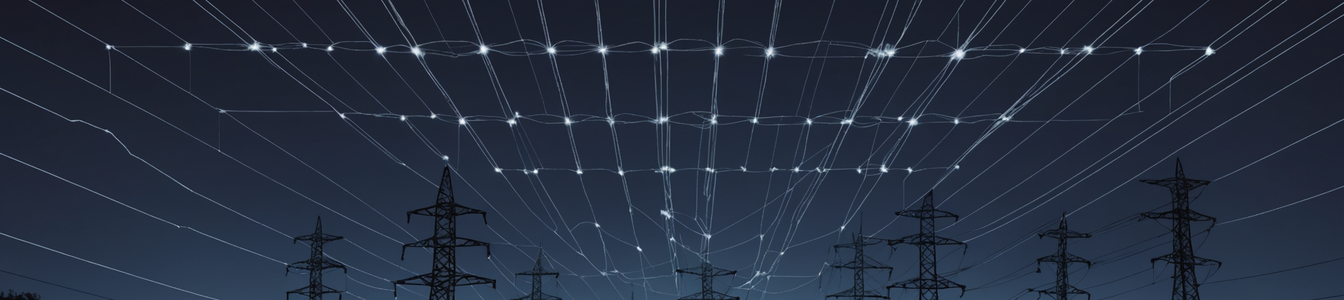
The artificial intelligence revolution is quietly triggering a parallel crisis in critical infrastructure security, as the technology's insatiable energy demands transform power grids into strategic cybersecurity battlegrounds. What began as a computational challenge has evolved into a physical security dilemma, with implications extending far beyond traditional IT perimeters.
The Scale of Consumption: From Digital to Physical Risk
Modern AI data centers consume electricity at rates comparable to medium-sized cities. Training advanced large language models requires thousands of specialized processors running continuously for weeks, with single training sessions sometimes consuming more electricity than 100 US homes use in a year. This exponential demand curve creates concentrated energy consumption points that represent both operational dependencies and attractive targets for malicious actors.
The cybersecurity implications are profound. As Big Tech companies secure long-term power purchase agreements and even invest directly in generation facilities, they're effectively creating vertically integrated energy-digital ecosystems. While this provides operational stability, it also creates single points of failure where disruption to energy supply could cascade through critical AI infrastructure supporting everything from financial markets to national defense systems.
Water: The Overlooked Vulnerability
Beyond electricity, AI's cooling requirements introduce another critical infrastructure dependency. Advanced liquid cooling systems for high-density AI servers consume millions of gallons of water annually per facility. In regions already facing water scarcity, this creates competition between technological and human needs, while adding environmental resource security to the cybersecurity equation.
Attackers targeting water supply systems could indirectly compromise AI infrastructure through thermal overload, creating a novel attack vector that bypasses traditional digital defenses. This intersection of water security and computational infrastructure represents an emerging domain requiring cross-sector security coordination previously unseen in cybersecurity planning.
Geopolitical Dimensions: The US-China Energy Race
Energy security has become inextricably linked to technological supremacy in the AI era. Analysts warn that America's ability to maintain AI leadership depends fundamentally on winning the parallel energy race. The nation that secures stable, scalable, and affordable power generation gains decisive advantage in AI development and deployment.
This geopolitical dimension elevates energy infrastructure from economic concern to national security priority. Power grids are no longer merely civilian infrastructure but strategic assets in technological competition. Cybersecurity measures must now account for state-sponsored attacks aimed not at causing blackouts for disruption's sake, but at specifically degrading competitors' AI capabilities through energy denial.
The Monopolization Risk: Concentration Creates Vulnerability
As technology giants increasingly control energy resources, they're creating what some experts describe as "digital-physical monopolies." When a handful of companies control both the AI computational infrastructure and the energy required to operate it, they create systemic vulnerabilities through concentration.
From a cybersecurity perspective, this concentration simplifies attackers' targeting calculus. Rather than needing to compromise distributed energy assets, focusing on the limited number of tech-controlled generation and distribution points offers higher potential impact. This dynamic is particularly concerning given the interconnected nature of modern grids, where localized disruption can propagate regionally.
Methane Emissions: The Climate-Security Nexus
The push for AI-driven efficiency is ironically increasing reliance on natural gas for reliable, dispatchable power to support intermittent renewable sources. This creates complex security interdependencies where methane emission regulations intersect with energy reliability concerns. Cybersecurity professionals must now consider how climate policy changes could alter energy availability profiles for critical AI infrastructure.
Furthermore, the methane supply chain itself represents additional attack surface, with extraction, processing, and distribution systems that could be targeted to indirectly impact AI operations through energy constraints.
Security Implications for Critical Infrastructure Protection
This convergence demands fundamental rethinking of critical infrastructure protection:
- Interdependency Mapping: Security teams must develop detailed understanding of how their AI systems depend on specific energy and water resources, including secondary and tertiary dependencies in supply chains.
- Resilience Through Diversification: Over-reliance on single energy sources or providers creates unacceptable risk. Security architectures should mandate energy source diversification as a cybersecurity requirement.
- Physical-Digital Convergence Security: Traditional separation between physical security and cybersecurity teams becomes untenable when cooling system compromises can cause computational failures.
- Supply Chain Transparency: Energy procurement must include security assessments of generation and distribution systems, treating energy providers as critical vendors in security frameworks.
- Geopolitical Risk Integration: Threat models must account for state actors targeting energy infrastructure to gain AI competitive advantages.
Toward a New Security Framework
The cybersecurity community faces the challenge of developing frameworks that address energy availability as a first-class security concern. This includes:
- Energy-Aware Security Protocols: Systems that can gracefully degrade functionality during energy constraints rather than failing catastrophically.
- Decentralized Resilience Models: Architectures that distribute AI processing to leverage diverse energy environments.
- Cross-Sector Security Collaboration: Formal mechanisms for coordination between energy providers, water authorities, and technology companies.
- Regulatory Evolution: Security standards that recognize energy dependency as a systemic risk factor.
Conclusion: The Grid as Digital Frontier
Power grids have become the new digital frontier, where physical infrastructure security directly enables or disables artificial intelligence capabilities. For cybersecurity professionals, this represents both unprecedented challenge and opportunity to redefine critical infrastructure protection for an era where computational power and electrical power are fundamentally intertwined. The organizations that successfully secure these converged systems will gain not only operational reliability but strategic advantage in the AI-powered future.
The coming years will test whether our security paradigms can evolve as quickly as our technological ambitions. The alternative—leaving energy dependencies as unmanaged risk—could make our most advanced artificial intelligence systems vulnerable to the most primitive form of attack: simply pulling the plug.
Comentarios 0
Comentando como:
¡Únete a la conversación!
Sé el primero en compartir tu opinión sobre este artículo.
¡Inicia la conversación!
Sé el primero en comentar este artículo.