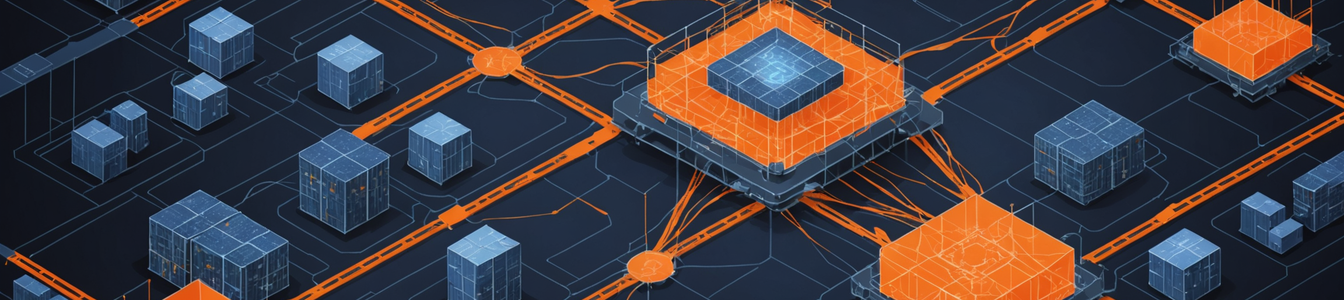
The global push toward AI-optimized supply chains, marketed as the path to sustainability and efficiency, is quietly creating one of the most significant cybersecurity challenges of the decade. Beneath the promise of "greener" logistics through artificial intelligence lies a paradoxical reality: these intelligent systems are driving unprecedented energy consumption, creating new critical infrastructure dependencies and expanding the attack surface for nation-states and cybercriminal groups targeting national economies.
The Energy Paradox of Smart Logistics
Artificial intelligence in supply chain management promises to reduce waste, optimize routes, and minimize carbon footprints through sophisticated algorithms. However, the computational power required to train and run these AI models—particularly large language models and predictive analytics systems for global logistics—is staggering. Each AI-driven optimization decision requires processing massive datasets from IoT sensors, satellite imagery, weather systems, and real-time shipping data. This processing doesn't occur in a vacuum; it happens in energy-intensive data centers that are becoming increasingly concentrated in specific geographic regions.
The recent announcement by Reliance Industries to invest ₹7 lakh crore (approximately $84 billion) in Gujarat, India, across clean energy and data centers exemplifies this trend. While framed as a green investment, the scale reveals the energy appetite of coming AI infrastructure. This concentration of computational power creates what cybersecurity experts are calling "energy attack vectors"—where disrupting power to a key data center cluster could cascade through AI-dependent supply chains globally.
New Critical Infrastructure Dependencies
The cybersecurity implications extend far beyond data protection. Modern AI-powered supply chains create three new layers of infrastructure dependency:
- Grid Reliability Dependence: AI systems controlling just-in-time manufacturing, pharmaceutical distribution, or food supply chains require 24/7 uptime. Any power fluctuation or outage that would previously cause temporary disruption now threatens complete systemic failure as AI controllers cannot function without stable power.
- Interconnection Vulnerabilities: As demonstrated by Reliance Jio's planned "people-first AI platform" for India and global markets, these systems create interconnected dependencies between energy grids, data networks, and physical logistics. An attack on one node—whether through cyber means targeting grid controls or physical attacks on substations—can propagate through AI-mediated connections in unpredictable ways.
- Concentrated Risk Profiles: Massive investments in regional AI/data center hubs create attractive targets for adversarial nations. Unlike distributed systems, these concentrated energy consumers present high-value targets where a successful attack could disrupt not just corporate operations but national and global supply chains.
The Emerging Threat Landscape
Cybersecurity teams traditionally focused on protecting data confidentiality and integrity must now expand their scope to include energy security assessments. The threat landscape includes:
- Grid-Focused Cyber Attacks: Advanced persistent threats (APTs) targeting industrial control systems (ICS) and supervisory control and data acquisition (SCADA) systems that manage power distribution to AI data centers.
- AI-Specific Power Manipulation Attacks: Sophisticated attacks that subtly manipulate power quality (voltage fluctuations, frequency variations) to degrade AI model performance without triggering complete failure, causing gradual supply chain degradation.
- Cascading Failure Scenarios: Attacks that exploit the interconnectedness of AI-optimized supply chains, where disruption in one sector (like energy) automatically triggers AI-driven responses in connected sectors (like transportation or manufacturing), amplifying initial damage.
Mitigation Strategies for Security Professionals
Organizations implementing AI in supply chains must adopt a new security paradigm:
- Energy Resilience Audits: Regular assessments of power infrastructure supporting AI systems, including redundancy, backup capabilities, and grid interconnection points.
- Decentralized AI Architectures: Implementing federated learning and edge computing approaches that distribute AI processing rather than concentrating it in vulnerable data center hubs.
- Grid-Aware Security Monitoring: Integrating power grid status and alerts into Security Operations Center (SOC) dashboards to correlate potential energy disruptions with cyber threat intelligence.
- Supply Chain Energy Mapping: Creating detailed maps of energy dependencies throughout the supply chain, identifying single points of failure where AI systems and physical logistics converge.
- Regulatory Collaboration: Working with energy regulators and grid operators to establish protected critical infrastructure designations for AI systems supporting essential supply chains.
The Path Forward
The convergence of AI, energy, and supply chain management represents both tremendous opportunity and unprecedented risk. As Mukesh Ambani's announcement of Reliance Jio's AI platform indicates, the transformation is accelerating. Cybersecurity professionals have a narrow window to develop frameworks that secure not just the algorithms and data, but the entire energy ecosystem supporting AI-driven logistics.
The solution requires cross-disciplinary collaboration between cybersecurity experts, energy engineers, supply chain specialists, and policymakers. Only through integrated planning can we harness AI's potential for sustainable supply chains while mitigating the grid vulnerabilities this technological revolution inevitably creates. The energy crisis driven by AI infrastructure isn't just about consumption—it's about creating resilient systems that can withstand the cyber threats targeting our increasingly interconnected critical infrastructure.
Comentarios 0
Comentando como:
¡Únete a la conversación!
Sé el primero en compartir tu opinión sobre este artículo.
¡Inicia la conversación!
Sé el primero en comentar este artículo.