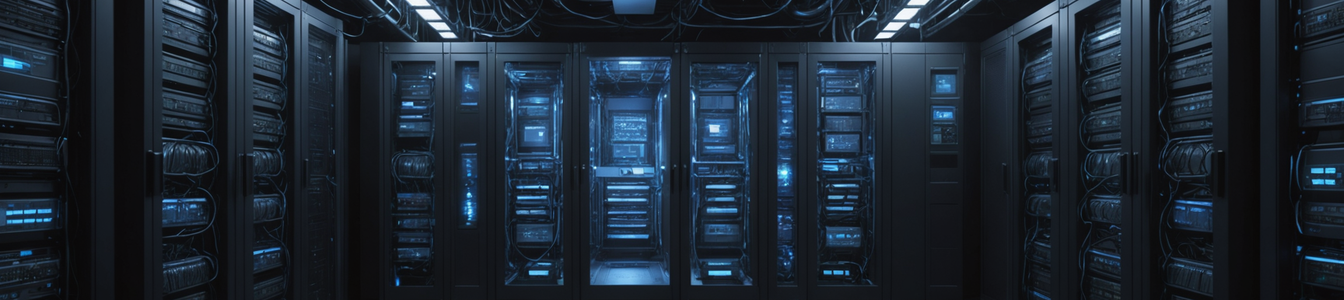
The global race to dominate artificial intelligence has entered a critical, physical phase—one that cybersecurity leaders are warning creates a perfect storm of systemic vulnerabilities. Beyond the familiar digital threats of model poisoning and adversarial attacks, a more fundamental security crisis is emerging: the physical and logistical infrastructure powering the AI revolution is being built at breakneck speed, creating dangerous blind spots in power grids, supply chains, and geographic security postures.
The Land and Power Grab: Physical Foundations Under Strain
The scale of expansion is staggering. Amazon's data center unit recently acquired the entire George Washington University Virginia campus for an undisclosed sum, part of a broader $427 million push to secure land for AI-capable data centers. This is not an isolated move. Across the United States, particularly in rural and suburban areas, tech giants are converting farmland, educational institutions, and open spaces into fortress-like computing hubs. This rapid conversion is sparking significant political backlash, as noted in reports of rural opposition fueling political challenges. These data centers are not just buildings; they are massive concentrations of critical digital infrastructure, often located in regions with limited prior experience securing such high-value targets. The physical security perimeter—from access controls to protection against sabotage or electromagnetic pulse (EMP) attacks—becomes a paramount, yet often overlooked, concern.
Compounding this physical concentration is an insatiable demand for power. AI model training and inference are extraordinarily energy-intensive. In response, initiatives like Prime Power's "Texas Titan #1"—a 1-gigawatt power project explicitly designed to feed the AI boom—are emerging. One gigawatt can power approximately 750,000 homes. Concentrating this level of demand in specific geographic clusters creates single points of failure for the AI ecosystem. A successful cyber-physical attack on a substation or transmission line supporting such a cluster could cripple a significant portion of a nation's AI compute capacity. The interdependence between the digital AI stack and the analog power grid has never been tighter or more vulnerable.
The Silicon Scramble: Supply Chain Security in the Spotlight
Parallel to the physical build-out is an equally frenetic scramble for the specialized hardware that makes AI possible. The supply chain for advanced AI chips and the optical components that connect them is becoming a central battlefield for both economic and security dominance.
Nvidia, the current market leader, is moving to secure its future pipeline by investing $4 billion into two key optics firms. This vertical integration is a strategic move to control critical components for the high-bandwidth connections needed between GPUs in massive AI clusters. However, it also consolidates risk. An attack on one of these specialized optics suppliers—whether through intellectual property theft, malware in manufacturing tools, or compromised firmware—could have cascading effects downstream.
Meanwhile, companies are seeking to diversify their dependencies. Meta's potential $100 billion deal to purchase AI chips from AMD represents one of the largest single supply chain agreements in tech history. While this mitigates the risk of reliance on a single chip vendor, it creates a new, massive transactional footprint vulnerable to supply chain interdiction, invoicing fraud, and the insertion of counterfeits or hardware backdoors during the manufacturing and logistics process. The sheer monetary value of these deals makes them high-profile targets for sophisticated financial and industrial espionage campaigns.
Converging Vulnerabilities: A New Attack Surface for Cybersecurity
For cybersecurity professionals, this infrastructure gold rush redefines the threat landscape. The attack surface is no longer confined to firewalls and endpoints; it now encompasses:
- Geopolitically Exposed Physical Assets: Data centers located in areas of political unrest or weak critical infrastructure protection become ripe targets for physical sabotage or local threat actors.
- The Energy-Data Nexus: The power grid is now a direct extension of AI security. Grid operators and data center security teams must coordinate as never before to defend against attacks that could use digital means to achieve physical power disruption.
- Hyper-Complex, Opaque Supply Chains: The journey of an AI chip from a Taiwanese fab to a server rack in Virginia involves dozens of companies across multiple jurisdictions. Each handoff is a potential point for tampering, introducing vulnerabilities that may be impossible to detect until triggered.
- Consolidated Single Points of Failure: The trend towards mega-clusters of compute (like those planned for Texas) creates attractive targets for state-sponsored actors seeking to degrade a competitor's AI capabilities.
The Path Forward: An Integrated Security Mandate
Addressing these systemic risks requires a paradigm shift in security strategy. CISOs and risk managers must expand their purview to include:
- Physical-Digital Convergence Security: Implementing frameworks that treat power availability, cooling system integrity, and physical site security as foundational cybersecurity controls.
- Supply Chain Resilience Audits: Moving beyond checkbox compliance to deep, adversarial testing of hardware provenance, firmware integrity, and vendor security postures throughout the multi-tier supply chain.
- Public-Private Critical Infrastructure Collaboration: Establishing secure channels for threat intelligence sharing between tech companies, power grid operators, and government defense agencies to protect shared, interdependent infrastructure.
The AI infrastructure boom is a testament to human ambition. However, the security of this new foundation has not kept pace with its construction speed. The cybersecurity community's next great challenge lies not solely in algorithms and code, but in securing the vast, vulnerable, and very real ecosystem of power, silicon, and steel upon which the future of AI is being built. The time to harden these foundations is now, before adversaries map the vulnerabilities first.
Comentarios 0
Comentando como:
¡Únete a la conversación!
Sé el primero en compartir tu opinión sobre este artículo.
¡Inicia la conversación!
Sé el primero en comentar este artículo.