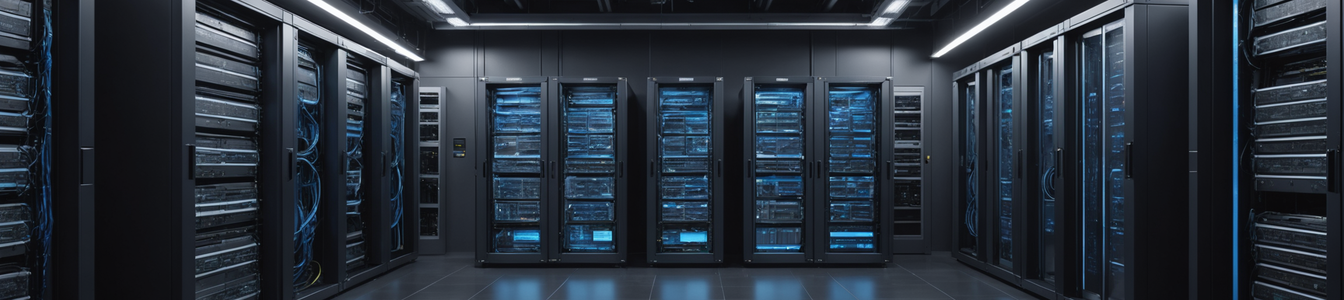
The narrative of artificial intelligence as a purely digital phenomenon is dangerously incomplete. Beneath the layer of algorithms and code lies a sprawling, resource-intensive physical reality—one that is rapidly becoming the central theater for a new kind of geopolitical conflict. This emerging 'AI Infrastructure Cold War' is reshaping national security doctrines, creating novel supply chain vulnerabilities, and forcing cybersecurity professionals to expand their threat models to encompass mines, power grids, and vast tracts of rural land. The security of the AI era is inextricably linked to the security of the materials that power it and the facilities that house it.
The Critical Mineral Foundation: A Strategic Chokepoint
Every advanced semiconductor, server rack, and battery backup system essential for modern AI depends on a suite of critical minerals. Rare earth elements, lithium, cobalt, and copper form the physical bedrock of the digital revolution. As nations like India publicly articulate, a reliable supply chain for these materials is not merely an economic concern but a foundational element of technological sovereignty and security. The concentration of mining and processing capabilities in a handful of countries creates significant single points of failure. For cybersecurity strategists, this translates into a critical infrastructure problem of the highest order. A geopolitical dispute, trade embargo, or successful cyber-physical attack on mining or refining operations could cripple a nation's ability to develop or deploy AI systems, creating a potent new form of economic and technological coercion.
The Data Center Dilemma: Local Transformations, Global Implications
The insatiable demand for compute is manifesting physically through the rapid construction of massive, power-hungry data centers. These facilities are increasingly rising not in traditional tech hubs, but on converted farmland and in rural communities, as seen in towns across the United States. While they promise economic investment and jobs, their arrival creates complex local security dynamics. The sudden concentration of critical digital infrastructure in areas potentially unprepared for its physical security demands—from securing perimeter access to protecting against sabotage—presents a clear risk. Furthermore, the massive strain these centers place on local water resources for cooling and, most critically, on regional power grids, creates cascading vulnerabilities. A grid failure induced by data center demand isn't just a local power outage; it's a potential national security incident if it takes a strategic AI training cluster offline.
National Strategies: Forging Digital Sovereignty
In response to these vulnerabilities, nations are pursuing aggressive strategies to secure their AI infrastructure. India's move, exemplified by Tata Communications' partnership with state-owned RailTel, is a textbook case. By leveraging existing national assets like the extensive fiber network along railway corridors, the country aims to build a sovereign, secure digital backbone for AI development. This reduces reliance on foreign-controlled infrastructure and shortens data transit paths, potentially limiting exposure to interception. Similarly, the expansion of cloud providers like AWS via partners into strategic hubs like Singapore reflects a corporate-level response to the demand for localized, low-latency, and (theoretically) more secure compute resources for enterprises and governments alike.
The Energy Imperative: The Achilles' Heel of AI Ambition
Perhaps the most stark warning comes from Europe. The German Digital Minister's public call for a solution to AI's massive energy consumption is a direct alarm bell for security planners. The current trajectory of AI development is environmentally and logistically unsustainable. From a cybersecurity and continuity perspective, an infrastructure with an exponentially growing energy appetite is inherently fragile. It presents a colossal attack surface—imagine the impact of coordinated cyber-attacks on the power generation and distribution systems feeding multiple major AI hubs. Securing AI is now inseparable from securing and stabilizing the energy grid. This forces a convergence between cyber defense, critical infrastructure protection, and energy policy that few security teams are currently structured to address.
The Cybersecurity Mandate: An Expanded Battlefield
For the cybersecurity community, this infrastructure cold war demands a fundamental shift in perspective.
- Supply Chain Security Gets Physical: Vendor risk management must now extend deep into the mineral supply chain, assessing geopolitical stability, labor practices, and environmental controls at mining sites, not just software bill of materials (SBOM).
- Converged Physical-Cyber Defense: Securing a data center is no longer just about firewalls and intrusion detection. It requires integrated teams that can address drone incursions, insider threats to hardware, electromagnetic pulse (EMP) risks, and the security of water and power intake systems.
- Grid Security as a Primary Objective: Protecting the energy infrastructure from sophisticated cyber-attacks is now a direct prerequisite for national AI capabilities. This elevates grid security to a top-tier national security priority.
- Resilience and Sovereignty: The focus must expand from pure protection to building resilient, sovereign capacity. This includes investing in alternative compute architectures, energy-efficient AI models (like neuromorphic computing), and diversified supply chains for critical components.
The AI arms race is not just happening in research labs; it is being fought in remote mines, on rural land development boards, and in national energy ministries. The security of our intelligent future depends on recognizing and defending this entire, interconnected battlefield. The professionals who can navigate this complex nexus of technology, resources, and geopolitics will define the security posture of the coming decade.
Comentarios 0
Comentando como:
¡Únete a la conversación!
Sé el primero en compartir tu opinión sobre este artículo.
¡Inicia la conversación!
Sé el primero en comentar este artículo.