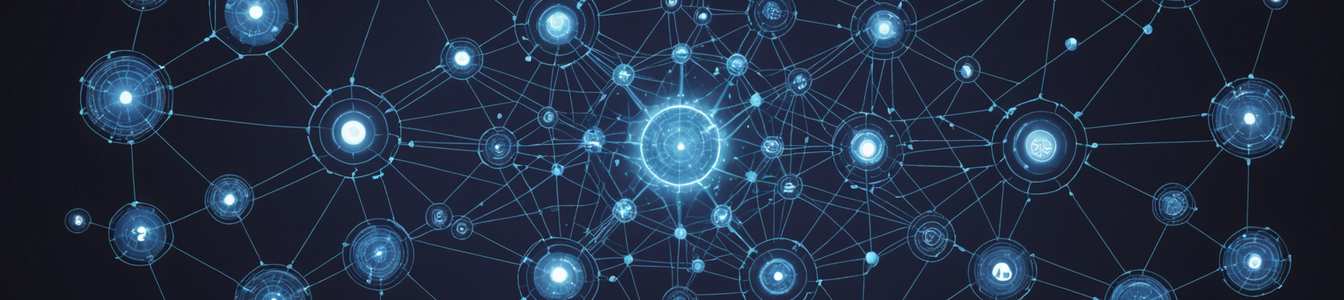
A silent convergence is reshaping the physical world, weaving artificial intelligence, billions of IoT sensors, and the nascent power of quantum computing into the very fabric of critical infrastructure and industry. This technological triad—AI, IoT, and Quantum—is no longer a futuristic concept but a present-day engineering reality, driving projects from smart energy grids in the Middle East to satellite-based 6G networks. For cybersecurity professionals, this represents not just an evolution of threats, but a fundamental transformation of the attack surface, creating interdependencies and vulnerabilities at a scale and complexity never before seen.
The evidence of this convergence is global and accelerating. In Jordan, industrial giant ABB is deploying an AI-powered platform to optimize the national management of water and energy—two lifeline sectors. This system relies on a dense network of IoT sensors and actuators to collect data and execute AI-driven decisions in real-time. Similarly, the recognition of companies like Helious Tech Solutions for Industrial AI & Automation underscores the corporate push to embed cognitive layers into industrial control systems (ICS). These are not isolated IT projects; they are deep integrations of AI into operational technology (OT), the systems that control physical processes. The compromise of such an AI layer could lead to manipulated data, faulty automated decisions, or even direct physical control by threat actors, with dire consequences for public water supply or grid stability.
Simultaneously, the IoT sensor layer—the 'nervous system' of this converged infrastructure—is exploding in both scope and sensitivity. The photoelectric sensor market, a critical component for industrial automation, safety systems, and logistics, is projected to reach $4.02 billion by 2032. These sensors, found on factory floors, power stations, and transportation networks, are increasingly IP-enabled and connected. Each one represents a potential ingress point. Furthermore, regulatory mandates are forcibly expanding the IoT ecosystem. In Spain, and by extension the EU, the upcoming mandatory use of V16 emergency beacons (connected IoT devices) from 2026 has already caused a surge in sales for providers like Vodafone. This creates a vast, standardized, and time-sensitive deployment of millions of new endpoints on roads, each requiring secure provisioning, communication, and lifecycle management—a monumental logistics challenge for cybersecurity.
The connectivity layer itself is ascending to space. Projects like Open Cosmos launching satellites to test integrated 6G and AI capabilities in orbit foreshadow a future where critical infrastructure communications rely on low-earth orbit constellations. While promising resilience and coverage, this adds another dimension of risk: the security of the space segment and its ground stations. An attack compromising a satellite's AI payload or its 6G communication link could disrupt timing signals for energy grids, intercept sensitive industrial telemetry, or jam critical IoT networks over vast geographical areas.
Perhaps the most profound wildcard is the arrival of quantum computing capabilities into this mix. In Spain, technology center Fidesol is preparing to acquire its first quantum simulator in 2026 to position itself in 'deep tech'. While currently for simulation and research, this marks the beginning of quantum technology's journey from lab to industry. The long-term cybersecurity implication is stark: the encryption protocols that currently protect data flows between AI clouds, IoT devices, and satellite links are potentially vulnerable to future cryptographically-relevant quantum computers. The sensitive data being generated today by industrial AI systems may need to remain confidential for decades, making the threat of 'harvest now, decrypt later' attacks a pressing concern for infrastructure planners.
The Cybersecurity Imperative: From Silos to Systemic Resilience
This convergence creates a perfect storm of challenges:
- Blurred Perimeters: The traditional air-gap between OT and IT is gone. AI models trained in corporate clouds control physical valves via IoT networks that extend to satellites and roadside beacons.
- Cascade Failure Potential: A vulnerability in a single, widely-used photoelectric sensor model could be exploited to feed poisoned data to an industrial AI, causing it to make catastrophic control decisions across multiple facilities.
- Supply Chain Complexity: The technology stack spans AI software vendors, sensor manufacturers, telecom operators (for 6G/V16 beacons), satellite providers, and quantum tech startups. Verifying the security posture of each link is impossible with current methodologies.
- Skill Gap: Defending these systems requires a rare blend of OT security, AI integrity assurance, IoT device hardening, space systems knowledge, and post-quantum cryptography awareness.
Moving forward, the security community must advocate for and help build:
- Convergence-Aware Security Frameworks: New standards and architectures that treat AI, IoT, and connectivity as a single, interdependent system from the design phase, mandating zero-trust principles even within OT environments.
- AI Security for OT: Specific focus on securing the AI/ML pipeline—training data integrity, model robustness against adversarial attacks, and secure, explainable inference at the edge.
- Quantum-Ready Roadmaps: Immediate initiation of crypto-agility programs for critical infrastructure, beginning with inventorying long-lived sensitive data and planning for the migration to post-quantum cryptographic standards.
- Unified Visibility: Security platforms capable of providing a unified view of threats across IT, OT, IoT, and cloud AI layers, correlating anomalies from a sensor malfunction to a suspicious model retraining request.
The wired world of critical infrastructure is here, but its security is not a given. The expanding attack surface is a direct result of technological ambition outpacing security integration. The time for siloed defense is over. The next decade will be defined by our ability to secure the convergence itself, building resilience into the interconnected heart of our water, energy, and industrial systems before a threat actor learns to exploit it.
Comentarios 0
Comentando como:
¡Únete a la conversación!
Sé el primero en compartir tu opinión sobre este artículo.
¡Inicia la conversación!
Sé el primero en comentar este artículo.