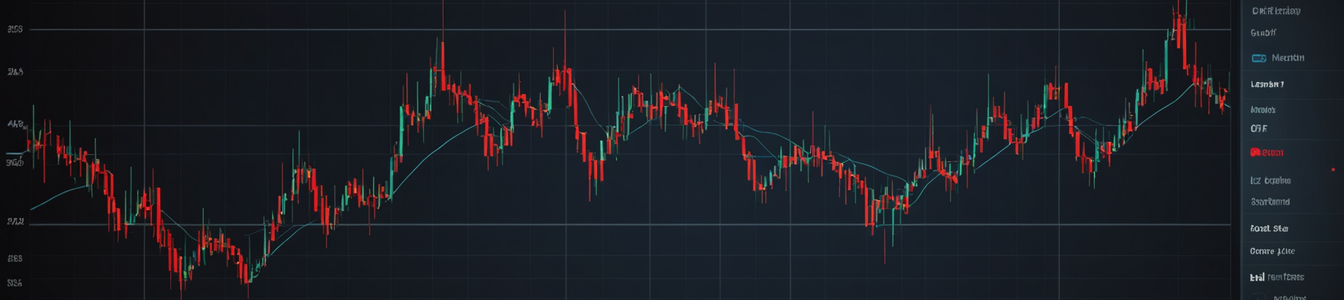
The New Frontier: Information Warfare Meets Algorithmic Trading
A disturbing pattern is emerging in global financial markets that should alarm every cybersecurity professional. What began as a speculative research report from boutique firm Citrini has evolved into a case study of how fictional narratives can trigger real-world financial instability. The report, predicting catastrophic AI-driven unemployment exceeding 40% in certain white-collar sectors by 2028, caused immediate market whipsawing, particularly affecting technology stocks and AI-related investments.
Industrialist Anand Mahindra commented on the phenomenon, noting how markets were reacting to what he characterized as 'speculative fiction dressed as research.' His observation highlights a critical vulnerability: modern financial systems, increasingly dependent on algorithmic trading and sentiment analysis, lack robust verification mechanisms for the information they consume.
The Citadel Counterargument: Historical Context vs. Alarmism
Citadel Securities, one of the world's leading market makers, publicly dismantled Citrini's methodology. Their analysts drew a compelling parallel: 'Was the advent of Microsoft Office a substitute for office workers?' they asked rhetorically. The historical analogy is powerful. While word processors and spreadsheets automated certain tasks, they ultimately created new roles, increased productivity, and expanded entire industries rather than simply eliminating jobs.
The financial giant's rebuttal pointed to flawed assumptions in the dystopian report, particularly its linear extrapolation of displacement without accounting for job creation, adaptation, and the historical resilience of labor markets during technological shifts. However, by the time this counter-narrative gained traction, algorithmic systems had already processed the initial alarming headlines, executing trades based on sentiment triggers.
DeepSeek's Predictive Gambit and the HALO Trade
Compounding the issue is the growing practice of consulting AI models for financial predictions. In a related development, analysts asked DeepSeek AI to predict Nvidia's stock price for the end of 2026. While presented as a curiosity, this practice normalizes the use of generative AI for financial forecasting, despite known limitations regarding hallucination and training data cutoffs.
The 'AI Typhoon' concept, referenced in analysis for Indian investors, describes the overwhelming flow of AI-related information—both credible and speculative—creating market turbulence. Within this typhoon, the 'HALO Trade' (High-Algorithmic-Leverage Operations) has emerged. This refers to investment strategies that specifically target volatility created by algorithmically amplified news cycles, essentially profiting from the panic triggered by reports like Citrini's.
Cybersecurity Implications: Defending Against Synthetic Financial Intelligence
For cybersecurity teams, especially those protecting financial institutions, this incident reveals a multi-layered threat:
- Supply Chain Vulnerability in Information Feeds: Trading algorithms consume data from news aggregators, research platforms, and social media. Poisoning these feeds with plausible but fictional research represents a new attack vector with direct financial consequences.
- Sentiment Analysis Manipulation: Attackers can engineer reports specifically designed to trigger negative sentiment scores in automated systems, creating self-reinforcing sell-offs.
- Reputation Weaponization: Boutique research firms, with less established reputation safeguards than major institutions, can be created or compromised to disseminate market-moving disinformation.
- Regulatory Gray Zone: Current market manipulation regulations often require proving intent and direct trading activity. Synthetic research published 'in good faith' (however flawed) may exist in a regulatory gray area.
The Path Forward: Building Resilient Systems
The financial sector needs to develop cybersecurity protocols specifically for information integrity. This includes:
- Provenance Verification Systems: Implementing blockchain or similar technologies to track the origin and modification history of financial research.
- Algorithmic Sentiment Calibration: Building 'circuit breakers' that flag extreme sentiment shifts triggered by single or low-credibility sources.
- Cross-Validation Requirements: Mandating that automated trading systems cross-reference predictive claims against historical data patterns before executing large-volume trades.
- Industry Information Sharing: Creating secure channels for financial institutions to share intelligence about potentially manipulative research before it triggers widespread algorithmic reactions.
Conclusion: From Technical Security to Information Integrity
The Citrini incident marks a paradigm shift. Cybersecurity in financial contexts can no longer focus solely on protecting transactions and preventing unauthorized access. It must expand to encompass the integrity of the information ecosystem that feeds decision-making systems—both human and algorithmic. As AI continues to permeate financial markets, the line between information operations and market manipulation will blur further. Developing defenses against this new class of threats—synthetic financial intelligence attacks—will be one of the defining challenges for cybersecurity professionals in the coming decade. The market panic paradox demonstrates that in today's interconnected systems, fictional research can create very real instability, making information integrity a cornerstone of financial security.
Comentarios 0
Comentando como:
¡Únete a la conversación!
Sé el primero en compartir tu opinión sobre este artículo.
¡Inicia la conversación!
Sé el primero en comentar este artículo.