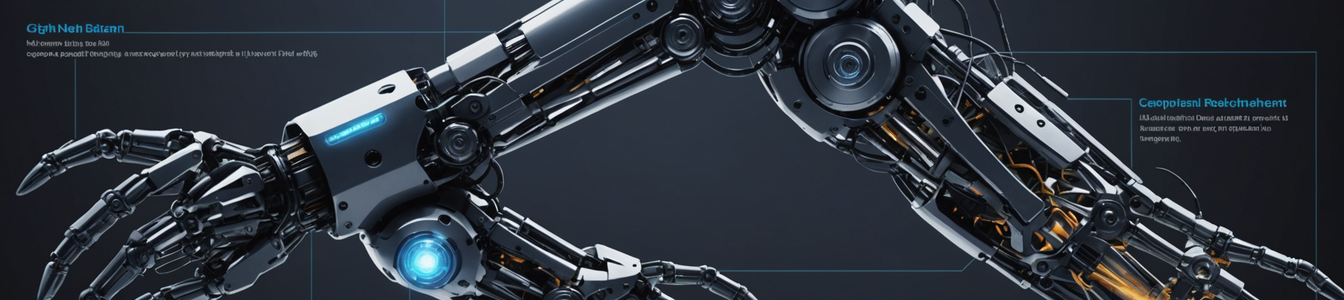
The integration of Artificial Intelligence into physical systems—moving beyond screens and servers into the operating theater and the wildfire frontline—marks a profound shift in both technological capability and cyber risk. Two parallel developments, one in precision medicine and another in environmental crisis management, exemplify this new frontier where AI decisions manifest as immediate physical actions. For cybersecurity professionals, this evolution from traditional IT and OT security to what experts are calling "Embodied AI Security" presents novel challenges that demand urgent attention and innovative defensive strategies.
The Surgical Frontier: AI Robotics in Early Cancer Detection
Medical technology is advancing toward autonomous and semi-autonomous robotic systems capable of performing complex diagnostic procedures. A significant focus is on early lung cancer detection, where AI-guided robots aim to conduct minimally invasive biopsies with unprecedented precision and speed. These systems typically combine computer vision for navigation, machine learning models for real-time tissue analysis, and robotic actuators for physical manipulation.
From a cybersecurity perspective, the attack surface is multidimensional. An adversary could potentially target the integrity of the AI's perception system, feeding corrupted image data to misguide the robotic arm. The decision-making algorithm itself could be poisoned during training or via inference-time attacks, leading to false negatives or positives with dire health consequences. Furthermore, the communication link between the AI 'pilot' and the robotic components presents a critical junction for interception or manipulation. A successful attack is no longer just a data breach; it becomes a direct physical threat to patient safety, eroding the fundamental trust in medical technology.
The Environmental Frontier: AI Drones in Wildfire Management
Simultaneously, AI is being deployed to combat large-scale environmental threats. A consortium involving Wells Fargo and other major partners is developing AI-powered solutions for wildfire prediction and response. These systems leverage networks of drones and sensors equipped with AI to detect ignition points, predict fire spread using complex environmental models, and coordinate autonomous firefighting resources.
This creates a vast, distributed Cyber-Physical System (CPS) operating in harsh, unsecured environments. The cybersecurity implications are staggering. Attackers could spoof sensor data to hide a growing fire or create panic with false alarms. The swarm intelligence coordinating drone fleets is vulnerable to communication hijacking, potentially turning a firefighting asset into a chaotic or even weaponized swarm. The AI models predicting fire paths are susceptible to adversarial attacks that could misdirect critical resources, leaving communities unprotected. The involvement of financial institutions adds another layer: these systems manage economic risk and insurance liabilities, making them attractive targets for financially motivated threat actors seeking to manipulate outcomes for fraud or extortion.
Converging Threats and a New Security Paradigm
Despite their different applications, these systems share common vulnerabilities inherent to AI-powered CPS:
- Sensor Fusion Attacks: Both robotic surgeons and environmental drones rely on multiple data streams (visual, LiDAR, thermal). Corrupting this fused sensory input can blind or misdirect the entire system.
- Adversarial Machine Learning: Specially crafted inputs can fool AI models in both domains. A subtly altered tissue scan or satellite image could lead to catastrophic misdiagnosis or misallocation of emergency resources.
- Autonomy Under Duress: These systems often operate with high levels of autonomy. Security protocols must ensure graceful degradation and safe "fail-secure" states when under cyber attack, preventing a compromised surgical robot or drone from causing harm.
- Supply Chain Complexity: The hardware, software, and AI model supply chains for these systems are global and intricate, offering numerous insertion points for backdoors and vulnerabilities.
The Path Forward for Cybersecurity
The security community must move beyond perimeter defense and adopt a resilience-by-design approach for embodied AI. Key priorities include:
- Developing Robust Verification: Creating methods to formally verify the safety and security of AI decision pathways before they trigger physical actions.
- Real-Time Anomaly Detection: Implementing continuous monitoring for deviations in sensor data, model behavior, and actuator commands that signal an ongoing attack.
- Secure Swarm Communication: Designing encrypted, fault-tolerant communication protocols for distributed AI systems like drone networks.
- Incident Response for Physical AI: Establishing new playbooks for responding to cyber incidents where the compromised asset is a physical actor in the real world.
The promise of AI in saving lives and protecting our planet is immense. However, realizing this promise requires building security into the foundation of these physical AI systems. The time for the cybersecurity industry to engage with roboticists, AI ethicists, and environmental engineers is now, before the next generation of critical infrastructure becomes our greatest vulnerability.
Comentarios 0
Comentando como:
¡Únete a la conversación!
Sé el primero en compartir tu opinión sobre este artículo.
¡Inicia la conversación!
Sé el primero en comentar este artículo.