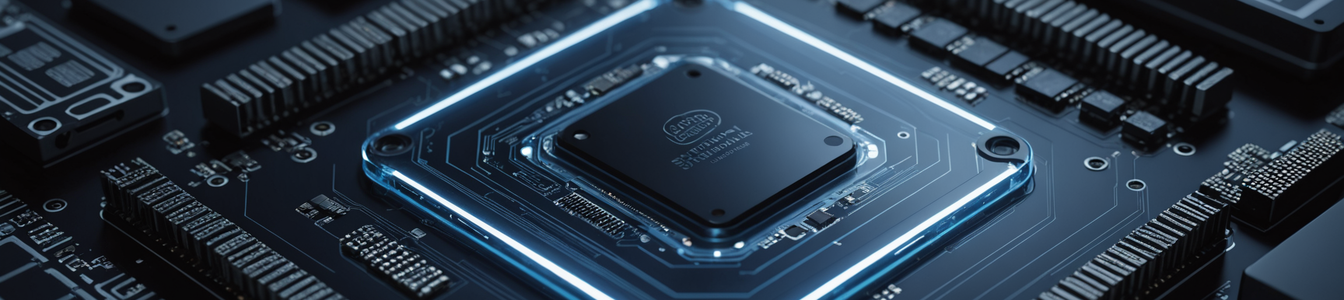
A silent crisis brewing in the global semiconductor supply chain is poised to degrade the security posture of consumer and enterprise devices for years to come. The insatiable demand for high-bandwidth memory (HBM) and advanced DRAM from artificial intelligence data centers has triggered a severe shortage, diverting production capacity and inflating costs for the entire memory market. This 'AI memory crunch' is creating a domino effect, forcing device manufacturers to make perilous compromises on security hardware to manage soaring Bill of Materials (BOM) costs.
The Economic Shockwave
Industry warnings are stark. Samsung's co-CEO has publicly stated that the surge in memory chip prices will have an 'inevitable' impact on smartphone costs, describing the technology shortage as 'unprecedented.' Financial analysts project that the trickle-down effect could make the 2026 smartphone and PC upgrade cycle up to 20% more expensive for consumers. This isn't limited to flagships; the inflationary pressure is squeezing every tier of the market. In regions like India, manufacturers have already begun issuing revised price lists for existing mid-range smartphone models, a rare move that signals deep supply chain stress.
The root cause is a massive capital and production shift. Chipmakers are prioritizing the fabrication of lucrative HBM stacks for NVIDIA GPUs and AI accelerators, which offer far higher margins than conventional memory for mobile devices. This has created a supply vacuum for LPDDR5X and next-gen LPDDR6 RAM, essential for high-performance smartphones and laptops. Qualcomm's flagship mobile system-on-chip (SoC) for 2026 is rumored to be so costly that its price alone could rival that of an entire mid-range phone, forcing OEMs to cut corners elsewhere.
The Security Trade-Off: A Tiered Vulnerability Landscape
For cybersecurity professionals, the real alarm bell isn't the price hike itself, but how manufacturers will absorb it. When faced with a 20% increase in core component costs, companies have limited options: pass the full cost to consumers (risking market share), absorb the cost (eroding profits), or redesign the product to meet a target cost. Evidence suggests the latter path is leading to security being designated a 'variable cost.'
To hit aggressive price points, security is being silently downgraded. The most likely casualties are dedicated, discrete security chips. A discrete Trusted Platform Module (dTPM) or a secure element, which physically isolates cryptographic keys and sensitive operations, adds tangible cost. In a crunch, manufacturers may opt for a cheaper firmware-based TPM (fTPM) or, worse, omit hardware-backed security entirely for software-based solutions. Similarly, hardware-based encryption accelerators that ensure full-disk encryption doesn't cripple performance may be replaced with slower software implementations.
This creates a dangerous, tiered security landscape:
- Flagship Devices: May retain full security suites but at a significantly higher premium, becoming niche products.
- Mid-Range Devices (The Battlefield): Will see the most aggressive 'value engineering.' Security co-processors, secure enclaves, and advanced biometric sensors are prime targets for cost-cutting. These devices often form the bulk of corporate fleets and consumer purchases, massively expanding the attack surface.
- Budget & IoT Devices: Security may be reduced to a bare minimum checklist for certification, relying on outdated software and shared resources, making them perpetually vulnerable.
The Cascading Cyber Risks
The ramifications of these hardware compromises are severe and long-lasting:
- Weakened Device Integrity: Without a robust hardware root of trust, devices become vulnerable to sophisticated firmware and bootkit attacks, like those leveraging UEFI or bootloader vulnerabilities. Malware can achieve deeper persistence.
- Compromised Data-At-Rest Encryption: Software-based encryption is slower and more vulnerable to brute-force attacks if key derivation is weak. The lack of a secure element makes encryption keys easier to extract from system memory.
- Supply Chain Obfuscation: It becomes exceedingly difficult for enterprises and auditors to verify the security pedigree of a device. Two identical-looking phone models from the same brand, released months apart, could have radically different underlying security hardware.
- Prolonged Vulnerability Lifecycle: Hardware security flaws cannot be patched with a software update. A decision to ship a device without a specific security feature locks in that vulnerability for the device's entire lifespan.
Strategic Imperatives for Cybersecurity Teams
This trend moves the threat from software vulnerabilities to intentional hardware insufficiency. Defense must evolve accordingly:
- Enhanced Procurement Scrutiny: Security teams must be embedded in the device procurement process. RFPs and purchasing contracts need detailed hardware security specifications (e.g., 'mandatory discrete TPM 2.0,' 'hardware-based vault for biometric data') that become non-negotiable clauses, not optional checkboxes.
- Shift to Security-First Vendor Assessment: Vendor evaluations must prioritize transparent disclosure of security hardware across device SKUs and a proven track record of not degrading security specs mid-generation.
- Asset Management & Segmentation: Organizations must inventory devices based on their verified hardware security capabilities. Devices identified with compromised security hardware should be segmented on networks and restricted from accessing sensitive data.
- Advocacy for Standards: The industry needs louder advocacy for minimum hardware security baselines across device categories, similar to automotive safety standards, to prevent a race to the bottom.
The AI memory shortage is more than an economic story; it is a watershed moment for hardware trust. It reveals that foundational security is still treated as a commodity in boardroom decisions. As the crunch intensifies toward 2026, cybersecurity leaders must elevate their focus from the software layer to the very silicon upon which it runs, demanding transparency and integrity in an increasingly compromised supply chain.
Comentarios 0
Comentando como:
¡Únete a la conversación!
Sé el primero en compartir tu opinión sobre este artículo.
¡Inicia la conversación!
Sé el primero en comentar este artículo.