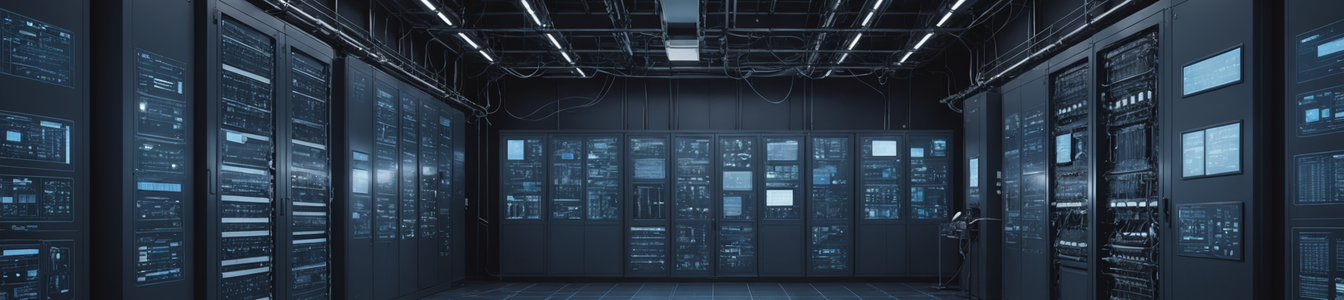
The artificial intelligence revolution, often portrayed as a purely digital phenomenon, is triggering a physical world crisis with profound cybersecurity implications. Across North America, grid operators are facing unprecedented pressure as AI-driven data centers demand staggering amounts of electricity, forcing emergency measures that keep aging, polluting coal plants online and creating dangerous new intersections between digital ambition and physical infrastructure vulnerability.
The Grid Emergency: 15 Gigawatts and Counting
PJM Interconnection, which manages the largest electrical grid in the United States serving 65 million people across 13 states, has announced an urgent initiative to secure 15 gigawatts of new power generation. This colossal requirement—enough to power approximately 11 million homes—is driven almost entirely by projected demand from new data centers needed to train and run large language models and other AI workloads. This isn't future planning; it's emergency response to connection requests already overwhelming system capacity.
The scale reveals the physical reality behind AI's digital promise. Training a single advanced AI model can consume more electricity than 100 US homes use in an entire year. As companies race to deploy increasingly complex models, data center power density has skyrocketed, with some AI facilities requiring 50-100 megawatts each—comparable to small cities. This concentrated demand creates geographic choke points, particularly in regions like Northern Virginia, already home to massive data center clusters, where grid reliability is now under direct threat.
Environmental Backslide: Coal's Unplanned Comeback
The most immediate physical consequence is environmental regression. To meet this surge and prevent blackouts, grid operators and utilities are delaying scheduled retirements of fossil fuel plants. In one of America's most polluted regions, a major coal-fired power plant originally slated for closure has received multiple life extensions specifically to provide "reliable baseload power" for expanding data center corridors. This directly undermines climate commitments and increases local air pollution, creating a stark trade-off between technological progress and public health.
This dependency on legacy thermal plants (coal and natural gas) reintroduces and amplifies physical security risks. These facilities represent concentrated single points of failure with complex, often outdated operational technology (OT) systems. Their extended operation beyond planned lifespans often means delayed security upgrades, as capital expenditure is directed toward capacity rather than modernization.
The Convergence Attack Surface: Where IT Meets OT
For cybersecurity professionals, this situation creates a perfect storm of converging vulnerabilities. The AI boom is accelerating the integration between information technology (IT) networks in data centers and operational technology (OT) systems controlling physical grid assets. This convergence is happening at breakneck speed, often without adequate security architecture.
Data centers require not just power, but ultra-reliable, high-quality electricity. This necessitates deep digital integration with grid management systems for monitoring, load balancing, and failover coordination. Each of these connections—between a data center's building management system and a utility's supervisory control and data acquisition (SCADA) system, for instance—creates a potential pivot point for attackers. A compromise in a data center's IT network could provide a pathway into grid OT systems, and vice-versa.
The risk profile is uniquely severe. An attack could aim not just to steal data or disrupt cloud services, but to cause physical damage to power generation or transmission equipment. The 2015 and 2016 attacks on Ukraine's grid demonstrated how cyber operations can cause widespread blackouts. Today's integrated AI infrastructure could allow for more precise, destabilizing attacks—for example, manipulating load data to cause cascading grid failures while simultaneously crippling the data centers that depend on that power.
The Financialization Factor: Speed Over Security
Adding to the risk is the massive financial wave behind the infrastructure build-out. Investment firms like Blackstone are moving aggressively to capitalize on the boom, with recent filings to take data center acquisition companies public. This Wall Street pressure prioritizes rapid deployment and asset accumulation to satisfy investor returns. In this environment, cybersecurity and resilient OT/IT integration are too often treated as cost centers or afterthoughts, rather than foundational requirements.
The rush to connect new data centers can lead to shortcuts in security assessments of interconnections. The complex supply chains for both data center components and power equipment introduce vulnerabilities that may not be visible to end operators. Furthermore, the specialized workforce needed to secure these converged environments is in critically short supply, leaving systems managed by teams with either IT or OT expertise, but rarely both.
A Path Forward: Securing the Physical-Digital Foundation
Addressing this crisis requires a paradigm shift in how we view AI infrastructure security. It must be treated as critical national infrastructure from the outset. Key actions include:
- Mandatory Converged Security Frameworks: Regulatory bodies must establish and enforce security standards that explicitly cover the IT-OT integration points between data centers and power providers, moving beyond guidelines like NERC CIP that focus primarily on the utility side.
- Transparent Stress Testing: Regional grid operators and major data center operators should conduct joint, public red-team exercises to model sophisticated cyber-physical attacks targeting their interdependencies.
- Architectural Segmentation: While integration is necessary for functionality, security architecture must enforce robust segmentation and one-way data diodes where possible, preventing direct remote access from data center networks to critical grid control systems.
- Investment in Secure Modernization: A portion of the enormous capital flowing into AI infrastructure must be earmarked not just for more power, but for modernizing the grid's digital controls with security-by-design principles, facilitating the retirement of insecure legacy OT systems.
Conclusion
The AI revolution is not happening in the cloud; it is happening in concrete-and-steel facilities connected to a physical grid under immense strain. The cybersecurity community's role is expanding beyond protecting data to ensuring the stability of the very foundation that the digital economy is being built upon. The choices made in the next 12-24 months—whether to prioritize secure, resilient integration or to continue the frantic rush to plug in more servers—will determine whether the AI era is built on a stable foundation or a physical-digital time bomb. The threat is no longer just data exfiltration or service disruption; it is the potential for coordinated attacks that could simultaneously darken screens and cities.
Comentarios 0
Comentando como:
¡Únete a la conversación!
Sé el primero en compartir tu opinión sobre este artículo.
¡Inicia la conversación!
Sé el primero en comentar este artículo.