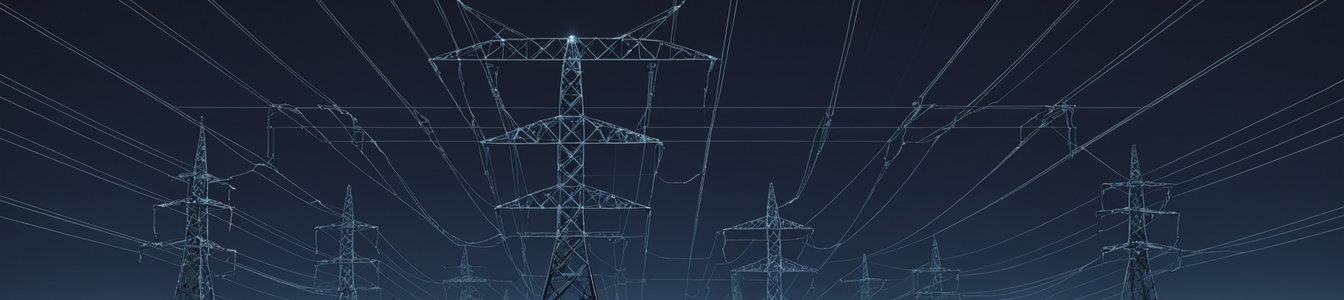
The global race for artificial intelligence supremacy is being fought not just in silicon valleys, but in power valleys. A series of recent, seemingly disparate business moves—from canceled data center projects to international utility investments—paint a concerning picture of an emerging critical infrastructure crisis. The so-called 'AI supercycle' is placing unsustainable demands on aging power grids, forcing rapid expansion and integration that cybersecurity experts warn is creating a web of novel and systemic vulnerabilities.
The Strain Becomes Visible: Cancellations and Consolidations
The first clear signal of this strain emerged with reports that Oracle and OpenAI have abandoned plans to expand a massive data center site in Texas. This decision, as reported by Bloomberg News, underscores a harsh reality: the physical and economic constraints of powering AI are hitting home. Simultaneously, Oracle announced plans to cut thousands of jobs, citing soaring data center operational costs, particularly energy. These two events are directly connected. The astronomical energy appetite of AI training and inference clusters—often requiring tens to hundreds of megawatts per facility—is making previously viable locations untenable. For cybersecurity, this consolidation and retreat from certain geographies creates concentration risk. It funnels critical AI infrastructure into fewer, more powerful hubs, making them juicier targets for both cyber and physical attacks, and increasing the potential impact of a single successful breach.
The Grid's Response: International Gambits and Rapid Build-Out
On the other side of the equation, power providers are scrambling to meet this unprecedented demand. Korea Electric Power Corporation (KEPCO), a top-tier utility, is aggressively betting on U.S. growth, specifically to capitalize on the AI infrastructure boom. This move exemplifies a global trend: traditional and new energy players are rushing to build or upgrade substations, transmission lines, and generation capacity to serve data center corridors. The cybersecurity concern here is twofold. First, the supply chain for this rapid build-out—from industrial control systems (ICS) and smart grid components to construction software—is being stretched, increasing the risk of compromised hardware or software being integrated into critical grid assets. Second, the integration of these new, high-demand nodes into legacy grid management systems creates complex interdependencies that are poorly understood and rarely stress-tested from a security perspective.
The Novel Attack Surface: Where AI Meets the Grid
This convergence creates a unique and dangerous attack surface that transcends traditional IT or OT security silos.
- The AI-to-Grid Interface: Data centers now engage in sophisticated, real-time demand response with utilities. AI workloads might be shifted based on grid load or energy prices. The communication protocols and APIs that enable this are new, potentially vulnerable, and offer a direct digital pathway from a data center breach to grid disruption.
- Compromised Supply Chain for Critical Components: The rush to install new transformers, switchgear, and cooling systems for data centers and the grids that feed them opens doors for state-sponsored or criminal actors to implant malicious firmware or hardware backdoors. A compromised transformer serving an AI hub could be disabled remotely.
- Physical Security Convergence: The physical location of data centers, often near power sources, and the transmission lines that feed them become high-value targets. An attack no longer needs to be purely digital; physical sabotage of a substation could take down a cluster of AI data centers, crippling services for millions.
- Resource Competition as a Threat Vector: The immense power draw of AI is sparking political and community tensions over energy resources. This social friction can be exploited through influence operations or hacktivist campaigns aimed at delaying projects or eroding public trust in both the energy and AI sectors.
Recommendations for Cybersecurity Leaders
Addressing this requires a paradigm shift in risk assessment and collaboration.
- Adopt Converged Security Models: Security teams must break down walls between IT, OT (Operational Technology for grids), and physical security. Threat modeling must consider cascading failures from a cloud vulnerability to a grid control system.
- Audit the Extended Supply Chain: Due diligence must extend deep into the suppliers of both data center infrastructure (cooling, UPS systems) and grid components. Firmware integrity checks and secure development lifecycles are non-negotiable.
- Stress-Test Interdependencies: Red team exercises should simulate scenarios where an attack on a utility's SCADA system impacts data center operations, and vice-versa.
- Advocate for Security-by-Design in Build-Outs: Cybersecurity leaders must have a seat at the table when new data center campuses or grid expansions are planned, insisting on security principles being baked into architecture from day one, not bolted on later.
The AI revolution is built on a foundation of electrons. The frantic scramble to supply those electrons is creating brittle points of failure where the digital and physical worlds collide. For the cybersecurity community, the message is clear: the threat landscape has expanded beyond servers and firewalls. It now includes substations, transmission lines, and the very real possibility that the pursuit of artificial intelligence could unintentionally trigger very real, and very widespread, disruptions.
Comentarios 0
Comentando como:
¡Únete a la conversación!
Sé el primero en compartir tu opinión sobre este artículo.
¡Inicia la conversación!
Sé el primero en comentar este artículo.