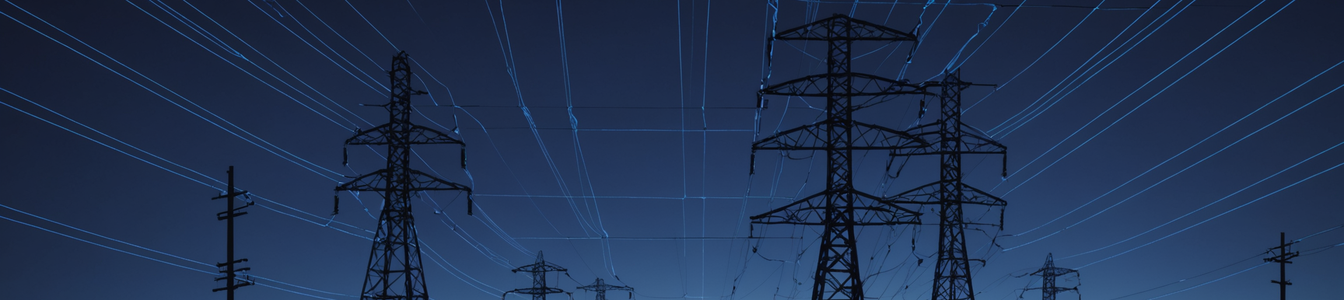
The narrative of artificial intelligence as a purely digital revolution is colliding with a stark physical reality: electricity. Behind every AI model training run, every real-time inference, and every sprawling data city announcement lies a voracious and growing demand for power. This demand is igniting a hidden infrastructure war, straining global power grids, inflating energy costs, and creating unprecedented operational resilience challenges that sit squarely in the domain of cybersecurity and critical infrastructure protection.
The Gigawatt-Scale Ambition: From Montana to Visakhapatnam
The scale of new AI infrastructure is staggering. In the United States, regions like Montana are being positioned as new epicenters for AI development, leveraging cooler climates and available space. However, the true magnitude of ambition is unfolding in Asia. India has unveiled plans for a massive, AI-focused "data city" in Visakhapatnam, a project championed by government officials like Nara Lokesh. The vision is not merely for a cluster of server racks but for a fully integrated technological ecosystem designed to attract global investment.
What defines this new generation of infrastructure is its power requirement. Reports indicate the Visakhapatnam project alone aims to eventually draw a staggering six gigawatts (GW) of electricity. To contextualize, one gigawatt can power approximately 750,000 homes. Six gigawatts is equivalent to the output of several large nuclear power plants or the peak demand of a major metropolitan area. This single project symbolizes a global trend: AI data centers are transitioning from being significant energy consumers to becoming the primary drivers of regional and national power demand.
The Rising Cost and The Community Backlash
This seismic shift in energy consumption is not occurring in a vacuum. As data center operators secure long-term power purchase agreements and lobby for grid expansions, the financial and social costs are being felt locally. The core conflict is clear: everyone wants data centers to pick up their tab. The surge in demand from these facilities contributes to higher wholesale electricity prices, which utilities often pass on to residential and commercial ratepayers. Communities near proposed data center hubs are beginning to question the trade-off between promised economic development and soaring personal energy bills, potential strain on water resources for cooling, and the environmental footprint of the additional power generation required, which often still relies on fossil fuels.
Policymakers are now grappling with complex regulatory questions. Should data centers pay premium grid connection fees or finance dedicated infrastructure? How can the long-term stability of the power grid be maintained when a handful of new facilities can increase baseline demand by double-digit percentages overnight? This tension creates a volatile landscape where social license to operate can no longer be assumed by tech giants.
The Cybersecurity and Operational Resilience Imperative
For cybersecurity leaders, this evolving crisis transforms the power grid from a background utility into a primary attack surface and a single point of failure for the digital economy. The convergence of IT and Operational Technology (OT) has long been a concern, but the dependency is now absolute. An AI data city consuming six GW is not just a data center; it is a critical national infrastructure node.
- Grid Reliability as a Security Parameter: The stability and reliability of the local power grid become direct components of an organization's security posture. Business continuity and disaster recovery plans must now model scenarios far beyond a localized UPS failure, encompassing regional brownouts, blackouts, or targeted attacks on substations feeding these power-hungry campuses.
- Supply Chain Attacks on Critical Infrastructure: The push to build rapidly creates supply chain vulnerabilities. The hardware for transformers, switchgear, and cooling systems, as well as the software managing these industrial control systems (ICS), become high-value targets for state-sponsored and criminal actors aiming to disrupt economic activity or extort payments.
- The Physical Security Perimeter Expands: The security perimeter no longer ends at the data center fence. It must extend to the electrical substation miles away. Protecting the physical infrastructure that delivers power—transmission lines, substations, and generation facilities—becomes a shared responsibility between utility companies, data center operators, and national security agencies.
- Energy Sovereignty and Geopolitical Risk: Nations and corporations are now engaging in a form of "energy sovereignty" race. Projects like India's data city are strategic moves to capture AI market share, but they tie technological ambition directly to energy security. This creates new geopolitical dependencies and risks, where energy-rich regions gain leverage over the AI development cycle.
The Path Forward: Secure by Design and Sustainable Resilience
Addressing this crisis requires a paradigm shift. The cybersecurity community must advocate for and help design "secure by design" principles for this new energy infrastructure. This includes:
- Mandatory Resilience Standards: Regulatory frameworks should require data centers above a certain power threshold to incorporate on-site renewable generation, advanced battery storage, and microgrid capabilities to island themselves from the main grid during disturbances.
- OT/IT Integration in Security Frameworks: Security frameworks like the NIST Cybersecurity Framework must be more deeply integrated with OT security standards (e.g., IEC 62443) for all new critical power infrastructure supporting AI.
- Transparent Risk Assessment: Data center operators should be required to publicly disclose their dependencies on specific grid assets and their contingency plans for prolonged power loss, moving beyond the standard 72-hour diesel fuel supply.
- Investment in Grid Modernization: A significant portion of the revenue from these AI hubs must be reinvested into modernizing the broader grid with smart technologies that enhance resilience, detect anomalies, and enable rapid recovery from cyber-physical attacks.
The AI revolution is revealing that our digital future is built on a physical foundation of copper, concrete, and silicon. The hidden war over power is not just about cost allocation; it is about securing the fundamental input of the 21st-century economy. For cybersecurity professionals, the mandate is clear: extend your expertise beyond the server rack and into the substation. The resilience of AI, and by extension our modern world, depends on it.
Comentarios 0
Comentando como:
¡Únete a la conversación!
Sé el primero en compartir tu opinión sobre este artículo.
¡Inicia la conversación!
Sé el primero en comentar este artículo.