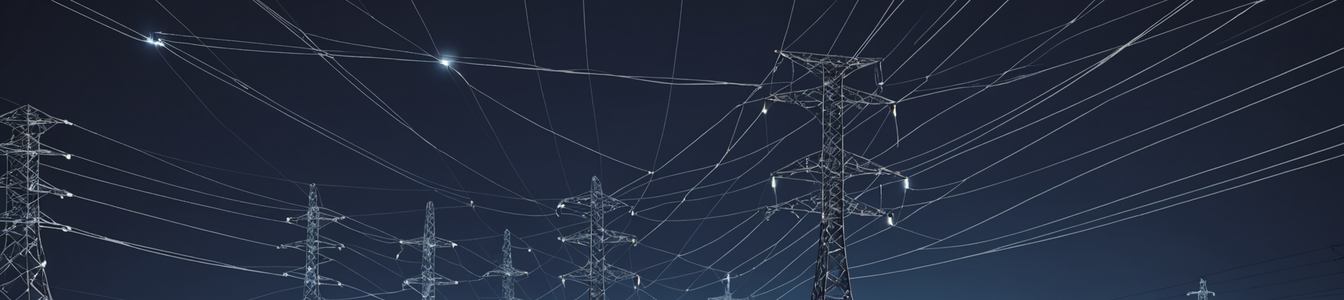
The narrative of artificial intelligence has pivoted from pure software innovation to a story of raw physical power. The emerging consensus is that the next bottleneck for AI advancement won't be algorithmic brilliance, but electricity—specifically, the vast, reliable, and dense power required to train and run trillion-parameter models. This energy imperative is now reshaping national security, critical infrastructure, and the very geography of technology, creating a new, intertwined frontier for cybersecurity and physical defense.
The Nuclear Gambit: Powering AI and Projecting Force
The most telling signal of this shift is the recent U.S. military operation to airlift a portable micro-nuclear reactor from California to a testing site in Utah aboard a C-17 Globemaster III aircraft. This was not merely a logistics exercise; it was a demonstration of strategic capability. Microreactors, typically generating 1-20 megawatts, represent a paradigm shift. They are designed for deployment in remote or contested environments, offering a resilient, off-grid power source for forward-operating bases, command centers, and, critically, the mobile high-performance computing clusters needed for battlefield AI applications.
This military move aligns with a broader political push, notably from figures like former President Donald Trump, to aggressively deregulate and accelerate the deployment of nuclear power—specifically small modular reactors (SMRs)—to fuel the data centers of the AI boom. The argument is that renewables alone cannot provide the constant, high-density 'baseload' power AI compute demands. The national security implication is clear: energy independence for AI compute is becoming synonymous with technological and military superiority.
The Data Center Dilemma: From Digital Asset to Physical Target
Concurrently, the landscape for the primary consumers of this power—data centers—is transforming. The article examining the impact of a major data center development in Indiana provides a microcosm of a global trend. These facilities are no longer inconspicuous server farms on the outskirts of cities. They are becoming massive, county-scale industrial installations that fundamentally alter local infrastructure, water tables, and power grids.
From a security perspective, this concentration of computational value creates a glaring physical target. A successful kinetic attack on a major AI data center—whether by state actors, terrorists, or in a conflict scenario—could cripple national economic functions, military AI capabilities, and core digital services. The security perimeter now extends miles beyond the server hall, encompassing power substations, cooling water intake systems, and fiber optic trunk lines. The convergence of IT and Operational Technology (OT) security is no longer optional; it is a foundational requirement for business continuity and national resilience.
The New Attack Surface: Cyber-Physical Threats to Critical Energy
This fusion of AI, nuclear power, and critical infrastructure creates a novel and perilous attack surface. Microreactors and SMRs, while designed with modern safety features, are still complex industrial control systems (ICS). They present a dual-threat vector:
- Cyber-to-Physical Attacks: A sophisticated adversary could target the digital control systems of a reactor powering a strategic data center or military AI hub, aiming to cause a disruptive shutdown or, in a worst-case scenario, engineer a physical safety incident to destroy critical assets.
- Physical-to-Cyber Attacks: Conversely, a physical attack or sabotage on a power source could trigger cascading failures in the AI and communications infrastructure it supports, creating chaos and blinding decision-makers.
The security model must evolve from protecting data in the system to protecting the system itself and the energy that animates it. This includes securing the supply chains for reactor components, vetting personnel with access to these dual-use technologies, and developing air-gapped, ultra-resilient control networks for critical energy infrastructure supporting AI.
Geopolitics and the AI Power Race
The financial markets, as noted in analysis of investment trends, are already betting on this new reality. Capital is flowing into nuclear technology, uranium mining, and specialized infrastructure funds. This financialization underscores that the competition for AI supremacy is also a competition for energy resources and technological sovereignty. Nations that fail to secure their AI power supply chain risk ceding strategic ground.
For cybersecurity leaders, the mandate is expanding. Risk assessments must now include:
- Physical Site Security: Evaluating the resilience of data center and microreactor locations against sabotage, drone attacks, and electromagnetic pulse (EMP) threats.
- Supply Chain Integrity: Ensuring the security of hardware and software components for both compute and power generation from manufacture through deployment.
- Resilient Architecture: Designing AI systems and their supporting infrastructure with graceful degradation, failover capabilities, and the ability to operate in disaggregated, low-power modes during crises.
The era of AI as a purely virtual phenomenon is over. Its future is physical, powered by atoms as much as algorithms. Securing that future will require a generation of security professionals who can think in terms of megawatts and missile shields as fluently as they do malware and firewalls. The airlift of a microreactor is more than a news item; it is a harbinger of the complex, hybrid security landscape that defines the AI-powered century.
Comentarios 0
Comentando como:
¡Únete a la conversación!
Sé el primero en compartir tu opinión sobre este artículo.
¡Inicia la conversación!
Sé el primero en comentar este artículo.