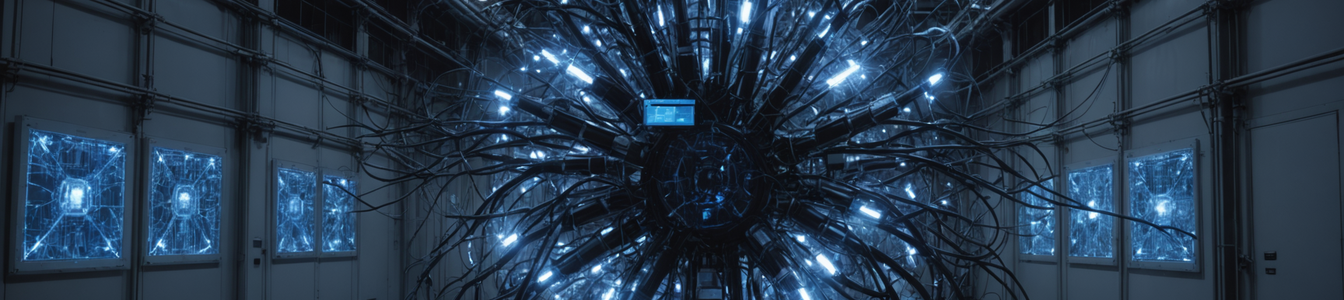
The artificial intelligence revolution is running headlong into a fundamental physical constraint: power. As tech giants scramble to build and operate the data centers that train and run large language models, they are consuming electricity at an unprecedented rate, destabilizing national power grids. In response, grid operators are being forced to make a controversial and risky decision—bringing back online aging, inefficient, and polluting 'peaker' power plants that were previously slated for retirement. This stopgap measure, while addressing an immediate energy crisis, is inadvertently creating a severe and expanding attack surface for critical infrastructure, merging legacy industrial vulnerabilities with the high-value target profile of the AI supply chain.
The Energy Backstop: A Cybersecurity Nightmare
Peaker plants are designed to operate only during periods of peak electricity demand, typically for short durations. Many of these facilities, often powered by natural gas or oil, were constructed decades ago. Their operational technology (OT) and industrial control systems (ICS)—the hardware and software that manage physical processes like turbine speed and voltage output—were engineered for reliability and isolation, not for the interconnected, IP-based world of modern cybersecurity. These systems frequently lack basic security features like regular patching, network segmentation, strong authentication, and comprehensive logging. Their reactivation does not include a wholesale modernization of these security postures; they are being turned back on largely as they were shut down.
This presents a golden opportunity for threat actors. State-sponsored groups from nations like China, Russia, and North Korea have long targeted energy infrastructure for espionage and as a pre-positioning strategy for potential conflict. Criminal ransomware gangs have also increasingly pivoted to critical infrastructure, recognizing the high pressure to pay ransoms to restore essential services. A reactivated peaker plant, now crucial to supporting the multi-trillion-dollar AI industry, becomes a high-impact target. A successful cyber-physical attack could not only cause a local blackout but could also cascade, destabilizing the grid's balance and triggering widespread outages that cripple data center operations.
Corporate Moves and Market Realities
The strategic importance of securing stable, scalable power for AI is driving massive corporate realignment. In a landmark deal, Alphabet Inc., Google's parent company, acquired data center energy specialist Intersect Power for approximately $4.75 billion. This acquisition is not merely a real estate or power purchase agreement; it is a vertical integration move aimed at controlling the entire energy stack—from generation to distribution—for its AI ambitions. From a cybersecurity perspective, this consolidation creates both a challenge and an opportunity. On one hand, it centralizes risk: Alphabet's infrastructure becomes a singular, monumental target. On the other, it gives a single, well-resourced security organization direct control over the entire OT/IT environment of these power assets, potentially allowing for more uniform and robust security standards than a patchwork of third-party operators.
Financial markets are acutely aware of this new paradigm. Analysis indicates that AI's power constraint is creating distinct investment theses. One focuses on the pure-play AI and technology companies, while another, increasingly prominent segment is dedicated to the underlying energy and physical infrastructure enabling AI. Companies that can provide grid stability, modular power solutions, or secure energy management are being revalued as critical enablers of the digital economy. This financial pressure to keep the lights on, literally, can sometimes conflict with the slower, more methodical pace required for thorough cybersecurity hardening of industrial systems.
The Converging Threat Landscape
The risk is not confined to the peaker plants themselves. Their integration into a modern smart grid creates bidirectional vulnerabilities. Legacy OT systems within the plants are now connected to grid management systems that are themselves potential targets. An adversary could exploit a vulnerability in a peaker plant's outdated human-machine interface (HMI) to gain a foothold, then pivot to more sensitive grid control networks. Furthermore, the supply chain for maintaining these revived plants is often fragile, relying on proprietary parts and vendor support for obsolete systems, creating opportunities for software or hardware supply chain compromises.
Mitigation and the Path Forward
Addressing this crisis requires a concerted effort from multiple stakeholders:
- Mandatory Security Baselines: Regulatory bodies like NERC (North America) and their global equivalents must establish and enforce mandatory cybersecurity baselines for all grid-connected generation assets, regardless of their age or operational status. Reactivation permits should be contingent on demonstrating a minimum security posture.
- Public-Private Collaboration: Tech companies investing in energy assets must partner closely with government cybersecurity agencies (CISA, etc.) and grid operators to share threat intelligence and best practices specific to legacy OT environments.
- Zero-Trust for OT: Security architectures must move beyond air-gapping (which is often illusory) and implement zero-trust principles tailored for industrial environments, including micro-segmentation, continuous monitoring of network traffic for anomalies, and strict identity and access management for engineers and vendors.
- Investment in Secure Alternatives: The long-term solution is to accelerate the deployment of modern, secure, and sustainable generation. This includes not only renewables but also next-generation nuclear and geothermal, designed from the ground up with cybersecurity integrated into their OT fabric.
The AI boom is testing the limits of our physical and digital infrastructures simultaneously. The decision to revive dirty, insecure power plants is a stark reminder that technological advancement cannot outpace the foundational systems that support it. For cybersecurity professionals, this represents one of the most significant and complex challenges of the decade: securing the last generation's industrial heart to power the next generation's digital brain.
Comentarios 0
Comentando como:
¡Únete a la conversación!
Sé el primero en compartir tu opinión sobre este artículo.
¡Inicia la conversación!
Sé el primero en comentar este artículo.