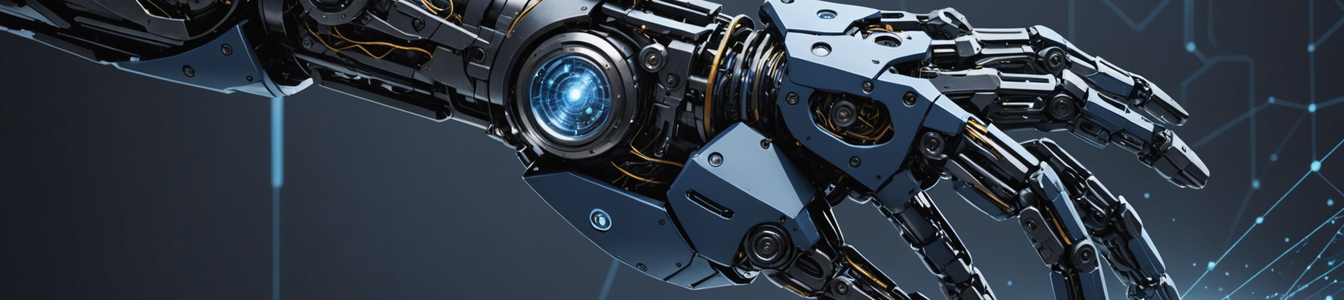
The narrative of artificial intelligence is undergoing a profound shift. No longer confined to the digital realms of data analysis, content generation, and virtual assistants, AI is breaking into the physical world. This transition, marked by significant investments and deployments in robotics, medical technology, and urban infrastructure, represents AI's most consequential—and risk-laden—frontier. For cybersecurity professionals, this move from bits to atoms creates a new class of threats where digital vulnerabilities have immediate, tangible consequences for human safety, public health, and civic stability.
The Robotic Workforce: Hyundai's High-Stakes Bet
The surge in Hyundai Motor's stock, its fastest in five years, is a powerful market signal. It underscores investor confidence in the company's aggressive push into AI and robotics. This isn't about novelty; it's about integrating intelligent, autonomous systems into manufacturing, logistics, and potentially consumer markets. These robots, powered by complex AI models for perception, navigation, and manipulation, represent a massive expansion of the Internet of Things (IoT) attack surface. Each robot is a node—a potential entry point. A compromised industrial robot could cause catastrophic physical damage, halt production lines, or be weaponized within a factory. The security challenge extends beyond traditional network perimeters to the integrity of the robot's firmware, the safety of its control algorithms, and the security of the data it collects and processes on the factory floor.
The Digital Twin of Health: IIT Indore's Body Replica
In a groundbreaking collaboration with AIIMS, researchers at the Indian Institute of Technology (IIT) Indore are developing a 'human body replica' powered by AI. This digital twin aims to diagnose diseases by simulating physiological processes. The promise is revolutionary: personalized medicine and early, accurate detection. The peril, however, is equally significant. This system will process and model highly sensitive personal health data at an unprecedented granularity. A breach here isn't just a leak of medical records; it's the compromise of a dynamic, predictive model of a human body. Threat actors could manipulate diagnostic outcomes, steal proprietary biomedical AI models, or corrupt the data used to train these systems, leading to misdiagnoses on a systemic scale. The convergence of AI with biomedical engineering creates a critical infrastructure where data integrity is directly linked to patient safety.
The Predictive City: AI and Urban Safety
Discussions at forums like Davos 2026 highlight AI's evolving role from a creative tool to a predictive safeguard for public safety. Initiatives are emerging where AI analyzes traffic patterns, road conditions, and driver behavior to predict and prevent road accidents. This application exemplifies the physical-digital convergence: AI algorithms processing real-time data from cameras, sensors, and connected vehicles to make decisions that affect physical safety on roads. The cybersecurity implications are stark. The data pipelines feeding these predictive models must be secure and tamper-proof. An adversary injecting false data—showing clear roads where there are obstructions, for instance—could cause the system to fail catastrophically. Furthermore, the command and control infrastructure for such city-wide systems becomes a high-value target for ransomware or state-sponsored attacks aimed at causing civic chaos.
The Nerve Center: Smart City Command Centers
The launch of the Smart City Command Center at the Deltamas Industrial Estate in Indonesia by Samakta Mitra and NEC Indonesia is a concrete example of this future in operation. This center leverages IoT and AI to optimize everything from traffic flow and energy use to security and emergency response. It is the brain of a modern urban ecosystem, aggregating data from thousands of sensors and controlling myriad systems. This centralization creates a 'single pane of glass' for efficiency but also a single point of catastrophic failure. A sophisticated cyber-attack on such a command center could disable utilities, disrupt transportation, manipulate public surveillance, and cripple emergency services. The attack surface is vast, encompassing the IoT devices, the communication networks (like 5G), the cloud analytics platforms, and the human-machine interfaces used by operators.
The Cybersecurity Imperative: A New Paradigm
This new physical frontier demands a fundamental evolution in cybersecurity strategy. The traditional CIA triad (Confidentiality, Integrity, Availability) must be weighted heavily toward Integrity and Availability, with the added dimension of Safety.
- Safety-by-Design: Security can no longer be an add-on. It must be embedded in the design phase of all physical AI systems, from robots to medical devices to urban IoT sensors. This includes secure boot processes, encrypted sensor-to-cloud communications, and robust access controls.
- Resilience Over Perfection: Assuming breaches will occur, systems must be designed to fail safely. An autonomous vehicle must have a secure fallback mode. A smart grid must be able to segment and isolate compromised sections. A medical diagnostic AI must have human-in-the-loop safeguards for critical decisions.
- Supply Chain Vigilance: These systems are built on complex global supply chains of hardware and software components. A vulnerability in a widely used sensor chip or an open-source robotics library can propagate across millions of devices. Security teams must have deep visibility into their software bill of materials (SBOM) and hardware provenance.
- Regulatory and Ethical Frameworks: The industry is moving faster than regulation. Clear standards and liability frameworks are needed to define who is responsible when a physically embodied AI system causes harm due to a cybersecurity failure. This is crucial for fostering both innovation and public trust.
Conclusion
The integration of AI into robotics, healthcare, and smart cities is inevitable and holds immense promise for economic growth, improved health outcomes, and safer, more efficient urban living. However, this transition dramatically alters the cybersecurity landscape. The stakes are no longer just financial or reputational; they are physical and human. The cybersecurity community must lead the charge in developing the tools, standards, and mindsets required to secure this new frontier. The goal is to ensure that the AI-powered physical world is not only intelligent but also inherently safe, secure, and resilient. The time to build that foundation is now, as these systems transition from prototype to pervasive reality.
Comentarios 0
Comentando como:
¡Únete a la conversación!
Sé el primero en compartir tu opinión sobre este artículo.
¡Inicia la conversación!
Sé el primero en comentar este artículo.