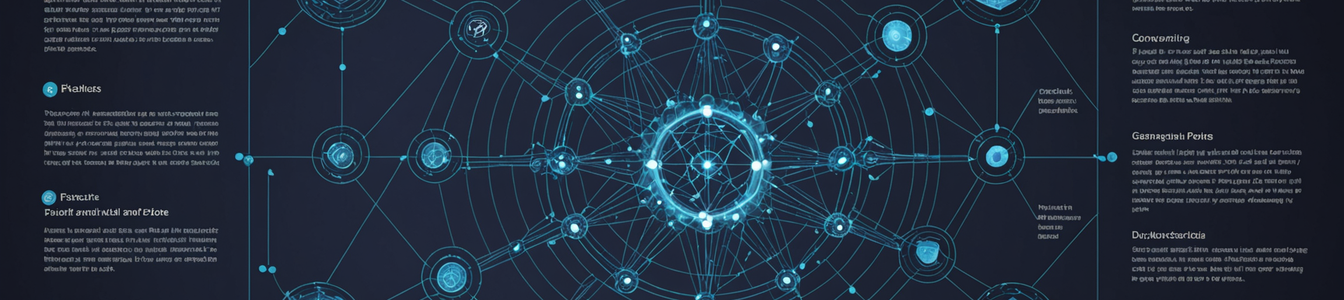
The cybersecurity landscape is undergoing a paradigm shift so profound it's redefining the very nature of governance, compliance, and risk management. Welcome to the era of 'governance-by-code'—a transformative approach where security policies, compliance requirements, and operational controls are embedded directly into automated systems through AI-augmented platform engineering. This isn't merely another tool in the security arsenal; it's a fundamental rearchitecture of how enterprises manage systemic trust in increasingly complex digital ecosystems.
The Platform Engineering Revolution
At the heart of this transformation lies AI-augmented platform engineering, a discipline that moves beyond traditional DevOps to create self-service, policy-driven platforms where governance is intrinsic rather than applied. As highlighted in recent architectural blueprints, forward-thinking organizations are building platforms that encode compliance requirements directly into their infrastructure-as-code templates, deployment pipelines, and runtime environments. This approach transforms security from a gatekeeping function to an enabling capability, allowing development teams to move faster while automatically adhering to security and compliance standards.
Platform architects are designing systems where every deployment automatically validates against hundreds of security policies before reaching production. AI agents monitor for policy drift, detect anomalous configurations, and even suggest remediation steps—all without human intervention. This represents a survival strategy for enterprises operating at cloud scale, where manual governance processes simply cannot keep pace with the velocity of change.
The Regulatory Imperative and Enforcement Challenge
The rise of governance-by-code coincides with increasing regulatory scrutiny of AI systems worldwide. The European Union's AI Act represents a landmark attempt to establish risk-based guardrails for artificial intelligence, categorizing systems by their potential harm and imposing corresponding requirements. However, as experts warn, even the most comprehensive legislation risks failure without strong enforcement capacity.
This is where governance-by-code offers a compelling solution. By encoding regulatory requirements directly into development and deployment workflows, organizations can demonstrate continuous compliance rather than periodic validation. For high-risk AI systems—such as those used in recruitment, where AI agents now conduct initial job interviews—automated governance ensures fairness, transparency, and bias mitigation are baked into the system rather than audited after the fact.
Sustainability Through Digital Financial Transformation
An often-overlooked dimension of this transformation is its connection to sustainability and financial governance. Effective IT governance now directly contributes to organizational sustainability, but primarily through digital financial transformation. Automated governance platforms provide real-time visibility into resource utilization, cost allocation, and carbon footprint across cloud environments.
By integrating financial controls with security policies in code, organizations can simultaneously optimize for security, cost efficiency, and environmental impact. This convergence creates powerful incentives for adoption: governance-by-code isn't just about risk reduction; it's about operational excellence and sustainable growth.
The Human Dimension in an Automated World
As AI agents take on increasingly sophisticated roles—from conducting job interviews to managing security incident response—the human role evolves rather than diminishes. Cybersecurity professionals must develop new competencies in policy engineering, machine learning oversight, and automated governance design. The challenge becomes less about manually enforcing rules and more about designing systems that enforce the right rules automatically.
This shift requires security teams to collaborate more closely with platform engineers, financial operations, and legal compliance departments. The governance-by-code architect becomes a crucial role, translating regulatory requirements, business policies, and security best practices into executable code that scales across the organization.
Implementation Challenges and Strategic Considerations
Adopting governance-by-code presents significant challenges. Organizations must overcome cultural resistance to automated enforcement, develop new skill sets, and establish clear accountability frameworks. Technical hurdles include creating comprehensive policy libraries, integrating disparate systems, and ensuring the governance platforms themselves are secure and resilient.
Strategically, organizations should start with high-impact, high-risk areas such as cloud infrastructure deployment, AI model governance, and financial controls. Pilot programs that demonstrate tangible improvements in compliance velocity, risk reduction, and operational efficiency can build momentum for broader adoption.
The Future of Systemic Trust
Looking ahead, governance-by-code represents more than a technological shift—it's a new foundation for systemic trust in digital ecosystems. As organizations increasingly rely on AI-driven decisions and automated processes, demonstrable, auditable governance becomes a competitive advantage and a regulatory necessity.
The convergence of platform engineering, AI augmentation, and automated compliance creates unprecedented opportunities to build organizations that are simultaneously more agile, more secure, and more trustworthy. For cybersecurity leaders, the message is clear: the future of governance is coded, continuous, and automated. Those who master this transition will define the next generation of enterprise security and compliance excellence.
Comentarios 0
Comentando como:
¡Únete a la conversación!
Sé el primero en compartir tu opinión sobre este artículo.
¡Inicia la conversación!
Sé el primero en comentar este artículo.