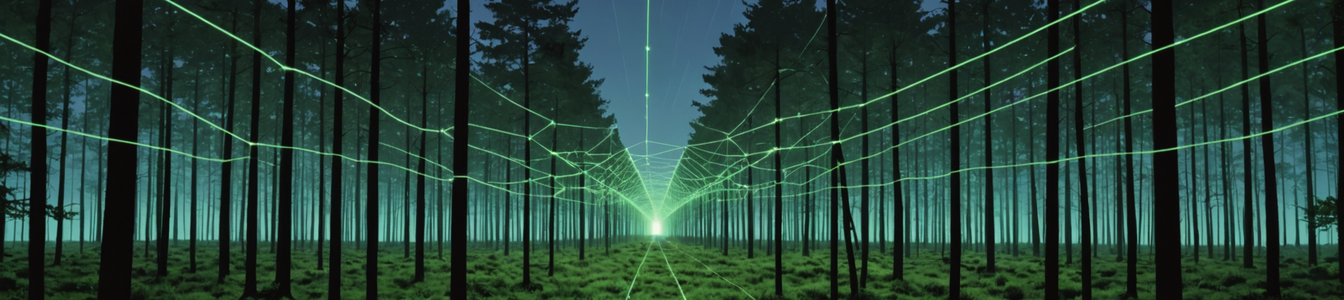
The dense forests of Odisha's Similipal Tiger Reserve, a UNESCO biosphere, have long been a battleground between conservationists and poachers. Traditional patrols and static cameras offered limited deterrence against well-armed, knowledgeable intruders. However, a recent deployment of an AI-powered surveillance network has rewritten the rules of engagement, leading directly to the surrender of 39 armed poachers—a case study that resonates far beyond wildlife conservation, offering profound lessons for the physical security and cybersecurity domains.
The core of this success lies in a network of AI-enabled cameras strategically deployed across known infiltration routes. Unlike conventional CCTV, these systems are equipped with sophisticated computer vision algorithms capable of real-time object detection, classification, and behavioral analysis. They don't just record footage; they interpret it. The AI was trained to distinguish between human movement patterns and those of wildlife, to identify the presence of weapons, and to recognize suspicious group behavior, especially during nocturnal hours when poaching activity peaks.
When the system detected multiple armed individuals breaching the reserve's perimeter, it triggered an immediate, multi-layered alert. Forest rangers and law enforcement were notified in real-time with precise GPS coordinates and visual evidence. Crucially, the AI's predictive capability meant authorities were not reacting to a crime in progress but were alerted to a high-probability threat before any animal was harmed. Faced with the certainty of being tracked, monitored, and intercepted—their traditional advantage of stealth completely nullified—the group of 39 poachers chose to surrender to authorities, a testament to the psychological and operational impact of pervasive, intelligent surveillance.
Implications for the Security Professional
For cybersecurity and physical security experts, the Similipal case is a textbook example of the 'Security Convergence' trend accelerating in 2024. It demonstrates the practical application of core cybersecurity principles to a physical environment:
- From Reactive to Predictive & Proactive Security: Modern SOCs (Security Operations Centers) rely on SIEM and XDR to correlate events and predict attacks. This AI surveillance system operates on the same principle: analyzing behavioral patterns (network traffic in cyberspace, human movement in physical space) to flag anomalies before an incident occurs.
- Automated Threat Detection and Response (ADR): Just as EDR solutions automatically isolate a compromised endpoint, this system automated the initial detection and alerting phase, compressing the critical 'detection-to-response' timeline from days or hours to minutes.
- Perimeter Defense Reimagined: The 'firewall' for this reserve was not a static fence but an intelligent sensory network. It provides a model for securing vast, remote critical infrastructure—pipelines, power grids, border areas—where human patrols are sparse and inefficient.
- The Deterrence Factor of Certain Detection: In cybersecurity, the certainty of detection is a more powerful deterrent than the severity of punishment. The poachers' surrender underscores this principle in the physical world. When potential adversaries know an intelligent system is watching, the incentive to attempt a breach plummets.
Technical Considerations and Future Applications
The system likely employs edge computing, where initial data processing occurs on the camera itself or a local gateway. This reduces bandwidth requirements—critical in remote areas—and enables faster real-time analysis. The AI models would require continuous training on diverse datasets to minimize false positives (e.g., misidentifying a researcher with equipment as a poacher).
The blueprint proven in Similipal is directly transferable. Imagine similar networks monitoring:
- Critical National Infrastructure: Using AI to distinguish between routine maintenance crews and unauthorized saboteurs near dams or substations.
- Smart Cities: Enhancing public safety by detecting unusual crowd gatherings, unattended bags, or traffic anomalies in real-time.
- Corporate Campuses and Data Centers: Extending cybersecurity's zero-trust model to the physical layer, where AI verifies access patterns and flags tailgating or perimeter breaches.
Challenges on the New Frontier
This evolution is not without its challenges. It raises significant questions about privacy, data sovereignty, and algorithmic bias that are familiar to cybersecurity governance teams. The deployment of such powerful surveillance tools must be governed by clear ethical frameworks, transparency, and legal oversight to prevent mission creep and protect civil liberties. Furthermore, the system's resilience—its own cybersecurity—becomes paramount. A network of AI cameras is an IoT ecosystem vulnerable to hacking, spoofing, or denial-of-service attacks, requiring the same rigorous hardening as any other critical network.
The surrender of 39 poachers in Similipal is not merely a conservation victory. It is a powerful signal flare for the security industry. It proves that AI-driven, predictive physical security systems are operationally effective today. They represent the maturation of surveillance from a passive recording tool into an active, intelligent participant in defense strategy. As threats in both the digital and physical worlds grow more sophisticated, the convergence of these disciplines, exemplified by this AI game warden, is no longer a futuristic concept—it is the new standard for comprehensive security.
Comentarios 0
Comentando como:
¡Únete a la conversación!
Sé el primero en compartir tu opinión sobre este artículo.
¡Inicia la conversación!
Sé el primero en comentar este artículo.