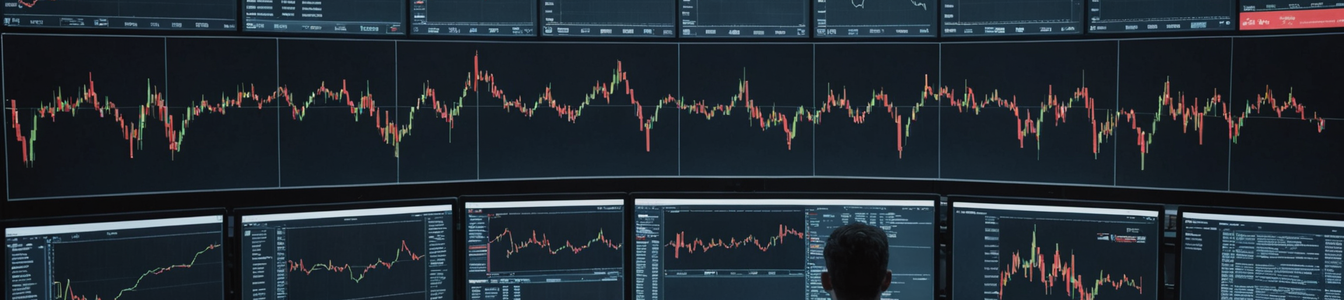
The AI Market Panic: How Security Fears Are Triggering Global Financial Instability
A seismic shift is occurring in global financial markets, where the traditional drivers of volatility—interest rates, inflation, geopolitical tensions—are being overshadowed by a new and potent force: cybersecurity anxiety surrounding artificial intelligence. Over the past week, a synchronized selloff has cratered software and data analytics stocks across Asia, Europe, and the United States, exposing a profound and systemic vulnerability where technological fear translates directly into financial contagion.
The immediate catalyst was the announcement of new, highly autonomous AI agent tools by Anthropic. Unlike previous AI iterations focused on assistance, these tools are perceived by the market as capable of performing complex, multi-step tasks that could directly compete with or replace core functions of established enterprise software. Investors, lacking deep technical insight into the actual security, reliability, and integration limitations of these agents, reacted with a broad-based flight from the entire sector. The narrative of "AI-led disruption" became self-fulfilling, with shares in major software firms and data analytics providers plunging, dragging down broader indices.
From Technical Concern to Market Contagion
The selloff pattern reveals a critical failure in risk communication. The fears are multifaceted: the cybersecurity of the AI agents themselves (potential for manipulation, data exfiltration, or unreliable outputs), the economic security of software vendors whose products might be displaced, and the operational security of enterprises that may face chaotic, unplanned transitions. These technical and strategic concerns, often debated in specialist circles, were amplified into a monolithic market risk. Asian markets, following the decline of U.S. peers, experienced sharp plunges in software stocks. European and U.S. futures initially steadied after the heavy selling, but the underlying anxiety continues to wobble investor confidence globally.
Industry attempts to provide reassurance have had limited effect. Nvidia CEO Jensen Huang publicly dismissed fears that AI would replace entire software toolchains, arguing instead for an augmentation model. "AI is a new computing paradigm that will require more software, not less," he stated, emphasizing the continued need for robust platforms, security layers, and human oversight. However, his voice was largely drowned out by the market's visceral reaction to the perceived threat. This disconnect highlights a gap where the nuanced understanding of cybersecurity professionals—who see AI as a complex tool with specific attack surfaces and dependencies—fails to translate into the binary, momentum-driven logic of equity markets.
The Cybersecurity Professional's Perspective on Systemic Risk
For the cybersecurity community, this episode is a stark warning. It demonstrates that perceptions of AI security and stability have evolved from an IT cost center issue to a material factor in global financial stability. The market is pricing in a form of "technological risk premium" that is poorly defined and highly reactive. Key vulnerabilities exposed include:
- Asymmetric Information: Investors act on headlines and narratives, not on detailed threat models or architecture reviews of AI systems. A vague announcement about "advanced AI agents" can trigger panic without anyone assessing their actual security posture or integration challenges.
- Contagion via Supply Chain Fear: The selloff wasn't confined to companies building AI. It spread to providers of data infrastructure, analytics platforms, and general enterprise software, based on the fear of an entire digital ecosystem being disrupted. This mirrors supply chain cyber risks, where a breach at one vendor compromises many.
- The Narrative as a Vector: The incident proves that the story about AI security—whether it's about job displacement, autonomous hacking, or unreliable code generation—can be as damaging as a real-world exploit. Managing this narrative becomes a core component of cyber-risk management for public companies.
Moving Forward: Securing Markets in the Age of AI Anxiety
Stabilizing this new landscape requires action from both the tech and financial sectors. Cybersecurity leaders must engage more directly with investors, regulators, and financial analysts to demystify AI risks. This involves clear communication on:
- The tangible security controls governing new AI agents (e.g., sandboxing, audit trails, input/output validation).
- The enduring necessity of secure software platforms, regardless of AI advancements.
- The realistic timeline for secure, enterprise-grade AI integration versus market hype.
Financial regulators and risk modelers, in turn, must begin to incorporate technological disruption and cybersecurity resilience as formal factors in systemic risk assessments. The old models are obsolete.
The recent market panic is not an anomaly; it is a precedent. As AI agents become more capable and pervasive, their perceived security and economic impact will increasingly sway capital flows. Building a more resilient system requires bridging the chasm between the server room and the trading floor, ensuring that the complex reality of cybersecurity informs the high-stakes decisions that shape our global economy. The stability of markets may now depend as much on secure code and robust AI governance as it does on monetary policy.
Comentarios 0
Comentando como:
¡Únete a la conversación!
Sé el primero en compartir tu opinión sobre este artículo.
¡Inicia la conversación!
Sé el primero en comentar este artículo.