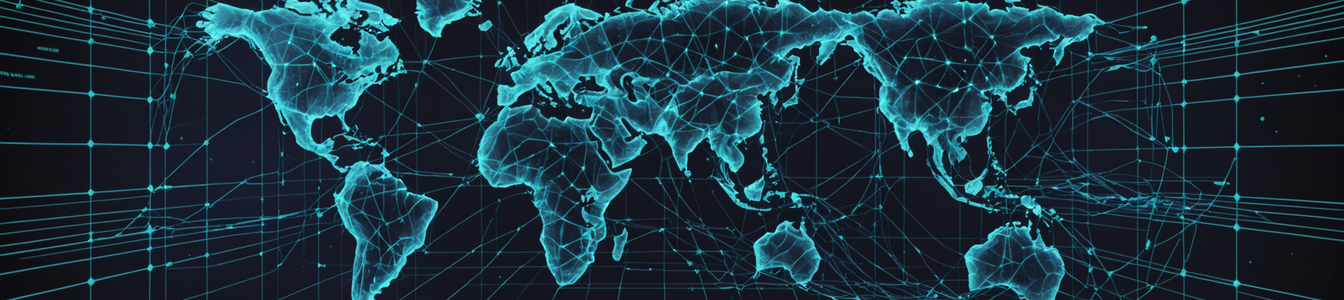
The strategic map of global cybersecurity operations is being redrawn. No longer confined to traditional hubs in North America and Europe, the Security Operations Center (SOC) is becoming a distributed, intelligence-driven asset, with its geography dictated by talent, technology, and strategic supply chains. The recent announcement by cybersecurity firm Scybers of a new, AI-powered SOC in Chennai, India, is a prime example of this shift, reflecting a broader industry race to build resilient, scalable, and intelligent security operations for a global clientele.
The Chennai Gambit: AI and Global Talent Convergence
Scybers' new Chennai facility is not merely an offshore support center; it is billed as a next-generation SOC leveraging 'agentic AI' to deliver proactive security for global enterprises. The term 'agentic AI' refers to artificial intelligence systems capable of autonomous action, decision-making, and goal pursuit within defined parameters. In a SOC context, this translates to AI agents that can independently investigate alerts, correlate events across disparate systems, initiate containment procedures, and even execute basic remediation tasks—all under human supervision.
This move underscores a critical trend: the decoupling of high-value security operations from high-cost geographic locations. India offers a potent combination of a deep, technically skilled workforce and significant cost advantages. By establishing a SOC in Chennai, Scybers aims to provide 24/7, follow-the-sun monitoring and response services at a competitive price point, while injecting advanced AI capabilities to handle the volume and sophistication of modern threats. For CISOs of multinational corporations, this model promises enhanced coverage and faster mean time to respond (MTTR), but it also introduces new considerations regarding data sovereignty, regulatory compliance across jurisdictions, and the management of a geographically dispersed security team.
The Hidden Foundation: Securing the Supply Chain
While the digital expansion of SOCs captures headlines, parallel strategic moves in the physical supply chain are equally critical for the future of cybersecurity and advanced computing. The announcement of Stallion India Fluorochemicals entering a long-term strategic partnership for liquid helium sourcing is a case in point. While not a cybersecurity story on its surface, it highlights a foundational dependency.
Liquid helium is an essential coolant for the superconducting magnets used in Magnetic Resonance Imaging (MRI) machines, large-scale scientific research, and—most pertinently for cybersecurity—the emerging field of quantum computing. Quantum computers, which promise to break current encryption standards, require extreme cooling, often provided by liquid helium. Furthermore, advanced data centers supporting AI workloads and high-performance computing are exploring more efficient cooling technologies, some of which rely on specialized gases and materials.
The security of these supply chains is a matter of national and corporate security. Disruptions in the sourcing of critical materials like liquid helium could impede technological progress in fields that will define the next generation of both cyber threats and defenses. This partnership signals a recognition of the need to secure these physical inputs, ensuring stability for the technologies that future SOCs will need to protect and, eventually, integrate.
Reshaping Dependencies and the CISO's Calculus
The confluence of these two developments—SOC geographic expansion and strategic supply chain partnerships—reshapes the risk and dependency landscape for security leaders. The decision to outsource SOC functions or partner with a Managed Security Service Provider (MSSP) now involves a multi-layered analysis:
- Geopolitical and Operational Resilience: Where are your SOC's nodes located? Are they in politically stable regions with robust digital infrastructure? The Chennai expansion diversifies the global SOC footprint, potentially mitigating risks associated with concentration in a single region.
- Technological Maturity and AI Integration: Can the SOC move beyond traditional, alert-centric models? The emphasis on 'agentic AI' indicates a shift towards autonomous operation, which could dramatically improve efficiency but requires rigorous oversight and validation of AI decision-making processes.
- Supply Chain Assurance for Security Providers: Does your security provider itself have a resilient supply chain? The ability of a firm like Scybers to operate its AI-powered data centers and infrastructure depends on the stability of underlying technological supply chains, from semiconductors to cooling materials.
The Road Ahead: Distributed Intelligence
The SOC of the near future is evolving into a network of distributed intelligence nodes. Centers like the one in Chennai will act as AI-augmented hubs, processing regional threat intelligence, leveraging local talent, and executing automated response playbooks. Their effectiveness will be tied to seamless integration with a global security fabric and the uninterrupted operation of the complex physical infrastructure that supports them.
For the cybersecurity community, the message is clear. Strategic planning must now encompass a holistic view that includes the location of security operations, the sophistication of their automation, and the integrity of the entire technological stack—from the software agents hunting for threats to the rare-earth elements cooling the servers they run on. The race is no longer just about having a SOC; it's about building an intelligent, resilient, and well-supported security operations ecosystem capable of weathering both digital storms and physical supply chain shocks.
Comentarios 0
Comentando como:
¡Únete a la conversación!
Sé el primero en compartir tu opinión sobre este artículo.
¡Inicia la conversación!
Sé el primero en comentar este artículo.