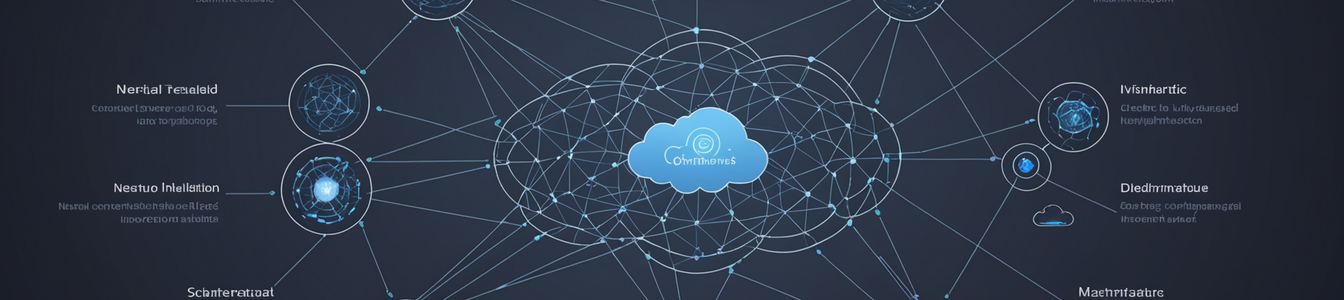
The strategic push for sovereign cloud capabilities is entering a new, more intelligent phase. The recent official listing of SecureKloud's AI-powered platform, DocuGenie.AI, on the Google Cloud Marketplace serves as a concrete indicator of this evolution. This move represents more than just another SaaS product launch; it is a signal of how specialized artificial intelligence solutions are being strategically positioned to address the complex trifecta of national data sovereignty mandates, enterprise digital transformation, and escalating cybersecurity requirements.
DocuGenie.AI is positioned as a document intelligence solution, leveraging AI and machine learning to automate the processing, analysis, and management of complex document workflows. For enterprises in heavily regulated verticals—such as banking, insurance, healthcare, and government agencies—the automation of document handling is not merely an efficiency play. It is a critical cybersecurity and compliance imperative. Manual document processing is prone to errors, inconsistencies, and security lapses, creating vulnerabilities and compliance gaps. By automating these processes with an AI layer, organizations can enforce consistent policy application, improve data accuracy, and create detailed audit trails.
The choice of the Google Cloud Marketplace as the launchpad is highly strategic. Official marketplace listings provide a seal of technical validation and simplified procurement, especially for public sector and large enterprise clients bound by strict procurement rules. For Google, featuring solutions like DocuGenie.AI enhances the value proposition of its cloud regions, particularly those designated for sovereign or government use. It demonstrates an ecosystem capable of delivering not just infrastructure, but sophisticated, compliant applications that meet local regulatory demands.
Cybersecurity Implications: Beyond Automation
For cybersecurity leaders, the arrival of such AI platforms on sovereign-cloud-aligned marketplaces presents a nuanced landscape. The primary benefit is the potential for 'compliance by design.' A solution vetted and listed for use within a specific cloud region's compliance framework (like GDPR in Europe or various data protection laws in Asia) can reduce the compliance burden. It promises that data processing, model training (where applicable), and storage adhere to the geographical and legal constraints of a sovereign cloud deployment.
However, this integration raises critical questions that CISO offices must scrutinize:
- The Sovereignty of Intelligence: If an AI model is trained on data residing in a sovereign cloud, but the underlying model architecture or ongoing learning loops are managed by a global provider, where does true 'sovereignty' lie? The integrity and confidentiality of the training data and the resulting model weights become a new frontier for data governance.
- Vendor Lock-in in the AI Stack: Adopting an AI solution deeply integrated into a specific cloud provider's marketplace and services can create a form of 'AI stack lock-in.' Migrating to another cloud or an on-premise AI system later could be prohibitively complex and costly, potentially limiting strategic flexibility.
- Transparency and Auditability: The 'black box' nature of some AI models conflicts with the principles of transparency required for strict regulatory audits. Cybersecurity teams must ensure that the AI's decision-making processes, especially in document classification or data extraction, are explainable and auditable to meet compliance standards.
- Shared Responsibility Model Expansion: The classic cloud shared responsibility model expands into a more complex triad. The cloud provider (Google) manages infrastructure security, the ISV (SecureKloud) is responsible for application-level security and AI model integrity, and the customer retains responsibility for their data, user access, and overall governance. Defining and auditing these boundaries is crucial.
The Broader Trend: Sovereign AI Ecosystems
The listing of DocuGenie.AI is a microcosm of a macro-trend: the construction of sovereign AI ecosystems. Nations are not only demanding that data stay within borders but are increasingly concerned with fostering national AI capabilities and retaining economic value. Local ISVs developing AI solutions for global cloud marketplaces contribute to this ecosystem. However, the dependency on the global hyperscaler's platform remains, sparking debates about technological sovereignty.
Conclusion
The integration of AI platforms like DocuGenie.AI into major cloud marketplaces is a logical and necessary step for the industry. It provides enterprises with practical tools to achieve digital transformation while navigating the labyrinth of data sovereignty laws. For the cybersecurity community, it underscores the need to evolve governance frameworks. Security postures must now account for the sovereignty, explainability, and supply-chain integrity of the AI models themselves, not just the data they process. As sovereign clouds get smarter, so too must the strategies to secure them. The future of secure, compliant enterprise operations will hinge on the ability to successfully harness these intelligent tools without compromising on core principles of data control, transparency, and strategic independence.
Comentarios 0
Comentando como:
¡Únete a la conversación!
Sé el primero en compartir tu opinión sobre este artículo.
¡Inicia la conversación!
Sé el primero en comentar este artículo.