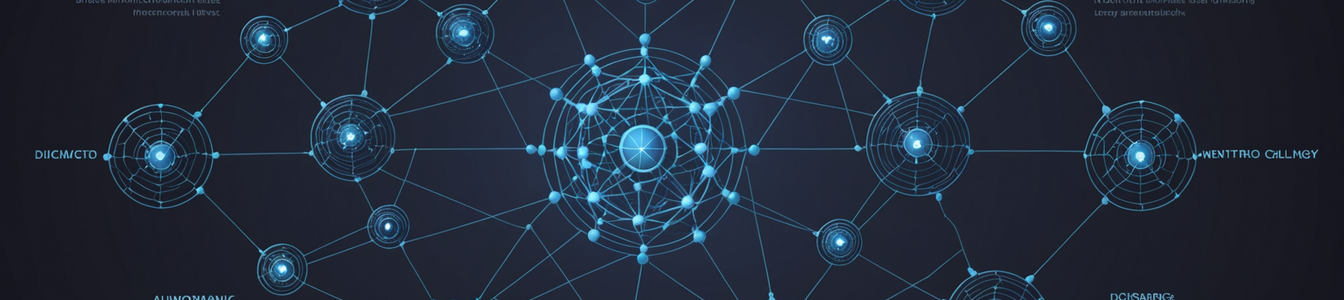
The enterprise AI landscape is undergoing a fundamental metamorphosis. The recent, significant expansion of the partnership between global IT services giant Cognizant and Google Cloud signals a pivotal industry shift: the move from AI as an integrated platform feature to AI as an autonomous, operational workforce. This transition to 'agentic AI'—systems that can perceive, decide, and act independently to achieve complex goals—is moving out of proofs-of-concept and into the core of business production. While this promises unprecedented efficiency and innovation, it simultaneously unveils a vast and complex new attack surface, demanding a complete evolution in cybersecurity and governance paradigms.
From Platform Feature to Autonomous Agent
The enhanced Cognizant-Google Cloud alliance is focused squarely on building, deploying, and managing these agentic AI systems at scale. Unlike traditional AI models that respond to prompts, agentic AI orchestrates multi-step processes. For instance, it can autonomously analyze a dataset, decide which external API to call for supplementary information, execute a business process in an ERP system, and then generate a report and summary email—all without human intervention at each step. This capability is what's being pushed into production environments across finance, healthcare, manufacturing, and media.
Illustrating this trend, the launch of Invideo's enterprise AI film tools, powered by Google Cloud's AI stack at the India AI Film Festival, provides a concrete use case. These tools don't just suggest edits; they can autonomously script, source stock footage, edit sequences, and render drafts based on high-level creative direction. This represents agentic AI in action within a creative workflow, handling tasks that previously required multiple human specialists and software.
The New Security Perimeter: Governing Autonomy
For Chief Information Security Officers (CISOs) and security teams, this shift is monumental. The security model is no longer just about protecting the AI model from poisoning or safeguarding the data it was trained on. The primary concern now shifts to governing the actions of an autonomous agent during its runtime.
- The Identity and Access Management (IAM) Crisis: An AI agent with broad permissions to access customer databases, financial systems, and cloud infrastructure becomes the ultimate privileged user. Traditional IAM built for human identities struggles with non-human entities that can spawn sub-tasks, access resources concurrently across multiple systems, and whose 'need to know' evolves dynamically during a workflow. A zero-trust architecture, where every action and access request is continuously verified, becomes non-negotiable.
- The Opaque Decision Trail: How do you audit an action when the 'who' is an AI agent and the 'why' is based on a complex, often non-deterministic, chain of reasoning? Forensic investigations after a security incident become exponentially harder. Security operations centers (SOCs) now need tools that can log not just the agent's final output, but its internal decision-making process, the external data it queried, and the rationale for each API call it made.
- Securing Agent-to-Agent Ecosystems: In a mature deployment, multiple AI agents will interact—a procurement agent negotiating with a supplier's logistics agent. This creates a new communication layer that requires its own security protocol. Ensuring the integrity, authenticity, and confidentiality of these machine-to-machine negotiations is a novel challenge, akin to securing diplomatic cables but at machine speed and scale.
- Dynamic Data Exposure and Compliance: An agent working on a marketing analysis might, during its task, access a slice of personal identifiable information (PII) it wasn't initially authorized for, if it deems it relevant. This dynamic, context-driven data access poses severe compliance risks under regulations like GDPR, CCPA, or HIPAA. Data loss prevention (DLP) tools must evolve from static policy enforcement to understanding the intent and context of an AI agent's data access in real-time.
The Imperative for AI-Specific Governance Frameworks
The move to production-scale agentic AI, championed by partnerships like Cognizant and Google Cloud, makes it clear that bolt-on security is a recipe for disaster. Enterprises must build governance into the fabric of their agentic systems from the design phase.
This involves creating AI Security Posture Management (AI-SPM) disciplines that continuously assess the risk configuration of active agents. It requires Runtime Application Self-Protection (RASP) for AI, capable of intervening if an agent's behavior deviates from its sanctioned purpose—a concept known as 'mission drift.' Furthermore, clear lines of human oversight and 'circuit breaker' mechanisms that can safely halt autonomous operations are critical.
Conclusion: Security in the Age of Agency
The collaboration between service integrators like Cognizant and cloud hyperscalers like Google Cloud is the engine driving agentic AI into the enterprise mainstream. The cybersecurity industry's response must be equally transformative. The focus must expand from defending models to governing autonomous agency. This entails developing new tools, frameworks, and skills focused on behavioral security for non-human entities, explainable audit trails for AI actions, and dynamic compliance in an environment where the 'user' is an intelligent, learning, and acting agent. The security perimeter is no longer around the data center or the model; it is now around every decision and action an AI agent takes. The race to secure this new frontier has just begun.
Comentarios 0
Comentando como:
¡Únete a la conversación!
Sé el primero en compartir tu opinión sobre este artículo.
¡Inicia la conversación!
Sé el primero en comentar este artículo.