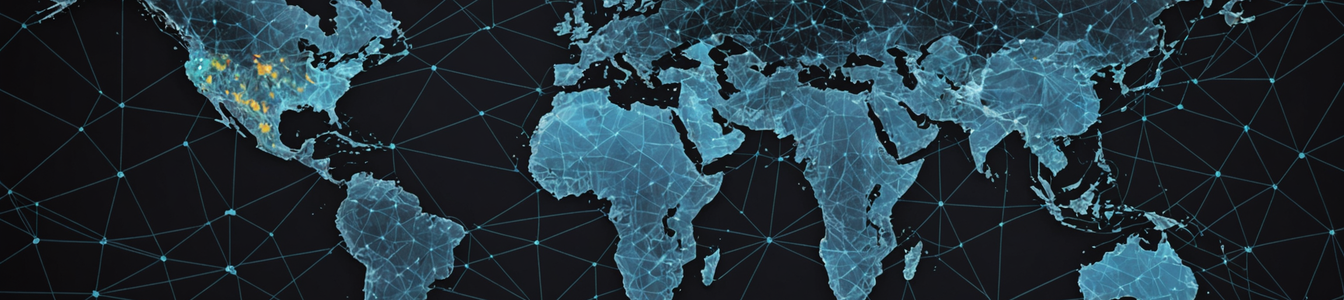
The Geopolitical Chessboard Redrawn: AI Sovereignty Alliances Forge New Cyber Frontiers
The traditional dichotomy of US-China technological competition is rapidly giving way to a more complex, multipolar reality. A new world order is crystallizing around artificial intelligence and semiconductor sovereignty, with profound implications for global cybersecurity. Recent strategic moves by key nations are not merely economic decisions; they are the foundational acts of new technological blocs that will define cyber defense, supply chain security, and digital governance for decades to come.
Israel's Strategic Pivot: Joining the Pax Silica Framework
In a significant geopolitical maneuver, Israel has officially joined the 'Pax Silica' international AI initiative. This move represents more than just membership in a collaborative forum; it is a strategic alignment with a growing coalition of nations seeking to establish an alternative technological ecosystem. Pax Silica, understood by analysts as a consortium focused on securing AI and semiconductor supply chains among allied democracies, gains considerable heft with Israel's inclusion. The nation's formidable cybersecurity industry, renowned offensive and defensive capabilities, and deep innovation ecosystem make it a powerhouse addition.
For cybersecurity professionals, Israel's integration into Pax Silica suggests a future where threat intelligence sharing, joint research on AI security (including adversarial machine learning and secure model development), and coordinated responses to state-sponsored cyber threats will intensify within this bloc. It also implies a potential harmonization of cybersecurity standards and certification regimes for AI systems among member states, creating a distinct regulatory zone that multinational corporations must navigate.
India's Meteoric Rise: The Third AI Superpower
Concurrent with these alliance formations, the global AI hierarchy is being reshuffled. According to the latest Stanford University AI Index Report, India has surged to become the world's third most competitive AI power, surpassing major economies like the United Kingdom, Germany, and Japan. This ranking, based on factors including talent, research output, investment, and implementation, cements India's status as a pivotal 'swing state' in the new tech world order.
India's ascendance is not just an economic story; it is a cybersecurity imperative. As a democratic nation with a vast digital population and a thriving tech services sector, India's AI trajectory will influence global norms. Its approach to data governance (through policies like the Digital Personal Data Protection Act), its stance on algorithmic accountability, and its development of indigenous AI solutions for critical infrastructure will create a new center of gravity. Cybersecurity teams worldwide must now account for Indian-origin AI models, platforms, and the unique threat landscape they might engender or be targeted by. India's position allows it to potentially act as a bridge or a buffer between existing blocs, making its internal cybersecurity policies a matter of global interest.
Supply Chain Diversification: TSMC's Japanese Gambit
The physical foundation of AI—advanced semiconductors—is also being reconfigured along geopolitical lines. In a critical development for hardware security, Taiwan Semiconductor Manufacturing Company (TSMC) is reportedly weighing plans to add advanced AI chip production capacity at its Kumamoto plant in Japan. This move, driven by customer requests and geopolitical risk mitigation, represents a tangible step in diversifying the world's most critical technology supply chain away from the Taiwan Strait.
From a cybersecurity and resilience perspective, this diversification is double-edged. On one hand, it reduces single-point-of-failure risks for the global economy and hardens supply chains against regional conflict or coercion. For chief information security officers (CISOs), a more geographically distributed source of advanced chips could enhance business continuity planning. On the other hand, it introduces new complexities. Securing design intellectual property across multiple jurisdictions, ensuring consistent hardware security standards (like root-of-trust implementations) across fabs in different countries, and auditing for potential hardware-level vulnerabilities become more challenging. Japan's entry as a major hub for cutting-edge AI chip production also places its industrial infrastructure squarely in the crosshairs of sophisticated state and criminal cyber actors.
The Cybersecurity Implications of a Fragmented AI Order
The convergence of these three trends—alliance formation, the rise of new powers, and supply chain diversification—heralds a fragmented future for cybersecurity.
- Balkanized Threat Landscapes: Cyber threats will increasingly reflect the priorities and conflicts of these tech blocs. Espionage campaigns may focus on exfiltrating AI research from rival alliances, while disruptive attacks could target the physical or digital infrastructure of competing semiconductor supply chains. Attribution will become even more convoluted as proxies and aligned non-state actors proliferate.
- Competing Security Standards: The world may see the emergence of competing security certifications for AI systems: a 'Pax Silica standard', a potential 'BRICS+ AI framework', and others. Companies operating globally will face the costly and complex burden of complying with multiple, possibly contradictory, sets of regulations governing AI safety, data privacy, and cybersecurity audits.
- The Weaponization of Interdependence: Control over key chokepoints in the AI supply chain—from chip design software (EDA) to rare earth minerals—will become a potent tool of statecraft. Denial of service or the insertion of vulnerabilities could be executed not just through code, but through legal, export-control, or logistical means, requiring cybersecurity teams to expand their risk models far beyond traditional network perimeters.
- The Talent War Goes Global: The competition for elite AI and cybersecurity talent will intensify, with each bloc seeking to attract and retain the minds that will secure its technological edge. This will drive innovation in defensive technologies but also lead to heightened insider threat risks and intellectual property theft.
Conclusion: Navigating the New Multipolar Cyber World
For the cybersecurity community, the message is clear: the strategic environment is evolving from a bilateral tech cold war to a multilateral contest for AI sovereignty. Professionals must broaden their focus from technical vulnerabilities to include geopolitical risk analysis, supply chain mapping for critical hardware and software dependencies, and an understanding of emerging international technical standards. The defenses of tomorrow will need to be as adaptable and alliance-aware as the threats they are designed to counter. In the age of AI sovereignty, cybersecurity is no longer just an IT function; it is a core element of national and economic security in a divided digital world.
Comentarios 0
Comentando como:
¡Únete a la conversación!
Sé el primero en compartir tu opinión sobre este artículo.
¡Inicia la conversación!
Sé el primero en comentar este artículo.