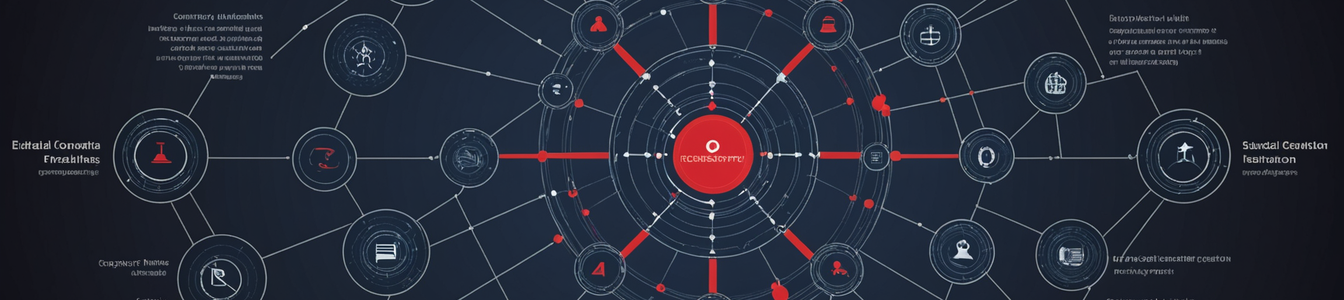
The rapid proliferation of artificial intelligence across critical sectors is exposing significant governance gaps that traditional regulatory bodies are struggling to address. As AI systems become increasingly embedded in judicial, financial, and healthcare operations, sector-specific regulators face unprecedented challenges in maintaining oversight and ensuring ethical compliance.
In the judicial sector, Supreme Court of India Chief Justice BR Gavai recently highlighted the emerging threats of generative AI misuse, specifically mentioning instances where judges have encountered morphed pictures and other AI-generated content designed to influence judicial proceedings. This acknowledgment from one of the world's largest judicial systems underscores the vulnerability of legal institutions to AI-powered manipulation and the urgent need for regulatory frameworks that can address these novel threats to judicial integrity.
The financial sector is witnessing its own regulatory transformation, with Malaysian banking institutions leading the charge in developing sophisticated AI governance frameworks. Banks in Malaysia are accelerating AI adoption while implementing comprehensive ethical compliance measures that address algorithmic transparency, data privacy, and bias mitigation. This proactive approach reflects the financial industry's recognition that AI systems require continuous monitoring and validation rather than traditional periodic compliance checks.
Healthcare and pharmaceutical regulators face particularly complex challenges, as experts note that AI projects cannot be managed like conventional research and development experiments. The iterative, data-driven nature of AI development demands regulatory approaches that can accommodate rapid iteration while ensuring patient safety and treatment efficacy. Traditional pharmaceutical validation processes, designed for linear drug development pipelines, are proving inadequate for AI systems that learn and evolve continuously.
Professor B Ravindran from IIT-Madras emphasizes that sectoral regulators must immediately assess their preparedness for AI-specific challenges. "The speed of AI advancement has outpaced regulatory capacity across multiple sectors," he notes. "Regulators need to develop specialized expertise in machine learning systems, data governance, and algorithmic accountability to effectively oversee AI implementation in their respective domains."
Cybersecurity professionals are particularly concerned about the intersection of AI governance and digital security. The judicial sector's experience with morphed images represents just one facet of a broader threat landscape that includes deepfake technology, automated social engineering attacks, and AI-powered disinformation campaigns targeting critical institutions.
In financial services, the cybersecurity implications extend to algorithmic trading systems, fraud detection networks, and customer authentication protocols. Malaysian banks' emphasis on ethical AI compliance includes robust security measures to prevent model poisoning, data leakage, and adversarial attacks that could compromise financial stability.
The healthcare sector presents unique cybersecurity challenges, where AI system vulnerabilities could directly impact patient safety. Regulators must balance innovation acceleration with rigorous security protocols to protect sensitive medical data and ensure the reliability of AI-assisted diagnostic and treatment recommendations.
Across all sectors, common themes emerge: the need for adaptive regulatory frameworks, specialized technical expertise within oversight bodies, and international coordination on AI governance standards. The current patchwork of sector-specific regulations creates compliance challenges for organizations operating across multiple jurisdictions and highlights the necessity for harmonized approaches to AI oversight.
As AI continues to transform critical infrastructure and services, the race between technological innovation and regulatory adaptation intensifies. The experiences in judiciary, finance, and healthcare sectors demonstrate that effective AI governance requires not just new rules, but fundamentally new approaches to regulation that can keep pace with rapidly evolving technology while safeguarding public trust and security.
Comentarios 0
Comentando como:
¡Únete a la conversación!
Sé el primero en compartir tu opinión sobre este artículo.
¡Inicia la conversación!
Sé el primero en comentar este artículo.