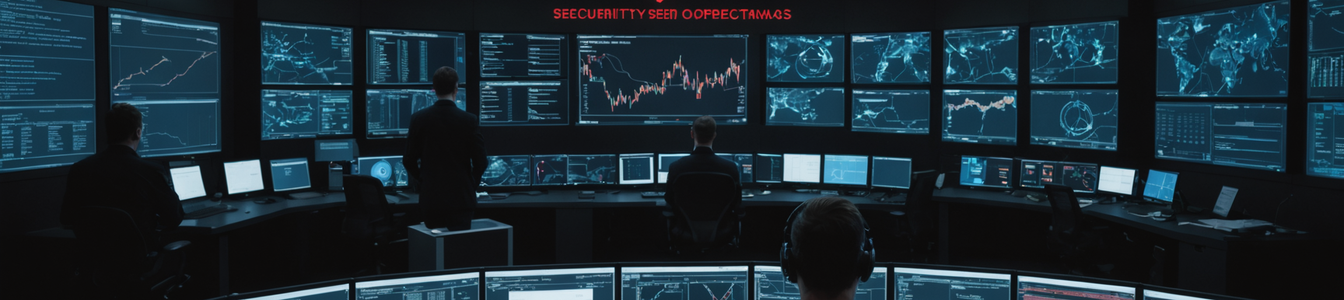
The Security Operations Center (SOC), long the beating heart of organizational defense, is at a breaking point. Legacy architectures, characterized by siloed tools, overwhelming alert fatigue, and manual investigation processes, are failing to scale against today's threat landscape. A perfect storm of increasing attack sophistication, relentless volume, and a critical shortage of skilled analysts has exposed the fundamental limitations of traditional approaches. In response, the cybersecurity industry is pivoting decisively toward a new paradigm: the AI-powered, data-centric SOC. This evolution is not merely an upgrade but a necessary reinvention to maintain defensive relevance.
The core failure of many legacy SOCs lies in their reliance on deterministic, rule-based detection. These systems generate a deluge of low-fidelity alerts, burying genuine threats in a sea of noise. Analysts spend the majority of their time triaging false positives, leaving little bandwidth for proactive threat hunting or investigating complex, multi-stage attacks. The operational strain is palpable, leading to burnout, high turnover, and dangerous gaps in coverage.
Enter the next wave of security technology, designed from the ground up to leverage artificial intelligence and machine learning. The key differentiator of these new tools is their foundation in high-quality, expansive, and real-time data. Companies like NetQuest are addressing this foundational need with products such as NetworkLens™. This platform provides hyperscale real-time network intelligence datasets that serve as the essential fuel for advanced AI-driven cyber threat detection engines. Instead of analyzing isolated log files, these systems can process and correlate global network traffic patterns, DNS queries, and threat intelligence feeds at a speed and scale impossible for human teams.
The value proposition is clear: shift from chasing alerts to understanding behavior. By applying machine learning models to these vast datasets, next-gen SOC tools can establish sophisticated baselines of normal network activity. Deviations from these baselines—such as anomalous data flows, suspicious domain communications, or lateral movement patterns—are flagged with far greater context and confidence. This enables the detection of novel threats, including zero-day exploits and stealthy command-and-control (C2) communications, that lack known signatures.
This technological shift was prominently showcased at recent industry gatherings, including MWC Barcelona 2026. While the event featured advancements across the tech spectrum, the underlying theme was the convergence of massive data processing capabilities and practical applications. The demonstration of next-generation, multi-channel spatial audio on platforms like the AB1595 by Fraunhofer IIS and Airoha, for instance, underscores the broader industry trend of processing complex, high-fidelity data streams in real-time. This same technological ethos—handling immense, nuanced data to derive intelligent insights—is precisely what powers the modern AI-SOC. The capability to ingest, process, and learn from diverse, high-volume data streams is no longer confined to consumer audio; it is becoming the cornerstone of enterprise cyber defense.
For CISOs and security leaders, the emergence of these tools presents both an opportunity and a challenge. The opportunity is to fundamentally transform security operations from a cost center mired in reactive firefighting into a strategic, intelligence-driven function. AI can automate the tedious aspects of tier-1 triage, correlate related events across disparate systems, and present analysts with prioritized, investigated incidents complete with suggested context and response playbooks. This elevates the analyst's role to that of a hunter and decision-maker.
The challenge lies in integration and expertise. Implementing AI-driven tools requires careful planning. They must be integrated with existing security infrastructure (SIEM, EDR, firewalls) to provide a unified view. Furthermore, SOC teams need new skills to manage, tune, and interpret the outputs of these AI models—understanding not just what the tool flagged, but why. There is also the perennial need to ensure the AI's training data is free from bias and that its decision-making processes are transparent enough to maintain trust.
Looking ahead, the evolution of the SOC will be defined by autonomy. The trajectory points toward increasingly autonomous systems capable of not just detecting threats but also containing them and initiating response actions based on learned policies. This "self-healing" network concept, powered by AI that understands both normal operations and malicious intent, is the logical endpoint of the current technological push.
In conclusion, the strain on legacy SOCs is the catalyst for one of the most significant transformations in cybersecurity. The new tools emerging, powered by hyperscale data and sophisticated AI, offer a path out of the alert fatigue quagmire. They promise a future where security operations are more intelligent, proactive, and scalable. For organizations worldwide, adapting to this AI-powered evolution is no longer a matter of gaining an edge; it is becoming a fundamental requirement for resilience in an increasingly hostile digital world.
Comentarios 0
Comentando como:
¡Únete a la conversación!
Sé el primero en compartir tu opinión sobre este artículo.
¡Inicia la conversación!
Sé el primero en comentar este artículo.