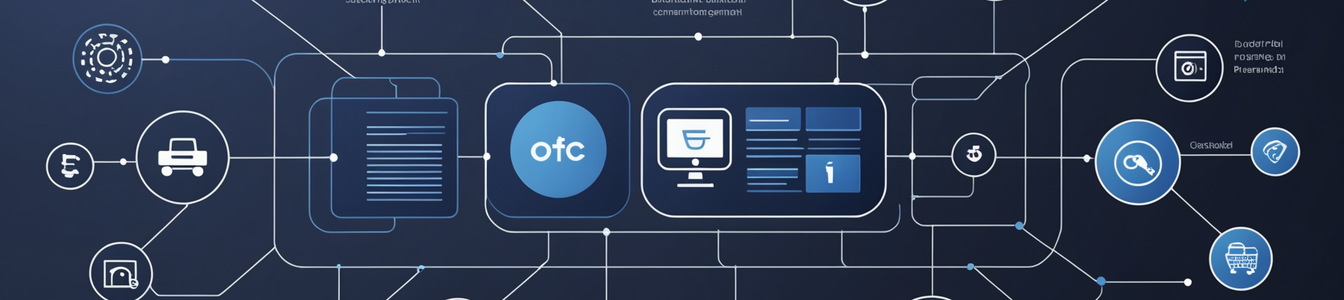
The future of online shopping, as outlined by Google CEO Sundar Pichai, will be driven not by human clicks and carts, but by conversational AI agents. At the core of this vision lies Google's Universal Commerce Protocol (UCP), a framework designed to enable AI models, like those within the Gemini chatbot, to browse, compare, and purchase goods directly from partnered retailers, including Walmart and Shopify. This shift towards 'agentic shopping' promises unprecedented convenience but simultaneously forges a new and complex battlefield for cybersecurity professionals. The autonomous delegation of financial decisions to AI systems introduces a suite of novel vulnerabilities that could redefine digital fraud and payment security.
The Architecture of Autonomous Commerce
The emerging ecosystem, showcased at events like NRF 2026, involves AI agents operating in 'AI Mode' with capabilities for 'Checkout.' These agents, powered by large language models (LLMs), are designed to understand user intent (e.g., "find a birthday gift for my tech-savvy nephew under $100"), navigate multiple retailer inventories via UCP, evaluate options, and execute purchases—all with minimal human intervention. This seamless integration, while a user experience breakthrough, creates a multi-layered attack surface. The security model shifts from protecting a user's direct interaction with a single website to securing the entire AI agent's decision-making pipeline, its interactions with multiple APIs (UCP), and its autonomous access to payment instruments.
The New Fraud Vectors: From Social Engineering to Prompt Injection
Traditional e-commerce fraud relies on deceiving humans. The AI agent era shifts the target to deceiving the AI itself. Key emerging threats include:
- Prompt Injection & Manipulation: Attackers could craft malicious user prompts or inject hidden instructions into web content the AI scrapes, tricking the agent into making unauthorized purchases, revealing saved payment details, or diverting shipments. A seemingly benign request could be engineered to exploit the agent's logic.
- Agent Credential Hijacking: If an AI agent operates with persistent access to a user's payment profiles (e.g., Google Pay), compromising the agent's session or the underlying model integrity becomes equivalent to stealing a digital wallet with auto-pay permissions.
- Supply Chain Attacks on AI Models: The UCP and agent models themselves become high-value targets. Poisoning the training data or compromising the model weights of a shopping agent could introduce systemic biases or backdoors, enabling widespread fraud across all users of that service.
- Synthetic Identity Fraud at Scale: AI agents could be weaponized to test stolen credit card data or synthetic identities across dozens of retailers simultaneously via the UCP, dramatically increasing the velocity and scale of credential-stuffing attacks.
- Repudiation & Liability Challenges: Disputing a fraudulent transaction becomes complex when the action was taken by an autonomous agent. Was it a user's malicious intent, a compromised user account, a manipulated agent, or a flaw in the retailer's UCP integration? Forensic accountability will be a major challenge.
The In-Store Convergence and Physical Security Risks
As demonstrated by companies like Honeywell, AI-enabled retail technology is blurring the lines between digital and physical commerce. AI agents might not only order online but also guide in-store pickups or interact with smart store systems. This convergence expands the threat landscape to include location spoofing to authorize in-store pickups of fraudulently purchased goods, or manipulation of IoT devices within the store network that communicate with shopping agents.
Redefining Payment Security for the Agentic Era
Current payment security frameworks (3D Secure, risk-based authentication) are built around human-paced interactions. They are ill-equipped for AI-driven transactions that occur in milliseconds and may lack clear, step-up authentication moments. The cybersecurity industry must innovate in several areas:
Agent-Specific Authentication: Developing protocols for authenticating the AI agent's* action on behalf of the user, potentially using cryptographic signatures tied to the agent's verified session and the user's confirmed intent.
- Behavioral Anomaly Detection for AI: Monitoring not just transaction patterns, but the agent's decision-making logic and API call sequences for signs of manipulation or compromise.
- Secure Prompt Engineering & Guardrails: Building robust defensive mechanisms within LLMs to resist prompt injection and enforce strict purchasing policies and user-defined constraints.
- Universal Fraud Intelligence Sharing: The UCP-like ecosystems will require a corresponding, secure framework for retailers and payment providers to share fraud signals related to AI agent behavior in real-time.
Conclusion: A Call for Proactive Security by Design
The rollout of agentic commerce cannot be a security afterthought. As Google, Shopify, and retailers build this future, cybersecurity must be embedded in the protocol (UCP) and agent architecture from inception. The 'AI Agent Shopping Revolution' is not merely a change in interface; it is a fundamental shift in the threat model for digital commerce. Security teams must now prepare to defend not just human users and systems, but the autonomous AI representatives acting on their behalf. The race between offensive exploitation of this new paradigm and defensive innovation will define the security of the next generation of e-commerce.
Comentarios 0
Comentando como:
¡Únete a la conversación!
Sé el primero en compartir tu opinión sobre este artículo.
¡Inicia la conversación!
Sé el primero en comentar este artículo.