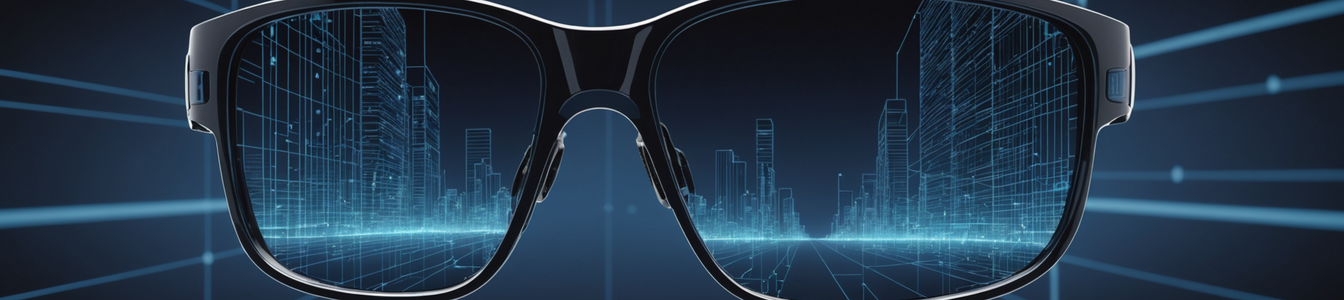
The security architecture for India's Republic Day 2026 celebrations marks a watershed moment in the evolution of cyber-physical security operations. For the first time in a high-stakes public event, security forces are deploying AI-enabled smart glasses as part of an integrated, multi-layer surveillance system that represents the future of SecOps in crowded urban environments.
The AI Sentinel's Gaze: Smart Glasses in Action
The centerpiece of this security transformation is the deployment of lightweight smart glasses equipped with real-time facial recognition capabilities. Unlike traditional CCTV systems that provide passive monitoring, these wearable devices enable proactive identification of persons of interest within moving crowds. Security personnel wearing the glasses receive instant alerts when the AI system matches faces against watchlists containing thousands of entries, all while maintaining their operational mobility.
The technical implementation involves edge computing architecture where initial facial processing occurs on the device itself, reducing latency and bandwidth requirements. Only potential matches or flagged individuals trigger data transmission to centralized command centers, where human operators make final verification decisions. This distributed processing model represents a significant advancement in balancing computational efficiency with privacy considerations.
Multi-Layer Security Grid: Beyond Wearable Tech
The smart glasses operate within a comprehensive security ecosystem featuring multiple overlapping systems:
- Integrated Surveillance Network: Over 500 CCTV cameras with facial recognition capabilities are strategically positioned along the parade route and surrounding areas, creating a continuous monitoring web that complements the mobile smart glasses.
- Anti-Drone Defense Systems: Given the increasing threat of drone-based attacks, specialized units equipped with drone detection and neutralization technology have been deployed. These systems use radio frequency scanners and directed energy weapons to identify and disable unauthorized aerial vehicles.
- Biometric Checkpoints: Enhanced access control points feature rapid biometric verification systems that cross-reference individuals against multiple databases simultaneously, creating frictionless yet secure entry for authorized personnel.
- Command and Control Integration: A unified security operations center aggregates data from all systems, employing AI-powered analytics to identify patterns, predict potential security breaches, and coordinate response teams.
Cybersecurity Implications and Challenges
For cybersecurity professionals, this deployment raises several critical considerations:
Data Protection and Privacy: The system processes massive volumes of biometric data in real-time. Ensuring this sensitive information remains secure against interception, tampering, or unauthorized access represents a monumental cybersecurity challenge. The implementation reportedly employs end-to-end encryption and zero-trust architecture principles, but the scale of data collection inevitably creates an attractive target for malicious actors.
System Integration Vulnerabilities: The convergence of multiple technologies—wearable devices, fixed surveillance, drone defense, and centralized analytics—creates numerous potential attack surfaces. Each integration point represents a potential vulnerability that could be exploited to disrupt the entire security apparatus.
AI Model Security: The facial recognition algorithms powering both the smart glasses and fixed cameras must be protected against adversarial attacks designed to fool AI systems. Ensuring model integrity and preventing data poisoning requires sophisticated cybersecurity measures that extend beyond traditional IT security approaches.
Operational Resilience: In high-pressure environments where seconds matter, system availability becomes a security requirement rather than merely an IT concern. Designing fault-tolerant architectures that maintain critical functions during partial system failures represents a significant engineering challenge.
The Future of Public Event Security
This deployment represents more than just technological innovation—it signals a fundamental shift in how nations approach security for major public events. The traditional model of reactive security checkpoints and perimeter defense is being replaced by proactive, intelligence-driven operations that leverage real-time data analytics.
For the global cybersecurity community, India's Republic Day security grid serves as a living laboratory for evaluating the effectiveness, ethics, and vulnerabilities of integrated surveillance systems. The lessons learned from this deployment will undoubtedly influence security planning for future global events, from political summits to international sporting competitions.
However, this technological advancement comes with significant responsibility. The same systems that can identify potential threats in a crowd also possess the capability for mass surveillance that challenges democratic norms. Developing appropriate governance frameworks, oversight mechanisms, and transparency protocols will be as crucial as the technological implementation itself.
As we move toward increasingly connected security ecosystems, the line between physical safety and digital privacy continues to blur. The success of systems like Delhi's Republic Day security grid will be measured not only by their ability to prevent incidents but also by their adherence to principles of proportionality, necessity, and respect for fundamental rights—a balance that represents the next frontier in cyber-physical security operations.
Comentarios 0
Comentando como:
¡Únete a la conversación!
Sé el primero en compartir tu opinión sobre este artículo.
¡Inicia la conversación!
Sé el primero en comentar este artículo.