The Urban SOC: How AI Surveillance is Redefining Public Safety Operations
As India prepares for its high-profile Republic Day celebrations, a sophisticated, technology-driven security blueprint is being activated. This operation moves beyond traditional checkpoints and patrols, showcasing a future where law enforcement functions as a real-time, mobile Security Operations Center (SOC) for the entire city. The centerpiece of this strategy is the Delhi Police's planned deployment of AI-powered smart glasses, a move that crystallizes the convergence of cyber-physical systems, biometric data, and real-time analytics in public safety.
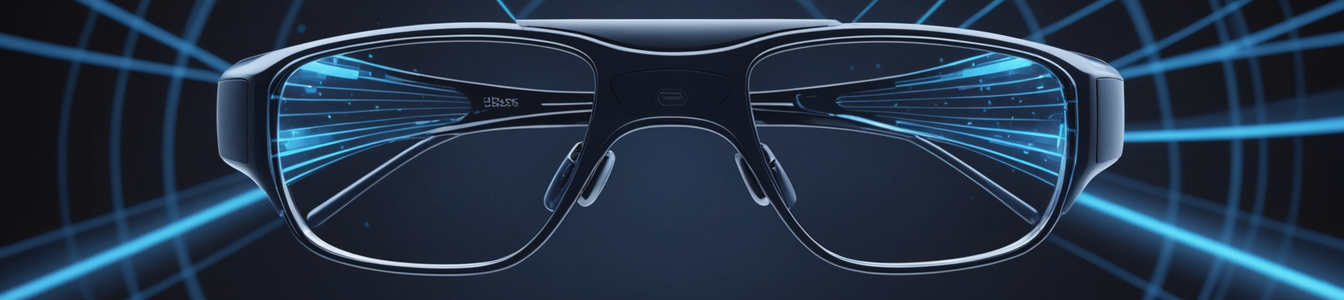
The technical core of this initiative lies in the smart glasses' capability to perform on-the-fly facial recognition. Officers wearing the devices can scan crowds, with the AI comparing live feeds against pre-loaded watchlists of individuals of interest. This creates a distributed, dynamic surveillance network where every equipped officer becomes a sensor node. The data—highly sensitive biometric information—is processed in real-time, likely leveraging edge computing to reduce latency, before alerts are sent to the officer's field of view or a central command. This architecture mirrors modern SOC principles: aggregated data ingestion, automated threat detection (via AI matching), and rapid alerting to "on-call" personnel (the officers).
However, this evolution from a static security posture to an active, AI-augmented one introduces a complex threat landscape familiar to cybersecurity experts. The integrity of the entire system hinges on the security of the data pipeline. The biometric databases used for comparison are high-value targets for cyberattacks, requiring robust encryption both at rest and in transit. A breach could lead to mass privacy violations or even the poisoning of watchlists. Furthermore, the AI models themselves are attack vectors. Adversaries could use techniques like adversarial attacks—subtly altering a person's appearance with makeup or accessories—to fool the facial recognition system, creating false negatives.
The operational risks extend beyond pure cybersecurity. The reliance on AI for split-second identifications raises critical questions about algorithmic bias and accountability. False positives could lead to wrongful detentions, while system errors or outages during a critical event could create dangerous blind spots. The privacy trade-off is immense: the normalization of continuous, pervasive biometric scanning in public spaces represents a fundamental shift in the relationship between citizens and state surveillance.
This Republic Day security plan is not isolated. It is part of a coordinated, nationwide SecOps upgrade. In Jammu, authorities have implemented sweeping physical security measures, including intensified vehicle checks and area domination, which can be seen as the physical "incident response" complement to the digital detection in Delhi. Simultaneously, in Punjab, police have strengthened coordination with the National Highways Authority of India (NHAI). This inter-agency data sharing for highway safety—potentially involving traffic cameras and license plate recognition—further expands the integrated surveillance and response fabric.
For the global cybersecurity community, India's rapid deployment serves as a critical case study. It demonstrates how AI and IoT are merging to create cyber-physical security systems of unprecedented scale. The challenges are multifaceted: securing the device firmware against tampering, protecting the data lifecycle from collection to disposal, auditing the AI for bias, and establishing clear legal and ethical frameworks for usage. As police forces worldwide adopt similar tools for major events, from political summits to sporting events, the lessons learned here will define the security and privacy standards for the next generation of public safety technology. The frontline is no longer just on the street; it's in the data centers, the algorithms, and the network protocols that power these AI-augmented officers.
Comentarios 0
Comentando como:
¡Únete a la conversación!
Sé el primero en compartir tu opinión sobre este artículo.
¡Inicia la conversación!
Sé el primero en comentar este artículo.