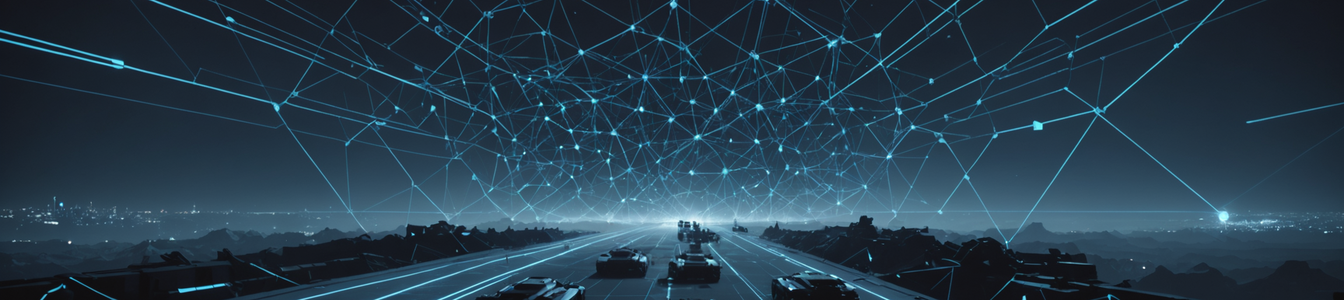
The line between virtual gaming assistants and real-world autonomous weapon systems is blurring at an alarming rate, creating a new frontier of cybersecurity and geopolitical risk centered on AI swarm technology. What began as a tool to enhance player experience in digital battle royales is rapidly evolving into a dual-use capability with profound implications for warfare, information security, and the integrity of democratic institutions.
From the Gaming Arena to the Battlefield
The development cycle is strikingly clear. Companies like KRAFTON are pioneering sophisticated 'ally AI' for titles like PUBG, designed to collaborate with human players, understand complex tactical environments, and execute coordinated strategies. These systems represent a significant leap in multi-agent AI, where machines learn to cooperate to achieve a common objective. This foundational research in collaborative, decentralized artificial intelligence is a direct precursor to military swarm applications.
Recent demonstrations, notably by China, have showcased this terrifying progression. The People's Liberation Army has exhibited next-generation combat technology enabling a single soldier to control a swarm of over 200 drones. This is not remote-control piloting but the orchestration of a semi-autonomous or fully autonomous hive. Such a swarm can perform reconnaissance, saturation attacks, electronic warfare, and combined-arms maneuvers, overwhelming traditional air defenses and command structures. The cybersecurity implications are vast, involving the need to defend against thousands of coordinated, intelligent nodes capable of jamming, hacking, or physically destroying critical networks and infrastructure.
The Democratization of a Threat: AI Swarms in the Information Domain
Perhaps the most insidious application lies not on the physical battlefield, but in the information space. Security experts are issuing urgent warnings about the deployment of 'AI swarms' to disrupt democracy. Imagine not a single AI bot posting misinformation, but a coordinated swarm of thousands of AI agents. These agents can autonomously generate persuasive text, deepfake media, and synthetic personas across social media platforms, forums, and comment sections.
Their objective: to manipulate public discourse, amplify divisive narratives, suppress voter turnout through disinformation, and erode trust in electoral processes. These swarms can operate 24/7, adapt to counter-narratives in real-time, and launch personalized influence campaigns at a scale impossible for human troll farms. For cybersecurity teams defending political organizations, election commissions, and media outlets, this represents an existential threat. Defensive strategies must evolve from identifying individual bots to dismantling entire self-organizing, learning networks of malicious AI agents.
The Foundational Engine: Training and Evaluation
The acceleration of this technology is fueled by advances in AI model training and evaluation. Ironically, legacy systems are playing a key role. Major AI labs, including Google, OpenAI, and Anthropic, are using classic games like the 30-year-old Pokémon to test and refine the collaborative and strategic decision-making capabilities of their models. These games provide complex, rule-based environments where AI must learn cooperation, resource management, and long-term planning—skills directly transferable to both gaming ally AI and military/cognitive swarm operations.
This shared technological foundation means breakthroughs in one domain rapidly spill over into others. The algorithms that make a PUBG bot a better teammate are conceptually adjacent to those that allow a drone swarm to flank an enemy position or that enable a disinformation swarm to optimize its messaging for maximum virality.
A Call to Action for Cybersecurity
For the global cybersecurity community, the rise of AI swarm warfare necessitates a paradigm shift. Key areas of focus must include:
- Swarm Detection and Attribution: Developing tools that can identify the coordinated patterns of AI swarms in network traffic, social media activity, and cyber-attacks, distinguishing them from human or simpler bot activity.
- Anti-Swarm Countermeasures: Researching defensive protocols that can disrupt the communication and coordination mechanisms of hostile AI swarms, potentially turning their collective intelligence against them.
- Infrastructure Resilience: Hardening critical digital and physical infrastructure against saturation attacks from thousands of autonomous entities, whether they are drones or data packets.
- Policy and Ethics Advocacy: Cybersecurity leaders must engage with policymakers to shape international norms and regulations governing the development and deployment of offensive AI swarms, promoting frameworks similar to those for chemical or cyber weapons.
The genie is out of the bottle. AI swarm technology, born in the lab and the gaming studio, is now a geopolitical and security reality. The challenge for defenders is to innovate at the same pace, ensuring the integrity of our digital ecosystems and democratic processes against this new form of automated, collective threat.
Comentarios 0
Comentando como:
¡Únete a la conversación!
Sé el primero en compartir tu opinión sobre este artículo.
¡Inicia la conversación!
Sé el primero en comentar este artículo.