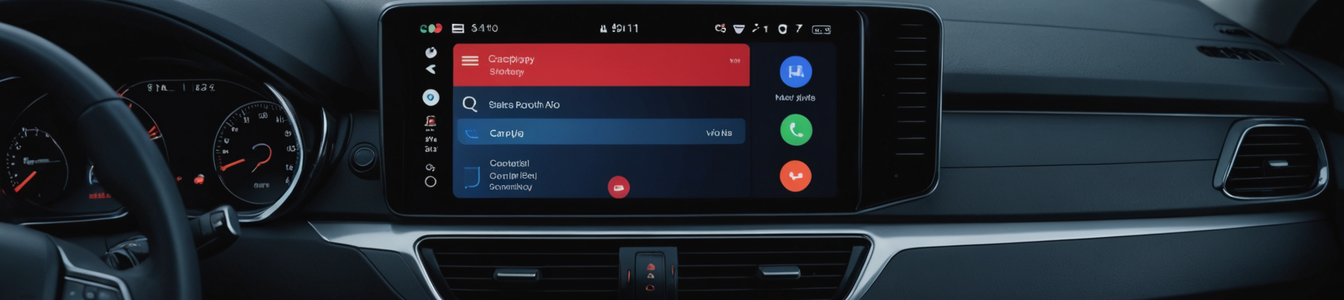
The connected car ecosystem is on the cusp of a significant shift, moving beyond audio and navigation to embrace full video streaming directly on the dashboard. Recent developments from both Google and Apple confirm that video playback in Android Auto and CarPlay is not a distant fantasy but an imminent reality. This evolution, driven by consumer demand for seamless in-car entertainment—especially during charging stops or while parked—unlocks new conveniences but simultaneously opens Pandora's box of cybersecurity concerns, expanding the attack surface of modern vehicles in unprecedented ways.
The Technical Push: Betas and Blueprints
On the Android front, ongoing beta updates to Android Auto reveal Google's concrete efforts to integrate popular streaming platforms. Code snippets and interface elements point to the inclusion of YouTube and Amazon Prime Video, suggesting a controlled rollout where video playback is enabled primarily when the vehicle is stationary, such as at a charging station. This aligns with safety-first design logic but also introduces a new layer of software complexity.
Apple is following a parallel path. The latest iOS 26.4 beta includes underlying frameworks and references that lay the essential groundwork for video support within CarPlay. Industry observers note preparations for Apple TV integration, signaling a future where passengers can access a wide array of video content. This strategic move indicates that both tech giants view the car's central display as the next frontier for their ecosystem battles, directly embedding their services into the driving experience.
The Security Dilemma: From Infotainment to Entry Point
The integration of video streaming transforms the infotainment system from a relatively closed environment handling audio, calls, and maps into a more open multimedia hub. This paradigm shift introduces several critical security challenges:
- Expanded Codebase and Attack Surface: Video players and streaming apps are complex software components historically prone to vulnerabilities, including codec exploits, buffer overflows, and parsing errors. Introducing these into the constrained environment of a vehicle's system increases the total amount of executable code, thereby multiplying potential entry points for attackers.
- Increased Connectivity and Data Flow: Streaming high-bitrate video requires robust, persistent data connections. This amplifies the system's exposure to network-based attacks, such as man-in-the-middle (MitM) attacks that could intercept or manipulate data streams, or attempts to exploit vulnerabilities in the vehicle's network stack or the connected smartphone.
- Blurred Boundaries and Privilege Escalation: A key concern is the potential for an exploit in the video streaming module to bridge the gap between the isolated infotainment domain and safety-critical vehicle systems (like CAN bus). While modern architectures employ domain separation, a sophisticated attack could seek to pivot from a compromised media player to more sensitive controls.
- App Ecosystem Risks: Allowing third-party streaming apps into the car creates a supply chain security problem. The security posture of the vehicle becomes partially dependent on the development practices of Netflix, Disney+, or other providers, and on the vetting processes of Google and Apple's app stores.
The Automaker's Countermove: Regaining Control
Amidst this tech-driven push, a contrasting trend emerges. Some automakers are reassessing their dependence on Apple and Google's ecosystems. The case of the Leapmotor C10, which recently confirmed it will not support CarPlay or Android Auto, is illustrative. The manufacturer is opting for a proprietary, integrated infotainment system. From a security perspective, this offers greater control over the entire software stack, potentially enabling more rigorous hardening, unified updates, and a reduced attack surface by eliminating the complex smartphone projection interface. However, it also places the entire security burden on the automaker and may limit functionality familiar to users.
The Road Ahead for Cybersecurity Professionals
For the cybersecurity community, this development mandates heightened vigilance and proactive measures:
- Architectural Scrutiny: Security researchers must analyze the implementation of these video services, focusing on sandboxing effectiveness, inter-process communication (IPC) security, and the integrity of the data pipeline between the phone and the head unit.
- Threat Modeling Updates: Automotive threat models need to be revised to include video streaming apps as potential threat actors. Scenarios involving maliciously crafted video files, compromised streaming accounts, or rogue apps must be considered.
- Focus on Update Mechanisms: The ability to rapidly deploy security patches for video-related vulnerabilities becomes paramount. The industry must pressure all stakeholders—tech companies, app developers, and OEMs—to establish swift, reliable over-the-air (OTA) update pipelines.
- Driver and Passenger Education: Users must be informed about safe practices, such as connecting only to trusted networks when streaming and understanding the limitations of "parked only" playback modes.
In conclusion, the arrival of video streaming in Android Auto and CarPlay represents a double-edged sword. It delivers on the promise of a more immersive and connected cabin experience but does so by introducing substantial new risks. The security of our vehicles will depend on how rigorously the principles of security-by-design, minimal privilege, and robust isolation are applied during this integration. As the lines between consumer tech and automotive systems continue to blur, the industry's response to this dilemma will set a crucial precedent for the next generation of software-defined vehicles.
Comentarios 0
Comentando como:
¡Únete a la conversación!
Sé el primero en compartir tu opinión sobre este artículo.
¡Inicia la conversación!
Sé el primero en comentar este artículo.