Android's Private Space: A New Frontier in User Privacy and Security Risk
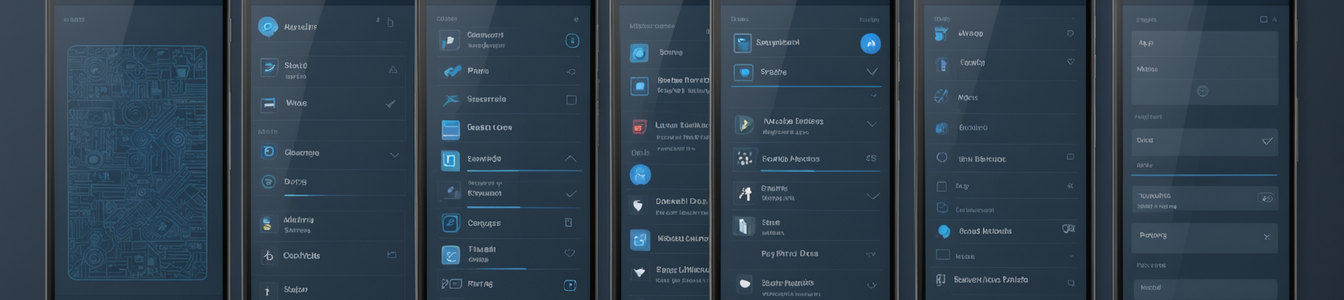
Code discoveries within the latest Android development builds have unveiled Google's work on a significant new feature dubbed 'Private Space.' This functionality is designed to allow users to create a hidden, secured compartment within their devices where applications can be placed, effectively making them invisible from the standard app drawer, home screen, and recent apps list. Access to this space is governed by a distinct authentication method—separate from the device's primary lock screen—such as a unique PIN, pattern, or biometric credential.
Technical Implementation and Legitimate Use Cases
The Private Space appears to be a native implementation of concepts previously offered by OEMs like Samsung with its Knox-powered Secure Folder. By integrating it directly into the Android Open Source Project (AOSP), Google aims to provide a standardized, platform-level privacy tool. For the legitimate user, the benefits are clear. It offers a robust solution for compartmentalizing sensitive aspects of digital life. Users can hide financial apps, private messaging platforms (like Signal or Telegram), personal photo galleries, or work-related applications from prying eyes when handing their phone to a friend or colleague. It represents a move towards more granular control over app visibility and access, aligning with growing consumer demand for digital privacy.
From a technical standpoint, the feature likely creates a separate, encrypted profile or workspace. Apps installed within the Private Space may run in a sandboxed environment, with potentially segregated storage and data. This isolation is key to its privacy proposition but also forms the core of the security dilemma it presents.
The Cybersecurity Community's Dual-Use Concerns
The revelation of Private Space has been met with immediate concern by mobile security researchers and threat intelligence analysts. The primary alarm stems from the feature's inherent dual-use nature: a tool designed for privacy can be repurposed for concealment and persistence by malicious software.
- Malware Persistence and Evasion: Advanced malware could potentially abuse the Private Space API to install itself into this hidden area. Once there, it becomes invisible to the average user. Common remediation steps like scrolling through the app list to identify unknown applications would fail. This grants malware a powerful new persistence mechanism, complicating manual removal efforts significantly.
- Bypassing Security Scanners and MDM: Many mobile security solutions and Enterprise Mobility Management (EMM/MDM) platforms perform detection based on app inventory and runtime monitoring. An app lurking in a Private Space, especially if the space's authentication is unknown to the device administrator (like a corporate IT department), could operate undetected. This poses a severe threat to corporate BYOD (Bring Your Own Device) policies and compliance frameworks, where visibility into device activity is paramount.
- Forensic Investigation Challenges: For digital forensics examiners, a fully encrypted and authenticated Private Space presents a substantial hurdle. Without the secondary credentials, accessing evidence stored within that space could be technically impossible, even with lawful authority, potentially crippling investigations.
- Social Engineering and Coercion: The feature could be misused in interpersonal threat models. An attacker with temporary physical access could set up a Private Space to hide stalkerware or monitoring tools. Conversely, in situations of coercive control, a victim's hidden apps for seeking help could be discovered if the abuser forces them to reveal all device passwords.
The Road Ahead: Mitigation and Industry Response
The development of Private Space is not yet complete, and its final implementation will be critical. The cybersecurity industry is already calling for Google to build in robust safeguards. These could include:
Mandatory Device Administrator Visibility: Ensuring MDM solutions can at least detect the existence* of an active Private Space, even if they cannot access its contents without user consent.
- Secure Boot Integration: Preventing the Private Space from being activated or modified if the device's bootloader is unlocked or the system integrity is compromised.
- Clear User Warnings and Logs: The system should provide unambiguous indications that a Private Space is active, perhaps in the main settings menu, to prevent secret creation by malicious actors.
- API Restrictions for Third-Party Apps: Severely limiting which apps, if any, can programmatically interact with the Private Space feature to prevent automated abuse by malware.
Conclusion
Android's Private Space epitomizes the constant tension in cybersecurity between privacy and security. It promises a valuable tool for user autonomy but inadvertently opens a new attack vector. Its success will depend not just on its utility for privacy-conscious users, but on Google's commitment to designing it with a 'security-by-design' philosophy that anticipates and mitigates abuse. The mobile security ecosystem must now begin adapting its tools and threat models to account for this new hidden layer within the Android operating system. Proactive research and dialogue with Google are essential to ensure that a feature built for privacy does not become a sanctuary for the next generation of mobile threats.
Comentarios 0
Comentando como:
¡Únete a la conversación!
Sé el primero en compartir tu opinión sobre este artículo.
¡Inicia la conversación!
Sé el primero en comentar este artículo.