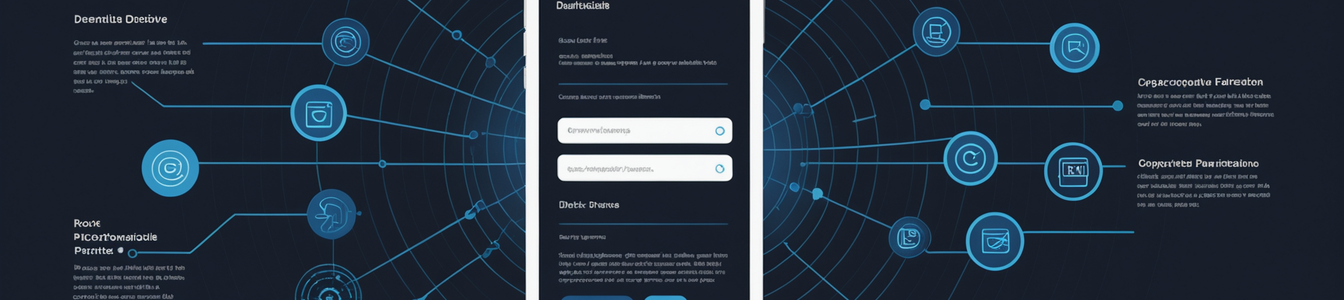
A new wave of sophisticated phishing campaigns is leveraging Android's Progressive Web App (PWA) technology to create what security researchers are calling "the new phishing frontier." These attacks move beyond traditional credential harvesting to establish persistent malware installations that abuse device permissions for extensive data theft.
The attack chain begins with victims receiving phishing messages—typically via SMS, email, or messaging apps—containing links to fake Google Account security pages. These pages are meticulously crafted to mimic legitimate Google security checkpoints, complete with familiar branding, language, and interface elements designed to trigger user urgency. Victims are prompted to verify their accounts due to "suspicious activity" or "security breaches."
What distinguishes this campaign is the exploitation of the PWA installation prompt. When users access the malicious page through Chrome or other supporting browsers on Android devices, they're presented with a deceptive prompt to "Install security app" or "Add to Home screen for better protection." This leverages the legitimate PWA installation feature that legitimate services like Twitter, Starbucks, and Google itself use for enhanced user experience.
Once installed, the malicious PWA gains a permanent presence on the victim's home screen, complete with a professional-looking icon that often mimics legitimate Google or security applications. Unlike traditional phishing pages that disappear after the browser is closed, these PWAs remain accessible offline and maintain their state across sessions.
The technical sophistication extends to permission abuse. During the "security verification" process, victims are guided through multiple screens that request increasingly intrusive permissions. Beyond stealing Google account credentials and two-factor authentication (2FA) codes, these malicious applications request access to contacts, location data, camera, microphone, and device storage. Some variants even attempt to gain notification access to intercept SMS messages containing authentication codes from other services.
This represents a paradigm shift in mobile phishing. Traditional attacks focused on stealing credentials during a single interaction. These PWA-based attacks establish persistent footholds that continue exfiltrating data long after the initial compromise. The malicious applications can run background processes, monitor user activity, and potentially serve as launching points for additional payloads.
The persistence mechanism is particularly concerning from a security perspective. Because PWAs operate within a browser context but appear as standalone applications, they often evade scrutiny from security solutions designed to monitor native app installations. Users accustomed to installing PWAs from trusted sources may not recognize the subtle indicators of malicious intent.
Detection challenges are compounded by the legitimate nature of the underlying technology. Progressive Web Apps represent genuine advancements in web technology, offering native-app-like experiences without requiring app store distribution. This legitimate utility creates perfect camouflage for malicious actors who can implement the same technical standards while embedding malicious functionality.
Security teams should update their threat models to account for PWA-based attacks. Technical indicators include unusual permission requests from web applications, PWA installations originating from non-corporate domains, and home screen icons that don't correspond to approved applications. Network monitoring should watch for data exfiltration to unfamiliar domains from what appears to be browser traffic.
User education remains critical but requires updated messaging. Traditional advice about "only installing apps from official stores" no longer suffices, as PWAs deliberately bypass app store controls. Instead, users should be trained to scrutinize installation prompts from websites, verify URLs before granting permissions, and question why a security check would require installing a separate application.
Organizations should consider technical controls such as restricting PWA installation capabilities on managed devices, implementing browser security policies that limit permission grants, and deploying security solutions capable of analyzing PWA behavior. Mobile device management (MDM) solutions may need updates to properly categorize and control PWA installations alongside traditional applications.
The emergence of PWA-based phishing represents more than just another attack vector—it signifies the convergence of web and application-based threats. As the lines between browsers and operating systems continue to blur, security approaches must evolve accordingly. This campaign demonstrates that attackers are quick to adopt legitimate technologies for malicious purposes, requiring security professionals to stay ahead of both technological adoption and attacker innovation.
Looking forward, the security community anticipates similar exploitation of other emerging web technologies. The same characteristics that make PWAs valuable for legitimate developers—easy distribution, cross-platform compatibility, and enhanced capabilities—also make them attractive to threat actors. Proactive security measures should include monitoring for unusual PWA adoption patterns, analyzing permission abuse trends, and developing specialized detection capabilities for web-based persistence mechanisms.
For now, this campaign serves as a stark reminder that security awareness must keep pace with technological evolution. The very features designed to enhance user experience and convenience are being weaponized against users, requiring renewed vigilance from both security teams and individual users alike.
Comentarios 0
Comentando como:
¡Únete a la conversación!
Sé el primero en compartir tu opinión sobre este artículo.
¡Inicia la conversación!
Sé el primero en comentar este artículo.