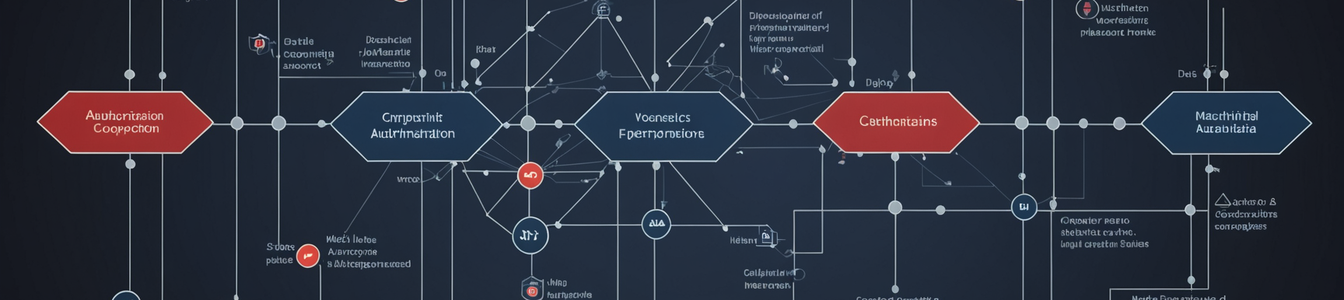
Cybersecurity has long focused on protecting the gates: firewalls, authentication protocols, and access controls. However, a new class of vulnerability is emerging not at the point of entry, but within the very systems that define who is allowed to enter and what they are allowed to do. This is the Authorization Gap—a systemic flaw where the formal processes for granting permission become attack vectors themselves. Recent, disparate incidents from global philanthropy to local governance and immigration law reveal a consistent pattern of risk that transcends digital boundaries and enters the realm of procedural security.
Case Studies in Authorization Failure
Three recent headlines illuminate different facets of this gap. In Kishtwar, India, district authorities issued a stern warning prohibiting all unauthorized charity collections during the holy month of Ramadan, mandating prior approval from the District Magistrate. This directive, while aimed at preventing fraud, highlights a centralized authorization bottleneck. In a climate of urgent charitable giving, such a bottleneck can be exploited in two ways: malicious actors may forge approval documents, or well-intentioned groups may bypass the system entirely, creating an unregulated shadow economy of donations that is ripe for exploitation.
Simultaneously, in the United States, a prestigious university's Board of Trustees publicly addressed the 'unauthorized use' of a landmark $20 million donation from philanthropist MacKenzie Scott. While details remain sparse, the language points to a governance failure. Funds released based on one set of authorized purposes were allegedly diverted or used for unapproved objectives. This is a classic case of authorization scope creep or insider threat within a fund disbursement workflow, where controls after the initial transfer were insufficient to ensure compliance with donor intent.
Further compounding this theme, the Trump administration found itself in a legal battle over the work authorization of an aide to Governor Maura Healey of Massachusetts. The lawsuit centers on whether the federal government improperly revoked or denied a legally granted permission. This scenario underscores how authorization systems, when wielded arbitrarily or opaquely, can themselves become tools of disruption, eroding trust in the system's legitimacy and forcing users to seek costly, time-consuming legal recourse—a form of denial-of-service attack on an individual's livelihood.
Technical Parallels and the Bureaucratic Attack Surface
For cybersecurity professionals, these are not mere administrative issues. They are analog manifestations of familiar digital threats.
The demand for prior approval in Kishtwar mirrors an overly restrictive Access Control List (ACL) or a cumbersome change management process. When legitimate 'users' (charitable groups) find the official path to access (approval) too slow or complex, they seek alternatives, creating shadow IT—or in this case, shadow philanthropy. This parallel environment is unmonitored, unsecured, and highly vulnerable to bad actors impersonating legitimate entities.
The Scott donation debacle is analogous to a privilege escalation or internal fraud incident within a financial application. The initial transaction was authorized, but subsequent controls (logging, segregation of duties, approval chains for re-allocation) failed to prevent mission drift. It highlights the need for continuous authorization monitoring and spending controls, not just a one-time grant of funds.
The work authorization lawsuit represents an abuse of the authorization system itself, similar to a system administrator weaponizing their access to disable a legitimate user's account without due process. It demonstrates how the administrators of an authorization framework can be the source of the threat, compromising the system's integrity from within.
Mitigating the Authorization Gap: A Security Framework
Addressing these vulnerabilities requires expanding the security mindset to encompass governance workflows. Key strategies include:
- Principle of Least Privilege Applied to Processes: Authorization should be granular, time-bound, and scope-specific. A donation approval should specify amount, timeframe, and geographic scope. Work authorization should be clearly defined and revocable only under transparent, pre-defined conditions.
- Transparency and Audit Trails: Every authorization grant, modification, or revocation must be logged in an immutable ledger, detailing the who, what, when, and why. In the case of the $20 million donation, a public blockchain-like ledger for major fund allocations could have provided transparency and deterred unauthorized use.
- Streamlining Legitimate Access: To prevent the rise of shadow systems, the official authorization pathway must be as efficient as possible. This involves digitalizing application processes, providing clear status updates, and establishing reasonable SLAs for decision-making. A cumbersome process is an insecure process.
- Continuous Validation: Authorization should not be a 'set-and-forget' token. Continuous validation mechanisms, such as periodic re-approval for long-running projects or automated alerts for transactions deviating from a pattern, are crucial.
- Separation of Duties (SoD): The authority to grant permissions, disburse funds, and audit usage must be separated. The same entity should not control all stages of an authorization lifecycle.
Conclusion: From Code to Governance
The Authorization Gap signals a necessary evolution in cybersecurity. As our world runs on permissions—for data, funds, movement, and activity—the security community must audit not just the technical gates, but the rulebooks that define who holds the keys. The vulnerabilities in Kishtwar's charity rules, the university's gift policy, and the U.S. visa system are all variations of the same flaw: a failure to design authorization systems that are secure, transparent, and resilient to both external exploitation and internal abuse. The next frontier of defense lies in securing the protocols of permission themselves.
Comentarios 0
Comentando como:
¡Únete a la conversación!
Sé el primero en compartir tu opinión sobre este artículo.
¡Inicia la conversación!
Sé el primero en comentar este artículo.