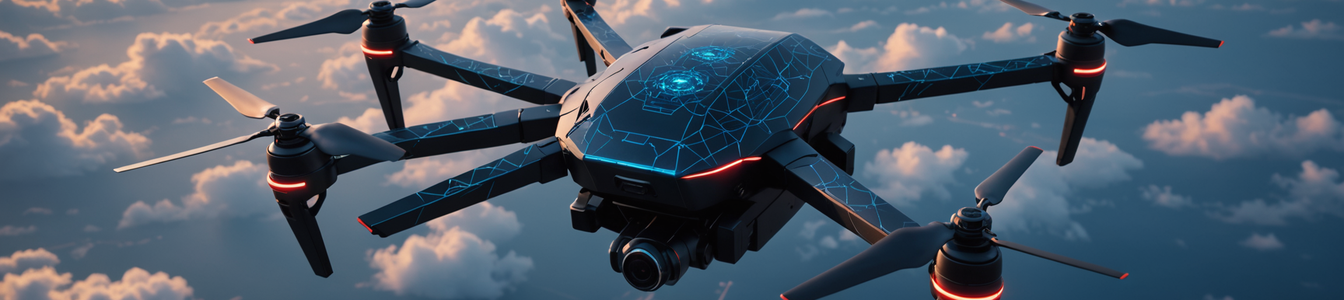
The transportation sector is undergoing its most radical transformation since the jet age, propelled by autonomy, connectivity, and advanced materials. Market forecasts reveal staggering growth: the global autonomous aircraft market is on track to become a $26.21 billion industry by 2032. Parallel markets are surging in tandem, with commercial helicopters projected to hit $10 billion and advanced components like next-generation aircraft seals—a $3.77 billion market itself—evolving into smart, sensor-laden systems. Yet, beneath this wave of innovation lies a critical and under-addressed vulnerability: cybersecurity frameworks are being outpaced by technological adoption, creating unprecedented risks for critical infrastructure.
The Expanding Attack Surface: From Components to Fleet Operations
The security challenge is no longer confined to flight control software. The entire aviation supply chain and physical asset ecosystem is becoming digital and connected. The aircraft seals market report highlights a key trend: advances in material science are revolutionizing design and procurement. Modern seals are no longer simple physical gaskets; they are increasingly embedded with sensors for predictive maintenance, transmitting data on pressure, integrity, and wear. This integration of Internet of Things (IoT) technology into fundamental physical components creates new ingress points for attackers. A compromised sensor in a critical seal could feed false data, masking a failure or triggering unnecessary maintenance actions, leading to operational disruption or safety incidents.
Similarly, the ultralight and light aircraft sector (a $17.87 billion market) is embracing digital avionics and automated systems to enhance accessibility and reduce pilot workload. These platforms, often operating in less stringently regulated environments than commercial airliners, represent a softer target that could be exploited to test attacks or create localized chaos.
The Autonomy-Cybersecurity Gap
The core of the crisis lies in autonomous systems. Autonomous aircraft rely on a complex stack of technologies: AI-based perception and decision-making, machine-to-machine (M2M) communication, satellite navigation (vulnerable to spoofing and jamming), and ground-based control links. Each layer introduces novel threats. An AI vision system could be fooled by adversarial attacks—subtly altered inputs that cause misidentification of terrain or obstacles. The communication links between autonomous vehicles and air traffic management or fleet operators are prime targets for interception, manipulation, or denial-of-service attacks.
The recent incident in Kumamoto, Japan, where a sightseeing helicopter carrying three people went missing, serves as a sobering reminder. While the cause remains under investigation, such events immediately raise questions about system integrity, communication failure, and the potential role of cyber-physical interference. In an era of increasing automation, distinguishing between a technical malfunction, a cyberattack, or a combination thereof becomes a monumental forensic challenge.
Commercial Aviation's Digital Transformation
The commercial helicopter market's growth is tied to efficiency and new service models, like urban air mobility (UAM) and advanced logistics. These operations depend on digital twins, real-time fleet management software, and connected maintenance platforms. A breach in a helicopter operator's network could ground fleets, manipulate flight schedules, or corrupt maintenance records, with direct safety implications. The concentration of market players, as noted in the strategy reports, means a successful attack on a major operator or OEM could have cascading effects across the global supply chain and service network.
The Path Forward: Building Cyber-Resilient Skies
For the cybersecurity community, this represents a multi-front battle:
- Securing the Digital Supply Chain: Security must be baked into components from the design phase. This requires collaboration between cybersecurity firms, aerospace engineers, and material scientists to develop security standards for smart components.
- Protecting AI Integrity: Research and implementation of robust AI security measures are paramount to defend against data poisoning and adversarial machine learning attacks that could compromise autonomous navigation.
- Resilient Communication Architectures: Aviation must adopt encrypted, authenticated, and redundant communication protocols. This includes hardening legacy systems like ADS-B while designing secure frameworks for new M2M and swarm communications.
- Unified Cyber-Physical Incident Response: The lines between IT, operational technology (OT), and physical safety are blurring. Incident response plans must integrate aviation safety investigators, cybersecurity analysts, and fleet operators to quickly diagnose and mitigate hybrid threats.
- Regulatory Evolution: Current aviation regulations (e.g., FAA, EASA) are ill-equipped for the speed of digital innovation. A proactive, risk-based regulatory approach is needed to mandate cybersecurity hygiene without stifling innovation.
The autonomous frontier in transportation is not a distant future—it is being built today. The market intelligence is clear on the economic trajectory. The missing helicopter in Japan is a stark warning of the human and operational stakes. The cybersecurity industry has a narrow window to bridge the gap between technological ambition and security maturity, ensuring that the revolution in the skies is not grounded by vulnerabilities on the ground.
Comentarios 0
Comentando como:
¡Únete a la conversación!
Sé el primero en compartir tu opinión sobre este artículo.
¡Inicia la conversación!
Sé el primero en comentar este artículo.