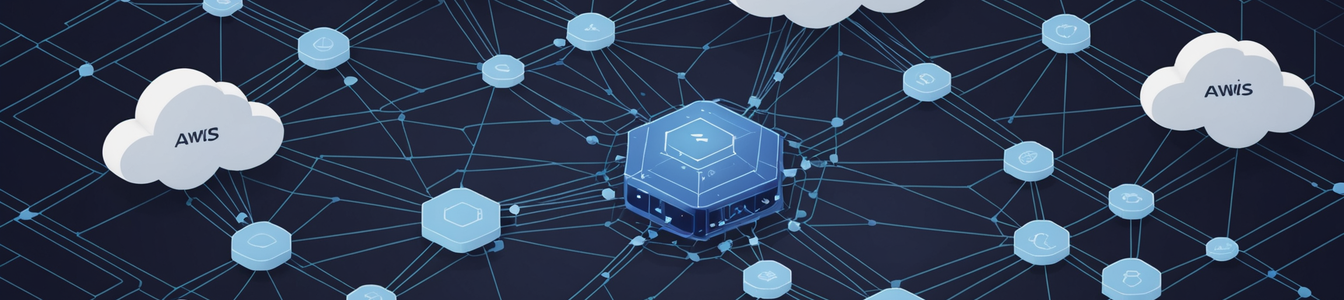
The cloud computing landscape witnessed a seismic shift this week as longtime rivals Amazon Web Services (AWS) and Google Cloud announced an unprecedented technical partnership. Unveiled as a headline announcement at AWS's flagship re:Invent 2025 conference, the collaboration centers on building a new multicloud networking service with a singular, ambitious goal: to eliminate the widespread, cascading outages that have become a critical vulnerability for the global digital economy.
The Genesis of a Cloud Détente
The motivation for this alliance is rooted in a shared pain point. High-profile outages in recent years—often originating in one cloud provider but crippling services that depend on multicloud or hybrid architectures—have exposed a fundamental weakness. While enterprises adopted multiple clouds for resilience, the networks connecting them remained fragile single points of failure. This new initiative, tentatively referred to internally as "The Cloud Alliance Gambit," aims to build a unified, high-availability network fabric that spans AWS and Google Cloud's global infrastructure.
Technical Architecture and Cybersecurity Promise
The proposed service is not merely a peering agreement. Early technical briefings describe a deeply integrated layer that provides seamless, low-latency connectivity between VPCs (AWS) and VPCs (Google Cloud) across regions. Key features include intelligent, policy-based traffic routing that can dynamically shift workloads in response to latency spikes or early signs of regional instability. Automated failover mechanisms would activate without requiring manual intervention from site reliability engineering (SRE) or security teams.
From a cybersecurity and resilience standpoint, the implications are profound. The service promises a shared telemetry and monitoring dashboard, giving security operations centers (SOCs) a unified view of network health and threat posture across both platforms. This could significantly reduce mean time to detection (MTTD) and mean time to response (MTTR) during incidents that span cloud boundaries. Furthermore, by architecting a more predictable and robust network layer, the alliance could help organizations meet stringent compliance and recovery time objective (RTO) requirements that were previously challenging in fragmented multicloud setups.
Security Implications and the New Shared Responsibility Model
However, this new paradigm introduces complex security considerations. The shared responsibility model, a cornerstone of cloud security, becomes more intricate. Who is responsible for security in the transit layer? How is encryption key management handled for data in motion between the providers? Security teams will need to scrutinize the shared fate model and ensure clear contractual and technical delineations of security duties.
Data sovereignty and compliance also enter a new dimension. Traffic routing across different legal jurisdictions via this unified fabric will require sophisticated policy controls to ensure data residency laws are not violated. Organizations will need to work closely with both providers to map data flows and maintain compliance with regulations like GDPR, CCPA, and sector-specific frameworks.
Competitive Landscape and Strategic Calculus
This partnership represents a strategic détente, acknowledging that the existential threat to cloud growth is no longer each other, but systemic instability that erodes enterprise confidence. By joining forces on network resilience, AWS and Google Cloud are presenting a formidable front. The move places significant pressure on Microsoft Azure, the other hyperscaler, which now must decide whether to develop its own competing multicloud solutions or seek to join the alliance—a politically complex decision.
For customers, particularly in the enterprise and financial sectors where uptime is non-negotiable, this could accelerate multicloud adoption by removing a major technical barrier. It also subtly shifts the competitive battleground from basic infrastructure resilience to higher-value services like AI, data analytics, and industry-specific solutions, where AWS and Google can still fiercely compete.
The Road Ahead for Security Professionals
As the service moves from announcement to preview and general availability, cybersecurity leaders must engage proactively. Key actions include:
- Architecture Review: Assess how this native multicloud network could simplify or replace existing complex VPN or SD-WAN setups, evaluating the new attack surface.
- Governance Framework Update: Update cloud security governance frameworks to account for a shared-infrastructure model between two major vendors.
- Vendor Management: Initiate discussions with both AWS and Google Cloud account teams to understand the security specifics, compliance certifications, and incident response protocols for the new service.
- Skill Development: Prepare network and cloud security teams for a future where managing a unified multicloud fabric becomes a core competency.
The AWS-Google Cloud alliance is more than a product announcement; it is a strategic inflection point for cloud computing. By prioritizing collective resilience over pure competition, the giants are addressing a critical market need. For the cybersecurity community, it opens a new chapter of opportunity and complexity, demanding vigilance, adaptation, and a keen understanding of the evolving shared responsibility in an increasingly interconnected cloud world.
Comentarios 0
Comentando como:
¡Únete a la conversación!
Sé el primero en compartir tu opinión sobre este artículo.
¡Inicia la conversación!
Sé el primero en comentar este artículo.