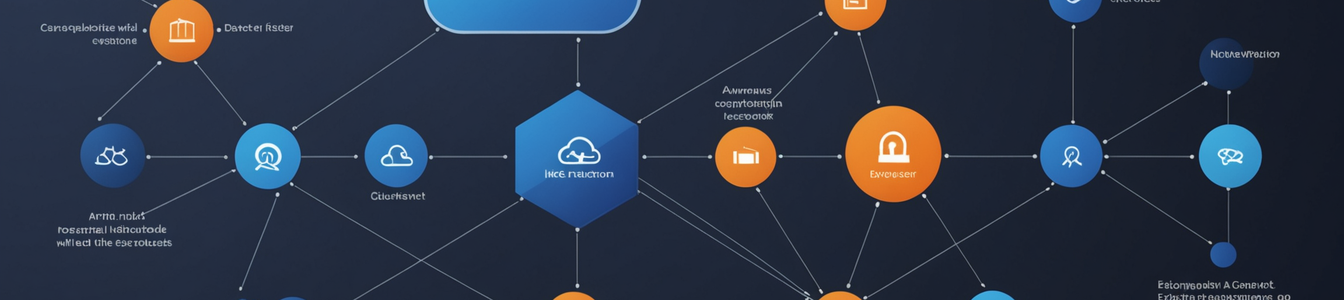
The cloud computing landscape is undergoing a strategic shift, moving beyond mere infrastructure provision to a battle for deep, systemic integration within the enterprise. Recent initiatives from Amazon Web Services (AWS) and Google Cloud reveal a multi-pronged approach to securing long-term customer dependency, weaving together independent software vendors (ISVs), global system integrators, and developer communities into a cohesive—and difficult to disentangle—ecosystem. This strategy raises profound questions for cybersecurity leaders about supply chain resilience, data governance, and strategic autonomy.
The ISV On-Ramp: Embedding via Specialized Solutions
AWS's ISV Accelerate Program is a cornerstone of this strategy, designed to co-sell and integrate third-party software deeply into the AWS fabric. The recent inclusion of ZIWO, a cloud contact center solution, exemplifies this tactic. By bringing such business-critical applications into its fold, AWS ensures that a company's core operations—customer service, in this case—are native to its platform. For security teams, this integration is a double-edged sword. While it can streamline compliance and security management through unified AWS Identity and Access Management (IAM) policies, CloudTrail logging, and GuardDuty threat detection, it also exponentially increases the cost and complexity of a potential migration. The security configuration, data flows, and compliance controls become bespoke to AWS services, creating a form of architectural lock-in that is as potent as any contractual obligation.
Forging the Physical Backbone: Data Center Alliances
Simultaneously, AWS is working to cement its physical and strategic presence in critical growth markets. Reports of talks with Tata Consultancy Services (TCS) and potentially OpenAI for a data center partnership in Navi Mumbai, India, signal a move beyond building alone. Partnering with a local titan like TCS provides regulatory navigation, local market trust, and massive scale. For a potential client like OpenAI, such a partnership could offer a tailored, high-performance infrastructure hub. From a cybersecurity perspective, these multi-party data center deals complicate the shared responsibility model. Questions of physical security, hardware supply chain integrity, and jurisdictional data access become distributed among more entities. An organization's data residency and sovereignty posture may now depend on the terms of a partnership between its cloud provider and a local integrator, adding a new layer of third-party risk that must be diligently mapped and assessed.
Cultivating the Mindshare: Google's Play for Developer Loyalty
While AWS focuses on commercial and infrastructural ties, Google Cloud is attacking the dependency problem from the human capital angle. Its launch of free, gamified generative AI training programs is a masterstroke in cultivating platform loyalty. By equipping developers and data scientists with deep, hands-on skills in Google's AI stack (Vertex AI, Gemini models), the company is shaping the next generation of enterprise architects. The individual who becomes certified and proficient in building with Google's tools will naturally lean toward specifying that platform for future projects. This creates a powerful, organic form of lock-in rooted in human expertise and comfort. For Chief Information Security Officers (CISOs), this means their own technical teams may develop inherent biases toward one ecosystem, potentially overshadowing objective evaluations of security features, audit capabilities, or incident response protocols across competitors. Managing this requires conscious investment in cross-platform training and architecture reviews to maintain strategic optionality.
The Convergence: A Comprehensive Lock-In Strategy
Viewed together, these moves form a coherent playbook:
- Application Layer Lock-in (AWS ISV): Embed business logic and data within a proprietary ecosystem of integrated services.
- Infrastructure Layer Lock-in (AWS/TCS Partnership): Anchor physical data assets and expansion plans in complex, joint-venture structures that are market-specific and hard to replicate.
- Human Capital Lock-in (Google AI Training): Capture the expertise and preferences of the technical workforce, making a competing platform feel unfamiliar and inefficient.
The Cybersecurity Imperative: Managing Ecosystem Risk
This environment demands a more sophisticated approach to cloud security and procurement:
- Supply Chain Security Expansion: Third-party risk management programs must evolve to assess not just the primary cloud provider, but the ecosystem of ISVs and infrastructure partners they bring. The security posture of a company like ZIWO becomes a direct extension of your own.
- Data Sovereignty in a Partnered World: Legal and security teams must scrutinize data center partnership agreements to understand ultimate control, access rights, and jurisdictional exposures in multi-tenant, multi-owner facilities.
- Skills Portfolio Management: CISOs and CIOs must actively diversify the cloud and AI skills within their teams, investing in training for multiple platforms to prevent unconscious vendor bias from dictating security and architectural decisions.
- Exit Strategy as a Security Requirement: In requests for proposals (RFPs) and cloud contracts, security teams should mandate clear data extraction, configuration migration, and security control translation paths. The cost and process for leaving a platform should be understood upfront as a component of risk management.
Investor sentiment, as noted in analyses betting on AWS to drive Amazon's stock growth, underscores the financial market's recognition of this strategy's value. The cloud is no longer a utility; it is a competitive moat being dug ever deeper. For cybersecurity leaders, the task is no longer just to secure a platform, but to secure their organization's strategic freedom within an increasingly entangled and proprietary digital ecosystem. The long-term security of an enterprise may well depend on its ability to navigate, negotiate, and, if necessary, disentangle from these deepening dependencies.
Comentarios 0
Comentando como:
¡Únete a la conversación!
Sé el primero en compartir tu opinión sobre este artículo.
¡Inicia la conversación!
Sé el primero en comentar este artículo.