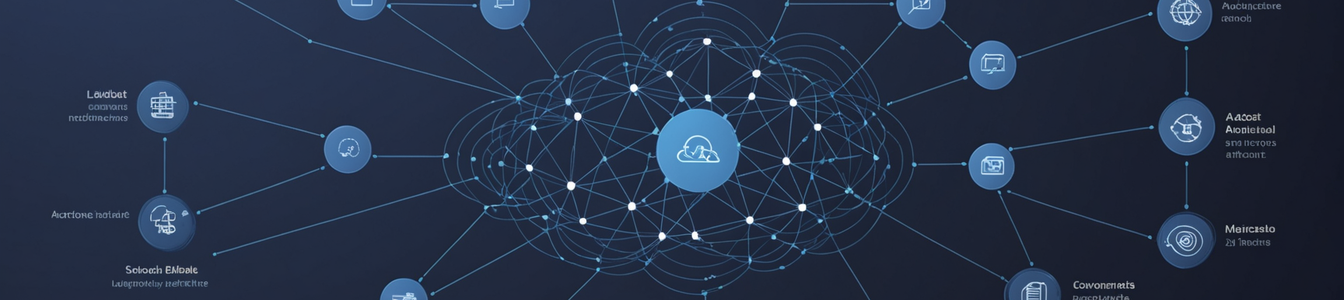
The cloud marketplace ecosystem is undergoing a seismic shift, driven by an influx of AI-powered agents and third-party tools that promise enhanced functionality but introduce unprecedented security complexities. What was once a curated repository for virtual machines and software licenses has transformed into a bustling bazaar of autonomous agents, AI-driven security tools, and deeply integrated third-party services. This transformation, while accelerating digital innovation, is creating what security experts are calling the 'new marketplace attack surface'—a complex web of dependencies that challenges traditional security paradigms.
Recent announcements underscore this trend's velocity. VISO TRUST, a cybersecurity risk management provider, has launched its AI-powered platform on AWS Marketplace, offering automated third-party risk assessments. Simultaneously, BrowserStack, a testing platform, announced the availability of its Model Context Protocol (MCP) Server in the same marketplace, enabling AI agents to interact directly with testing environments. These launches represent just two data points in a much larger pattern: vendors are aggressively leveraging cloud marketplaces as primary distribution channels for increasingly sophisticated, AI-enabled tools.
The security implications of this shift are profound. When organizations procure tools through AWS Marketplace, they're not just installing software; they're often granting extensive permissions, enabling data flows between their cloud environment and the vendor's infrastructure, and creating integration points that can be exploited. The 'shared responsibility model' of cloud security becomes exponentially more complicated when dozens of third-party agents operate within a single environment, each with its own access levels, update cycles, and potential vulnerabilities.
AI agents introduce a particularly novel risk dimension. Unlike traditional software, these agents can make autonomous decisions, initiate actions based on learned patterns, and interact with other systems without direct human intervention. A vulnerability in an AI agent's decision-making logic or its integration hooks could lead to cascading failures or unauthorized data exfiltration. Furthermore, the 'black box' nature of many AI systems makes traditional security auditing and compliance verification exceptionally challenging.
Supply chain security concerns are magnified in this context. Each third-party tool in the marketplace may itself depend on other libraries, services, or APIs, creating a nested chain of trust that is nearly impossible to map comprehensively. A compromise at any link in this chain—whether in the primary vendor's code, an open-source library they use, or an upstream API provider—can propagate to the enterprise environment. The rapid deployment model encouraged by marketplaces (often 'click-to-deploy') can outpace security review processes, leading to 'shadow IT' at an ecosystem level.
Vendor risk management (VRM) practices are struggling to adapt. Traditional VRM focuses on contractual agreements, security questionnaires, and periodic audits. However, the dynamic, API-driven nature of marketplace tools requires continuous, automated assessment. Tools like VISO TRUST's platform, which use AI to evaluate other vendors, represent a meta-solution to this problem, but they themselves become part of the attack surface they're meant to secure. Organizations must now assess not only the primary vendor's security posture but also the security of their AI models, training data integrity, and the resilience of their autonomous decision-making processes.
The governance gap is perhaps the most critical issue. Most organizations lack clear policies for procuring, deploying, and monitoring AI agents from cloud marketplaces. Questions of accountability—when an AI agent makes an erroneous or malicious action—remain largely unanswered. Compliance frameworks (like GDPR, HIPAA, or SOC 2) were not designed with autonomous marketplace agents in mind, creating regulatory ambiguity.
To navigate this new landscape, security leaders must adopt a multi-faceted strategy. First, they need to extend their cloud security posture management (CSPM) to include continuous discovery and assessment of all third-party tools and agents deployed via marketplaces. This requires integration between procurement systems, identity and access management (IAM), and security monitoring tools. Second, organizations should implement a mandatory 'security by design' review for any marketplace tool before deployment, focusing on the principle of least privilege, data residency commitments, and the vendor's own software development lifecycle security practices.
Third, and most importantly, security teams must advocate for and help develop new internal governance frameworks specifically for AI agents and autonomous tools. These frameworks should define acceptable use cases, establish rigorous testing protocols in isolated environments (like sandboxes) before production deployment, and create clear lines of accountability and override mechanisms for autonomous actions.
The gold rush in cloud marketplaces is not slowing down. If anything, the integration of generative AI and autonomous agents will accelerate it further. The convenience and innovation offered by these platforms are undeniable, but they cannot come at the cost of security. By recognizing the unique risks of this new attack surface—where AI, third-party code, and cloud infrastructure intersect—organizations can develop the proactive strategies needed to harness innovation safely. The alternative is a future where the very tools meant to drive efficiency become the weakest links in an enterprise's security chain.
Comentarios 0
Comentando como:
¡Únete a la conversación!
Sé el primero en compartir tu opinión sobre este artículo.
¡Inicia la conversación!
Sé el primero en comentar este artículo.