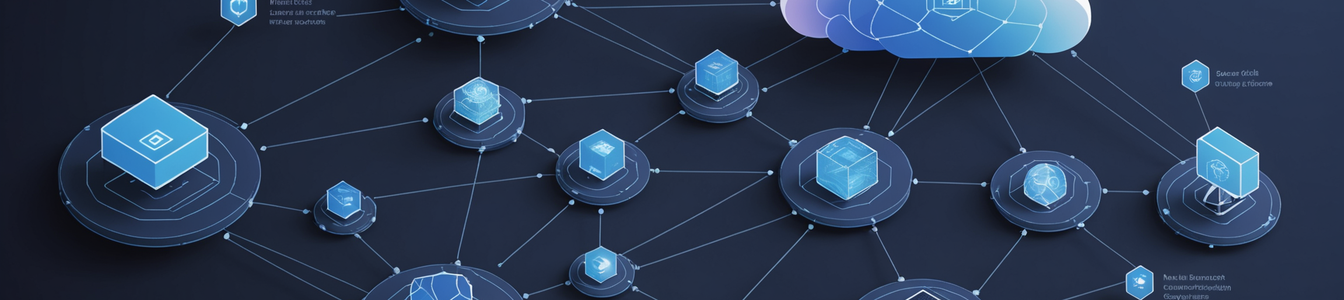
The cloud security landscape is undergoing a fundamental transformation, shifting from a direct provider-customer model to a complex, multi-layered ecosystem where certified partners form the new frontline of defense and innovation. At the recent AWS re:Invent 2025 conference, Amazon Web Services made a series of strategic announcements that underscore this shift, highlighting an aggressive campaign to arm, certify, and reward its partner network. This move is not merely about business growth; it represents a calculated strategy to create an extended security and AI implementation perimeter, effectively turning partners into force multipliers in the competitive battle against Google Cloud and Microsoft Azure.
The centerpiece of this push is the deepening of specialized collaborations. A prime example is the strategic collaboration agreement with Grid Dynamics, a digital-native technology services provider. This partnership is specifically focused on advancing enterprise data foundations for generative AI. For cybersecurity leaders, this is a critical development. The implementation of generative AI is fraught with security and governance challenges—from securing training data and model pipelines to ensuring compliant outputs and managing access to powerful AI tools. By certifying and elevating partners like Grid Dynamics, AWS is delegating the complex task of building secure, production-ready AI data architectures to its ecosystem. Customers gain access to specialized expertise but simultaneously become dependent on the security postures and practices of these third-party implementers.
Parallel to implementation partners, AWS is also reinforcing the training and enablement layer of its ecosystem. Skillsoft Global Knowledge was awarded a 2025 AWS Partner Award, recognizing its role in building the human capital required to operate and secure AWS environments. As solutions grow more complex—integrating AI services with legacy security tools and cloud-native controls—the skills gap becomes a significant vulnerability. AWS's strategy effectively outsources the critical task of workforce upskilling to authorized training partners. This creates a standardized knowledge base but also centralizes influence over how security and AI operations are taught and perceived, potentially creating uniformity in both best practices and blind spots across thousands of organizations.
The broader context was framed by Concierto, a prominent AWS partner, which used re:Invent 2025 to launch new solutions for partners and honor global partner excellence. This activity reflects a self-reinforcing cycle: hyperscalers provide advanced tools and certifications, partners build specialized practices and go-to-market solutions, and customers are increasingly channeled toward these certified experts for any complex deployment. The 'partner ecosystem arms race' is now a core dimension of cloud competition. Google Cloud, for instance, has been running similar programs, like the Google Cloud Security Partner Advantage, which certifies and showcases partners specializing in threat detection, data protection, and identity management on its platform.
The Third-Party Risk Conundrum in the AI Era
This ecosystem model presents a dual-edged sword for enterprise security. On one hand, it provides scalable access to niche expertise that most internal teams cannot match, especially in fast-evolving domains like AI security (AI SecOps), data lake security, and model governance. Partners act as accelerators for secure innovation.
On the other hand, it dramatically expands the attack surface and complicates the vendor risk management equation. Each certified partner represents a node in the cloud supply chain with access to sensitive customer data, critical infrastructure, and business logic. A breach at a key implementation partner could have cascading effects across its client portfolio. Furthermore, the concentration of expertise outside the organization can lead to a 'brain drain' effect, where internal teams lose the ability to critically assess, oversee, and audit the work done by external experts, creating a dangerous oversight gap.
Strategic Recommendations for Security Leaders
- Map Your Extended Cloud Perimeter: Security governance must now explicitly include not just AWS, Azure, or GCP, but also the key certified partners involved in your architecture, implementation, and training. Maintain a real-time inventory of these third parties and their level of access.
- Elevate Partner Due Diligence: Move beyond standard vendor questionnaires. For partners handling AI data foundations or security tooling, require evidence of their own secure development lifecycle, employee security training, and incident response capabilities. Verify their specific AWS Competencies or Service Delivery Program validations.
- Retain Core Oversight Competency: Avoid complete outsourcing of security knowledge. Ensure your internal team maintains enough expertise to manage, audit, and validate the work of partners. Invest in training that is independent of a single vendor's ecosystem to maintain a balanced perspective.
- Contract for Security and Resilience: Contracts with ecosystem partners must include robust security SLAs, right-to-audit clauses, clear breach notification protocols, and liability provisions. Specifically for AI projects, define data ownership, model security, and accountability for AI-generated outcomes.
In conclusion, the hyperscaler partner ecosystem is no longer just a sales channel; it is the operational and security backbone for the next generation of cloud-native and AI-driven enterprises. The race to certify the best and brightest partners is fundamentally a race to control the standards, practices, and pace of enterprise digital transformation. For cybersecurity professionals, the mandate is clear: develop sophisticated strategies to manage this new layer of third-party risk, ensuring that the strength of the ecosystem does not become its single point of failure.
Comentarios 0
Comentando como:
¡Únete a la conversación!
Sé el primero en compartir tu opinión sobre este artículo.
¡Inicia la conversación!
Sé el primero en comentar este artículo.