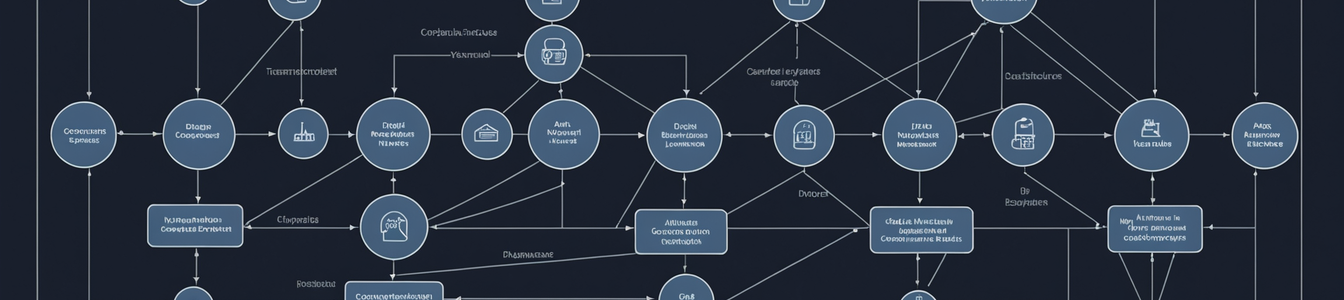
The digital infrastructure that underpins global commerce and governance is experiencing a profound crisis of verification. Multiple recent reports and investigations point to systemic failures across what were once considered robust trust systems—from financial transaction validation to corporate reporting and international sanctions enforcement. This 'verification vacuum' is creating unprecedented opportunities for both sophisticated criminal networks and state-level actors seeking to operate outside established regulatory frameworks.
The AI Paradox in Fraud Prevention
According to SEON's 2026 Fraud & AML Report, a striking paradox has emerged in the fight against financial crime. While artificial intelligence and machine learning tools have become ubiquitous in fraud detection systems, organizations are simultaneously expanding their human fraud investigation teams. This counterintuitive trend suggests that technological solutions, no matter how advanced, cannot fully compensate for gaps in verification protocols and the nuanced understanding required to investigate complex fraud schemes.
The report indicates that fraud attempts have grown not just in volume but in sophistication, with attackers increasingly exploiting seams between different verification systems. The 'human in the loop' remains essential for contextual analysis, particularly when dealing with synthetic identities, complex money laundering chains, or coordinated attacks that might appear legitimate when examined in isolation by automated systems.
Geopolitical Shadow Pipelines and Sanctions Evasion
Parallel to the corporate fraud landscape, a separate but structurally similar crisis is unfolding in international sanctions enforcement. A detailed investigation reveals how Russia has allegedly established a 'shadowy digital pipeline' capable of concealing approximately $90 billion in crude oil exports. This system reportedly employs a combination of obscured ownership structures, complex shipping documentation, and digital obfuscation techniques to circumvent price caps and trade restrictions imposed by Western nations.
The methodology involves more than just traditional shell companies. Investigators point to the use of digital platforms that facilitate opaque transactions, spoofed shipping data transmitted through vulnerable maritime tracking systems, and financial settlements processed through jurisdictions with weak verification requirements. This represents a geopolitical application of verification failures, where the inability to reliably track commodity flows and financial settlements creates space for sanctioned entities to continue operations.
Corporate Reporting and the Trust Deficit
The verification crisis extends into corporate governance, as highlighted by Experian's latest report on fraud expansion. The data shows a significant increase in corporate fraud incidents, with prevention measures consistently lagging behind emerging threats. A key vulnerability identified is the verification of corporate disclosures and financial reporting, where inadequate checks create opportunities for material misrepresentation.
This environment of weakened corporate verification contributes to a broader trust deficit that affects investment decisions, regulatory oversight, and market stability. When stakeholders cannot reliably verify corporate data, the entire ecosystem becomes vulnerable to manipulation, from pump-and-dump schemes to more sophisticated financial engineering designed to hide liabilities or inflate assets.
The Regulatory Response and Its Limitations
The scale of the verification problem is now attracting high-level regulatory attention. Following a Fortune report detailing potential sanctions violations, a U.S. Senator has launched a formal probe into cryptocurrency exchange Binance. This investigation focuses specifically on whether the platform's verification systems failed to prevent transactions involving sanctioned entities or jurisdictions.
This regulatory scrutiny highlights a fundamental challenge: verification systems are only as strong as their implementation and enforcement. Even platforms with technically sophisticated KYC (Know Your Customer) and AML (Anti-Money Laundering) protocols can suffer from gaps in execution, inconsistent application across global operations, or intentional design flaws that prioritize user growth over compliance rigor.
Implications for Cybersecurity Professionals
For cybersecurity teams, this expanding verification vacuum represents a multidimensional threat landscape. The challenge is no longer limited to protecting data integrity or system availability but now extends to defending the very mechanisms that establish trust in digital interactions.
Key areas requiring enhanced focus include:
- Identity Verification Architecture: Moving beyond simple credential validation to implement continuous, risk-based authentication that can detect anomalies in user behavior and transaction patterns.
- Data Provenance and Integrity: Implementing cryptographic and blockchain-based solutions where appropriate to create tamper-evident records of transactions, shipments, and corporate actions.
- Cross-System Correlation: Developing capabilities to correlate data across traditionally siloed systems—financial transactions, shipping logs, corporate registries—to identify patterns indicative of verification bypass.
- Adversarial AI Defense: As attackers employ AI to generate convincing synthetic identities or falsified documentation, defense systems must evolve to detect AI-generated fraud attempts.
The Path Forward: Integrated Trust Systems
Addressing the verification vacuum requires a fundamental rethinking of how trust is established and maintained in digital systems. Technological solutions must be integrated with robust legal frameworks, international cooperation, and transparent governance models. The expansion of human fraud teams alongside AI adoption suggests that the future lies in hybrid systems that leverage machine efficiency for scale while retaining human judgment for complexity.
For cybersecurity leaders, this moment represents both a profound challenge and a strategic opportunity. Organizations that can implement verifiable, transparent, and resilient trust systems will not only reduce their fraud exposure but will gain competitive advantage in an increasingly skeptical digital marketplace. The verification vacuum is widening, but so too is the understanding of what must be done to fill it.
Comentarios 0
Comentando como:
¡Únete a la conversación!
Sé el primero en compartir tu opinión sobre este artículo.
¡Inicia la conversación!
Sé el primero en comentar este artículo.