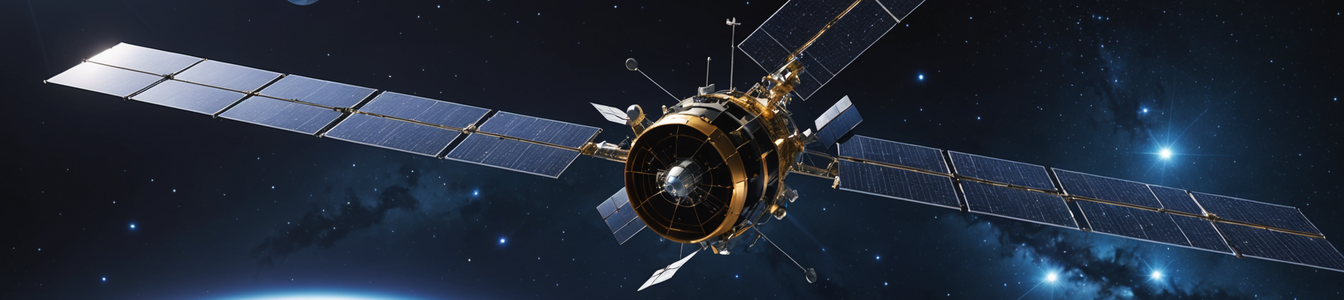
The final frontier is no longer the exclusive domain of governments and aerospace giants. A seismic shift is occurring as global financial institutions—from Chinese state banks to India's Bank of Baroda—are launching satellites, backing rocket companies, and directly entering the space economy. This move transforms them from financiers to operators of critical orbital infrastructure, creating a complex new nexus of finance, geopolitics, and cybersecurity with profound implications for global stability.
From Banking to Orbit: The New Financial-Industrial Complex
Recent developments indicate a strategic pivot. Chinese financial institutions are actively participating in satellite launches and providing capital for rocket development, effectively integrating space assets into their operational and investment portfolios. Simultaneously, reports from institutions like the Bank of Baroda highlight how geopolitical uncertainties, such as those surrounding territorial deals in Greenland, are directly influencing market volatility. This connection underscores a critical reality: geopolitical events affecting physical territory and space-based assets now have immediate, tangible impacts on financial markets. Financial entities are not just analyzing these risks; they are placing themselves at the center of them by owning the very infrastructure—communication satellites, Earth observation platforms—that the global economy relies upon.
The Cyber-Secured Orbital Economy: A Novel Attack Surface
This convergence creates what security experts are calling the 'cyber-secured orbital economy.' Banks and investment firms are becoming responsible for protecting space-based systems that handle sensitive financial data transmission, high-frequency trading communications, remote sensing data for commodity trading, and global payment network backbones. The attack surface is unprecedented:
- Orbital Financial Nodes: Satellites operated by banks become high-value targets for state-sponsored and criminal actors. A successful cyber intrusion could manipulate financial data flows, create artificial market conditions, or intercept confidential transactions.
- Supply Chain Vulnerabilities: The complex supply chain for satellite manufacturing, launch services, and ground station operations introduces multiple points of potential compromise, from malicious hardware implants to compromised software in launch vehicle guidance systems.
- Geopolitical Weaponization: As seen with the Greenland issue, territorial disputes now have a space dimension. A nation could view a financial institution's satellite over a contested region as a proxy target, using cyber means to degrade or disable it, thereby causing market disruption and signaling capability.
- Convergence of Physical and Cyber Risks: Kinetic anti-satellite (ASAT) tests create debris fields that threaten orbital assets. A cyberattack that causes a satellite collision or malfunction could be disguised as an accident, creating plausible deniability for an act of financial warfare.
The Cybersecurity Imperative for Space-Faring Finance
The traditional cybersecurity playbook is insufficient for the space domain. Signal jamming, spoofing of satellite navigation (GPS/GNSS), and uplink/downlink interception require specialized defensive measures. Financial institutions entering this arena must develop or acquire expertise in:
- Space-Secure Communication Protocols: Implementing quantum-resistant encryption and secure authentication for satellite links to prevent eavesdropping and man-in-the-middle attacks on financial data streams.
- Resilient Constellation Architecture: Designing satellite networks with built-in redundancy, autonomous anomaly detection, and the ability to isolate compromised nodes to prevent cascading failures across the financial grid.
- Ground Segment Hardening: Securing the often-overlooked ground control stations and data downlink centers, which are terrestrial targets for compromising orbital assets.
- Cross-Border Regulatory Navigation: Operating in a patchwork of national and international space and cybersecurity regulations, requiring legal and compliance frameworks as sophisticated as the technology itself.
Case in Point: Market Volatility and Orbital Dependencies
Analyses, such as the Bank of Baroda report on ongoing market volatility linked to the Greenland issue, reveal the tangible connection between terrestrial geopolitics, space assets, and finance. Financial institutions with stakes in Earth observation satellites monitoring Arctic resources, or communication satellites serving the region, find their assets and valuations tied to diplomatic tensions. This makes their orbital infrastructure a potential lever for influence or attack, moving cybersecurity from an IT cost center to a core strategic function for market integrity and institutional survival.
The Road Ahead: Securing the Final Frontier of Finance
The entry of banks into space operations marks a point of no return. It promises increased efficiency, new data-driven financial products, and global connectivity. However, it also opens a new theater for cyber conflict where the stability of markets could be threatened from orbit. The financial sector's foray into space demands a parallel investment in a new generation of cybersecurity professionals—those who understand orbital mechanics as well as encryption, and geopolitical strategy as well as network defense. The security of the emerging orbital economy will depend on building resilient, defensible, and sovereign-capable space architectures before threats materialize. The race is on, and cybersecurity is the critical payload.
Comentarios 0
Comentando como:
¡Únete a la conversación!
Sé el primero en compartir tu opinión sobre este artículo.
¡Inicia la conversación!
Sé el primero en comentar este artículo.